Atlantic Airways updates its fleet for a greener future: Why the Faroe Islands are turning their back on A320ceo for good
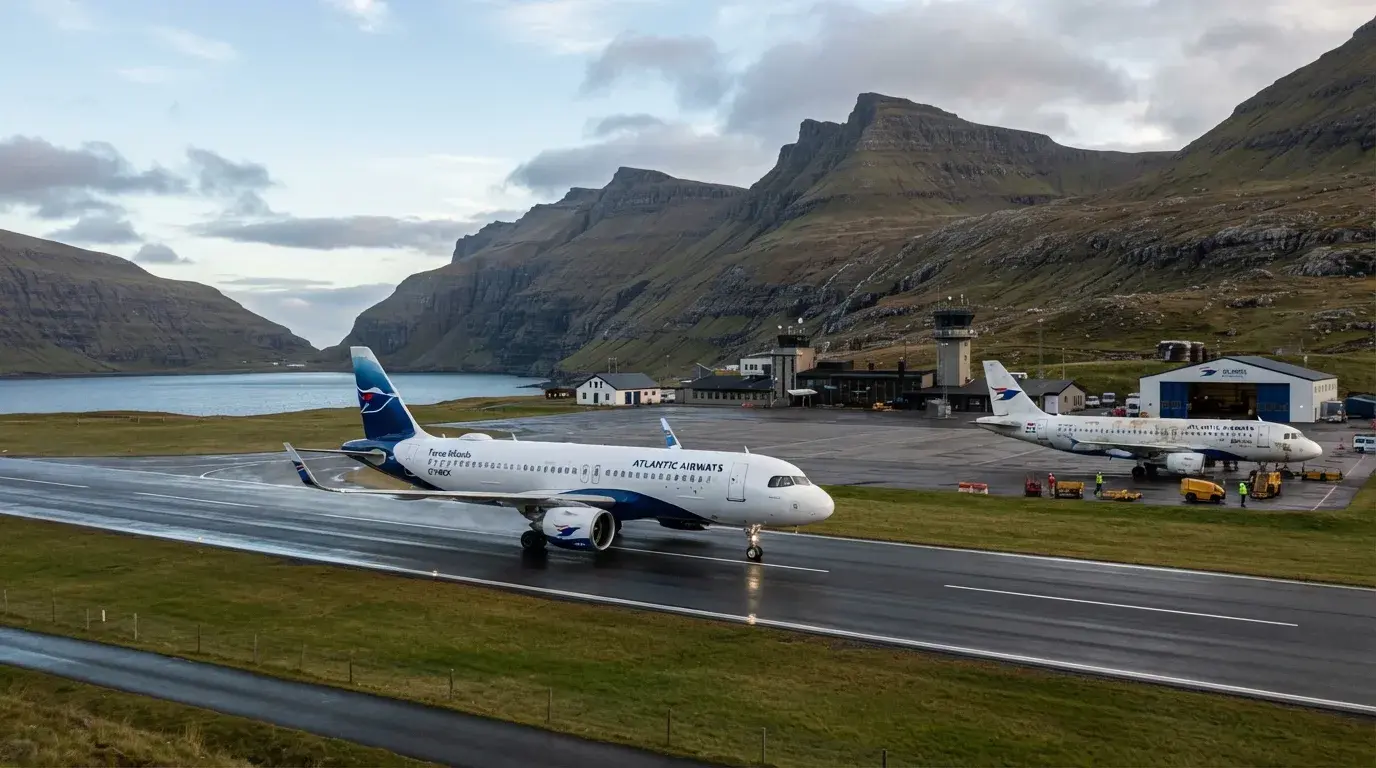
Atlantic Airways has taken a decisive step toward fleet modernization with the recent acquisition of two new Airbus A320neo aircraft. The national carrier of the Faroe Islands, renowned for its commitment to sustainable aviation and optimized regional connectivity, is transitioning to an all-new-generation single-aisle fleet. This strategic move aligns with both operational performance goals and a strong commitment to reducing its environmental impact.
The shift to the A320neo is more than just a technical upgrade—it reflects a long-term vision for an airline whose operations are intrinsically tied to the archipelago’s unique geographical and climatic conditions. The Faroe Islands, located in the North Atlantic, rely on flight regularity that leaves no room for compromise. With often harsh weather conditions, a homogeneous and modern fleet becomes a critical asset to ensure the reliability of air links, whether for domestic or international routes.
Atlantic Airways currently operates two A320ceo and two A320neo aircraft. The newly ordered Airbus A320neo models, powered by CFM International LEAP-1A26 engines, will definitively replace the last of the previous-generation single-aisle aircraft. Niels Mortensen, Chairman of the Board of Directors, emphasized the significance of this transition: “Our ambition is to operate an exclusively A320neo fleet in the near future, and this agreement marks a key milestone toward that goal.” His statement underscores the airline’s commitment to more efficient and environmentally responsible aviation.
This modernization extends beyond technical updates. It delivers tangible benefits for both passengers and the airline itself. Fuel consumption is expected to drop by at least 20%, directly reducing CO₂ emissions—a growing consideration for eco-conscious travelers. For Atlantic Airways, the transition also simplifies maintenance processes through fleet uniformity and enhances operational efficiency.
A 100% A320neo fleet: A winning bet for regional connectivity
The shift to an all-A320neo fleet is an ambitious project, but Atlantic Airways is already reaping the rewards. The airline took delivery of its first A320neo in July 2019, and the two new aircraft ordered in October 2026 are part of this carefully managed growth strategy. Their arrival will strengthen operational synergies and improve flight regularity—a critical factor for an airline whose operations are closely tied to the often unpredictable weather of the North Atlantic.
The A320neo’s advanced navigation technologies, including RNP AR 0.1, enable more precise landing approaches, even in low-visibility conditions. This innovation is particularly valuable at Vágar Airport, the Faroe Islands’ main gateway, where challenging weather can make landings especially demanding. These advancements allow Atlantic Airways to guarantee better flight regularity, a major advantage for passengers and partner airlines alike.
While Atlantic Airways’ fleet includes Leonardo AW139 helicopters for specialized missions such as medical evacuations or inter-island connections, the transition to an all-A320neo fleet applies exclusively to its fixed-wing operations. This distinction is key to understanding the airline’s broader strategy, which aims to clearly separate its two types of operations.
For the Faroe Islands, this modernization represents far more than a material change. It is part of a sustainable development and climate resilience strategy. By reducing its dependence on fossil fuels and optimizing operations, Atlantic Airways actively contributes to environmental protection while ensuring essential connectivity for the archipelago.
Toward greener aviation: A320neo as an ecological and economic choice
The A320neo’s primary strength lies in its ability to significantly reduce the environmental impact of flights. Thanks to its modern engines and optimized aerodynamics, these aircraft consume up to 20% less fuel than their predecessors while emitting less CO₂. For Atlantic Airways, this aligns perfectly with the sustainability goals set by local and European authorities.
Beyond environmental benefits, the transition to the A320neo also delivers economic advantages. Fleet uniformity simplifies maintenance, reducing operational costs and improving aircraft availability. For an airline whose operations are highly dependent on flight regularity, this optimization is a major asset. Additionally, lower fuel consumption translates into substantial long-term savings—a crucial factor amid rising energy prices.
Benoît de Saint-Exupéry, Airbus Commercial Aircraft’s Director of Sales, praised the initiative: “By adding two state-of-the-art A320neo aircraft to its future fleet, the airline is reinforcing its commitment to regional connectivity.” His remarks highlight the broader significance of this transition for the aviation sector, not just Atlantic Airways.
This modernization also responds to evolving passenger expectations. Travelers are increasingly prioritizing environmental concerns, and the choice of a modern, eco-responsible fleet can be a decisive factor in their travel decisions. For Atlantic Airways, this transition presents an opportunity to position itself as a key player in sustainable aviation across Northern Europe.
A promising future for Atlantic Airways and the Faroe Islands
With this order, Atlantic Airways reaffirms its commitment to staying at the forefront of aviation innovation. The transition to an all-A320neo fleet is an ambitious project, but the benefits are substantial: improved flight regularity, reduced operational costs, enhanced regional connectivity, and a strong environmental commitment. For the Faroe Islands, this modernization ensures sustainable development and guarantees that the archipelago remains well-connected to the rest of the world.
The airline has also emphasized the broader economic impact of this transition. By strengthening its operational capabilities, Atlantic Airways can better meet the needs of travelers and businesses in the archipelago while maintaining its role as a bridge between Europe and the North Atlantic. This modernization is far more than a technical change—it marks a pivotal step for the future of aviation in the region.
As the delivery of the two new A320neo aircraft approaches in the coming months, Atlantic Airways is poised to write a new chapter in its history. One defined by innovation, sustainability, and an unwavering commitment to the Faroe Islands. For travelers, this transition promises more reliable, comfortable, and environmentally friendly flights. For the archipelago, it represents a guarantee of connectivity and sustainable development for years to come.
Be the first to comment on this article
On the same topic
- Boeing 737 MAX 10: Alaska Airlines Bets on the Future with Imminent FAA Certification
- Turkish Airlines makes bold move: 150 Boeing 737 MAX ordered, a daring bet to reshape European skies
- Istanbul Airport’s New East-West Runway Revolutionizes Global Air Traffic
- Lufthansa Challenges Boeing with Shark Skin on A330: A Green Revolution Reshaping Air Travel
- Airbus Unveils Revolutionary Wings for Jets: The Future of Long-Haul Flights Will Be Faster and Cheaper
- Boeing and Lufthansa Test New Engine Nose in Flight: A Potential Aviation Revolution by 2026