Finnair breaks long-haul codes with A350 on Helsinki-Bangkok-Melbourne route: How the Finnish carrier is reinventing Australia links
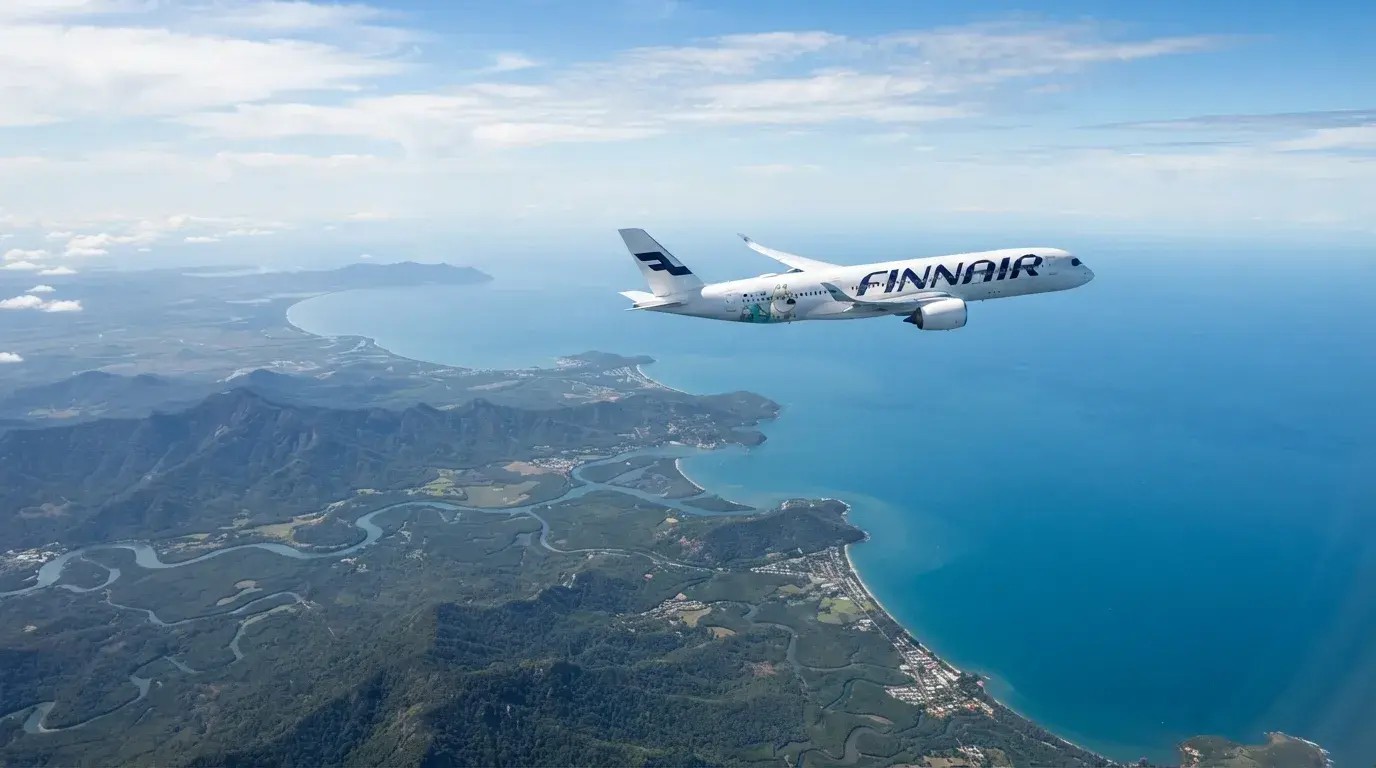
Finnair is making a bold move in Australian skies. On October 25, 2026, the Finnish carrier launched its first regular service to Australia under its own code and with its own aircraft, marking a major milestone in its long-haul development strategy. With an Airbus A350-900 operating the Helsinki–Bangkok–Melbourne route, Finnair isn’t just expanding its network—it’s innovating by combining fifth-freedom rights with optimized long-haul operations to serve a demanding market.
Flight AY145 departed Helsinki in the early hours of October 25 at 1:15 AM, aboard an aircraft registered OH-LWO. After a technical stopover in Bangkok-Suvarnabhumi, the A350 landed in Melbourne the following morning at 7:14 AM, 22 hours and five minutes after departure. An operational performance that highlights Finnair’s ability to manage complex rotations while respecting crew fatigue constraints and aircraft range limits. For the airline, this daily year-round service is more than just a route—it’s a response to the consistent demand of the Australian market, where business travel, tourism, and European expatriate communities intersect.
Fifth-freedom rights play a key role in this project. In Bangkok, passengers arriving from Europe can disembark and continue their journey to Australia, while Finnair can sell tickets between Thailand and Australia. This flexibility allows the airline to diversify its revenue streams and attract a broader customer base. “Thanks to fifth-freedom rights, passengers can book with Finnair to reach Bangkok or enjoy a well-deserved break on Thailand’s renowned beaches,” explains Lorie Argus, CEO of Melbourne Airport. A strategy that strengthens Bangkok’s appeal as a regional hub.
A high-stakes rotation: Bangkok at the heart of the operation
The success of this service hinges largely on the management of the Bangkok stopover. The A350 flying from Helsinki to Melbourne stops in Bangkok for a 1 hour 50-minute technical layover, a tight window for a rapid sequence of operations: crew change, cabin cleaning, refueling, catering, technical checks, mandatory disinsection for Australia, and cargo handling. Every minute counts. Finnair has had to adapt its operational procedures to ensure this rotation remains viable, relying on rigorous simulations and identified alternate airports.
Crews, reinforced by three or four pilots, alternate between flight phases and rest periods. Fatigue management is a central challenge, given the time zones crossed and overnight flight schedules. For pilots, the rotation represents about one week with four long-haul legs, including a rest day in Bangkok in each direction. A delicate balance between productivity and safety, where every detail has been anticipated.
The Airbus A350: Finnair’s masterstroke for conquering Australia
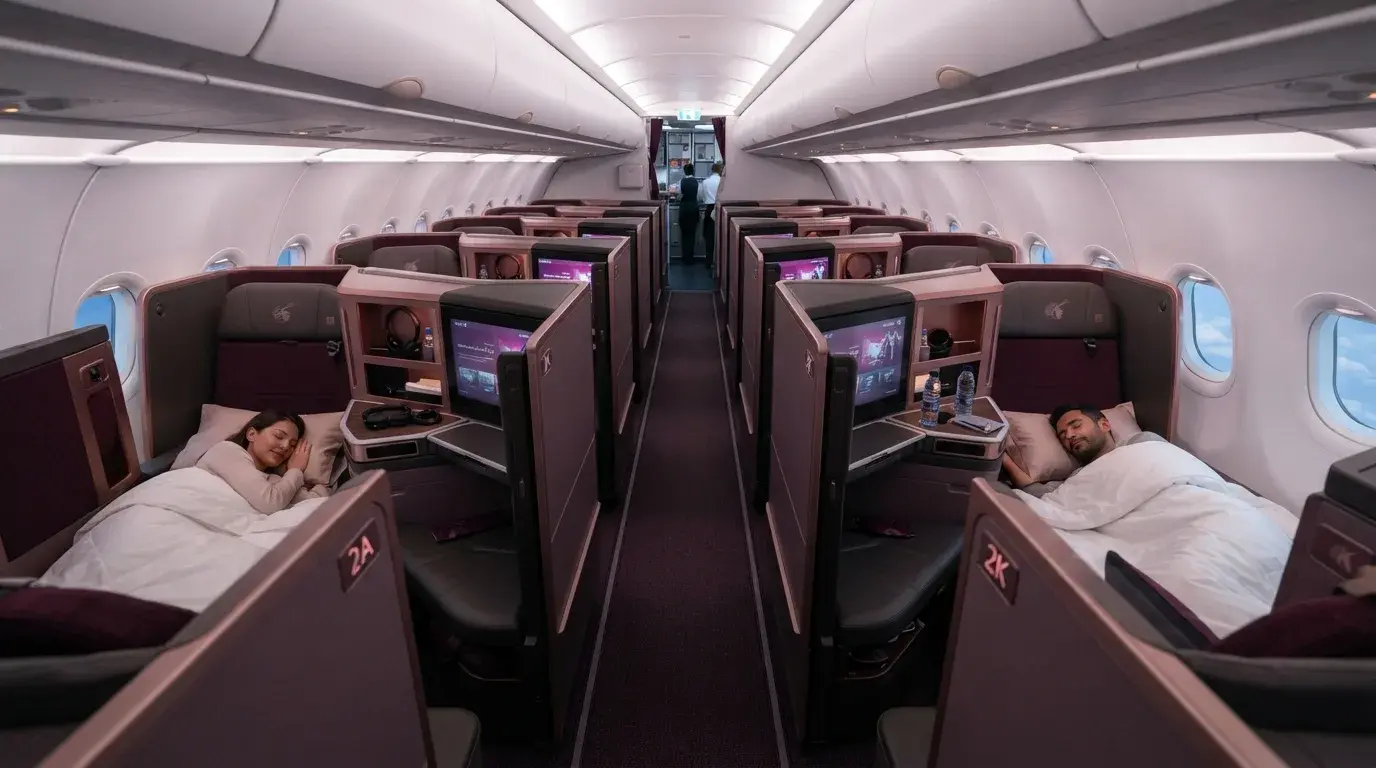
The deployment of the A350-900 on this route is no coincidence. With a maximum range of 16,100 kilometers, the aircraft is perfectly suited to connect Helsinki to Melbourne via Bangkok while meeting passenger safety and comfort requirements. Finnair has opted for a three-class configuration: Business Class, Premium Economy, and Economy. In Business Class, each passenger enjoys an AirLounge seat designed to maximize comfort on extended flights.
To preserve sleep cycles, the airline has adjusted meal schedules and boosted its catering supply in Bangkok. Up to 18,000 liters of bilberry juice, Finnair’s signature beverage, are flown to Thailand to meet passenger demand. A meticulous attention to detail that underscores the airline’s commitment to delivering a premium experience, even on such a demanding route.
Premium Economy complements the offering, while Economy Class remains competitive against low-cost carriers on long-haul routes. This segmentation allows Finnair to capture different market segments, from business travelers to comfort-seeking tourists without breaking the bank.
An audacious economic bet: When Australia becomes a key destination
The choice of Melbourne as the final destination is no accident. The Australian metropolis is one of Oceania’s most dynamic hubs, attracting a diverse clientele: business travelers, international students, expatriate workers, and adventure-seeking tourists. Finnair is banking on this diversity to ensure year-round regular traffic, without relying solely on peak tourist seasons.
According to network planning data, Melbourne meets all the criteria to justify this daily service: consistent demand, a sizable European expatriate community, and potential for connections to other Australian or Asian destinations. For Finnair, this route is also a way to reinforce its role as a European gateway to Asia and Oceania, complementing its other long-haul services.
Cargo also plays a crucial role in the route’s economic balance. Finnair Cargo is leveraging Melbourne as a new gateway for trade between Europe and Australia, with commercial opportunities on Asian segments. A diversification of revenue streams that helps offset the high operating costs of such a long route.
Ongoing challenges: Temperature, cargo, and reliability
Despite the successful launch, challenges remain. At the outset, Finnair does not transport all types of cargo across the entire Helsinki–Melbourne route. Pharmaceuticals and perishable goods, for example, are not accepted on the full journey due to temperature and logistics constraints. Their inclusion will depend on cold chain evaluations—a priority for the airline.
The ramp-up of the route will be gradual. Finnair plans to adjust operations based on passenger feedback and operational constraints, particularly regarding disinsection and baggage handling. A pragmatic approach aimed at ensuring the reliability of the service before considering expansion.
For Finavia, operator of Helsinki Airport, this new service strengthens the airport’s role as a hub between Europe and Australia. A recognition for Finland, which confirms its status as a gateway to distant destinations, thanks to an innovative and ambitious airline.
Explore the Helsinki–Bangkok–Melbourne route details on Finnair’s website and book your tickets for an off-the-beaten-path journey.
Why this route is a turning point for Finnair
With this service, Finnair proves that it’s possible to combine innovation, operational performance, and commercial appeal on a long-haul route. By leveraging fifth-freedom rights, optimizing A350 operations, and fine-tuning its cabin segmentation, the Finnish carrier is redefining travel standards between Europe and Australia. A strategy that could inspire other industry players in the years to come.
Be the first to comment on this article