Air China Launches Groundbreaking Route to Iceland from Beijing via Copenhagen in 2026
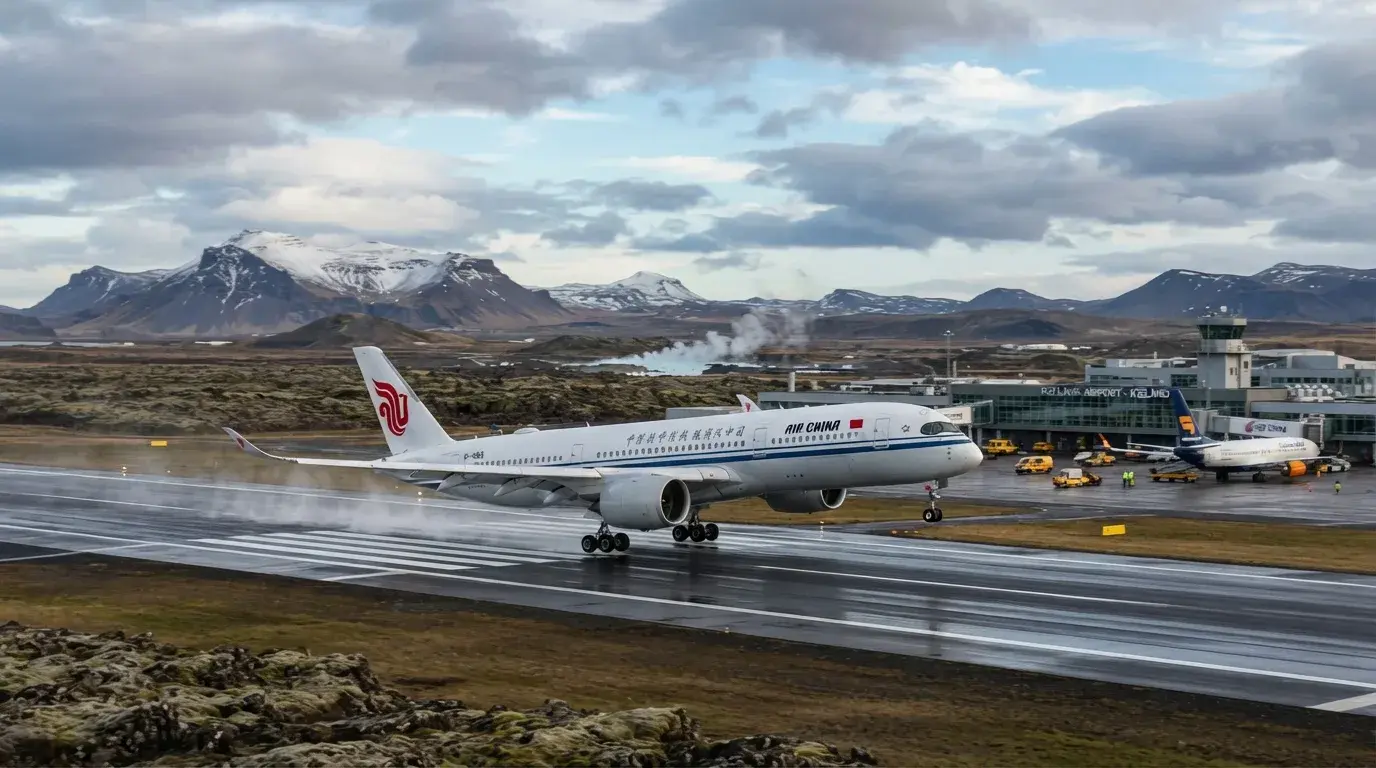
The summer of 2026 marks a turning point for Asian travelers seeking to reach Iceland. Air China has announced the launch, starting October 26, of an original route connecting Beijing-Capital, Copenhagen, and Keflavík, with the first flight scheduled for the winter of 2026/27. This new service, operated with an Airbus A330-300 featuring a 301-seat cabin including 30 in Business Class, introduces a premium direct option from Asia to the North Atlantic—a first for an Asian carrier.
What makes this service particularly compelling is the strategic choice of Copenhagen as a commercial stopover. Thanks to fifth-freedom rights acquired by Air China, the airline will be able to sell tickets exclusively between Denmark and Iceland, creating unprecedented competition on the Copenhagen–Keflavík segment. For passengers, this means a long-haul alternative with fully flat-bed seats in Business Class and a far more sophisticated experience than the regional options typically offered on this route.
Flight CA807 will depart from Beijing at 3:30 AM, arriving in Copenhagen at 6:30 AM, before continuing to Keflavík at 8:45 AM, where it is scheduled to land at 11:15 AM. The return flight, CA808, will leave Iceland at 1:45 PM, make a stopover in Copenhagen at 5:55 PM, and depart again at 8:30 PM for Beijing, arriving the next day at 12:20 PM. With a frequency of three flights per week in winter and likely more in summer, this service will cater to growing demand from Asian travelers seeking a destination still poorly connected directly from their continent but gaining popularity among tourists in search of authenticity and breathtaking landscapes.
A Bold Expansion Strategy in Europe
Air China is consolidating its presence on the Beijing–Copenhagen axis, strengthening its Danish hub as part of a broader strategy to capture tourism and business flows between Asia and Northern Europe. The addition of Keflavík aligns with a wider goal of tapping into the underdeveloped but rapidly growing Asian market for Nordic tourism.
This initiative follows recent moves in the region. Air France and Cyprus Airways have just finalized a codeshare agreement on Paris–Larnaca, while beOnd is expanding premium routes from the Saudi Red Sea to Europe. These strategies reflect a broader trend: airlines are diversifying their hubs and targeting high-end clientele by developing point-to-point services alongside their traditional networks.
For Air China, this route represents more than just a new service. The Chinese carrier is leveraging this opportunity to demonstrate its ability to innovate in flight operations by combining rare traffic rights with a premium product experience. This fits into a broader dynamic of differentiation against Gulf giants, which traditionally dominate Asia-Europe routes with increasingly luxurious cabins.
A Premium Offer That Disrupts the Icelandic Market
On the Copenhagen–Keflavík segment, competition remains limited. Travelers have until now relied primarily on flights operated by Icelandair or Play, using single-aisle aircraft or regional-premium cabins that are often seasonal. Air China’s entry changes the game by offering a Business Class cabin with fully flat-bed seats—a configuration that stands out from current North Atlantic market standards.
This year-round premium offering caters to growing demand from business travelers and high-end tourists who prioritize comfort and optimized travel time. In winter, this service could also attract transit passengers heading to North America or those drawn by Iceland’s booming northern lights tourism.
The choice of the Airbus A330-300, already widely used by Air China on its long-haul network, ensures operational reliability and capacity tailored to current demand. With 271 Economy seats and 30 in Business Class, this configuration meets the needs of both leisure and business passengers while maintaining attractive margins for the airline.
A Bet on the Future of Nordic Tourism
Iceland has become a flagship destination for Asian tourists, particularly Chinese travelers, thanks to its image as a preserved paradise and unique landscapes. Data from the Icelandic Tourist Board shows steady growth in arrivals from Asia, with a 12% increase recorded in 2025.
Air China’s new service will make it easier for travelers from China to reach Iceland, a market still largely served via connections in Europe or the Middle East. For Chinese travelers, this route offers a major advantage: a simplified journey with just one stopover, compared to two or three previously, along with a premium experience tailored to increasingly discerning clientele.
Additionally, this route aligns with a broader trend of developing tourism corridors between Asia and Northern Europe, a trend observed in recent years with the opening of new routes by carriers like Norwegian Air Shuttle or TUI Airways to Scandinavia.
For Air China, this launch is also an opportunity to test the resilience of its fifth-freedom model, a practice still rare in commercial aviation but poised to grow with evolving bilateral agreements between states. The success of this route will depend on Air China’s ability to convince Asian travelers to favor Copenhagen as a gateway to Iceland over more traditional hubs like London or Frankfurt.
What’s in It for Travelers?
Passengers traveling from China or Southeast Asia will now have an additional option to reach Iceland, with key benefits:
Air China will offer competitive pricing on its Asia–Europe segments, with flexible fares that could extend to the Copenhagen–Keflavík flights depending on demand. The airline has already opened bookings, suggesting an attractive offer for the inaugural flights.
Travelers from Europe can also take advantage of this new route to reach Iceland by combining a long-haul flight with a short A330 segment, providing a more comfortable experience than current direct flights, which are often operated with single-aisle aircraft.
Finally, this initiative could encourage other Asian carriers to explore similar routes, particularly China Eastern Airlines or China Southern Airlines, which may develop their own links to Northern Europe with commercial stopovers.
The arrival of Air China on this route marks a significant step in the reshaping of tourism flows between Asia and Iceland, with potential ripple effects for Iceland’s local economy and airlines that adapt to this new landscape.
Be the first to comment on this article
On the same topic
- Etihad revolutionizes Europe-Asia travel with First Class suites on narrowbody from Luxembourg
- Emirates Launches Direct Dubai-Helsinki Route with Airbus A350: What It Means for European Travelers
- Emirates Revolutionizes Nairobi-Dubai Route with A350 and Premium Economy
- Etihad Launches Calgary: First Direct Middle East to Western Canada Route, a Travel Revolution
- Aeromexico Launches Milan Route: A Game-Changer for Transatlantic Travel
- Starlux Leverages Art and Airbus to Revolutionize A350-1000s and Woo Europe