Lufthansa relaunches Frankfurt-Kuala Lumpur: Why this historic route is reshaping Southeast Asia
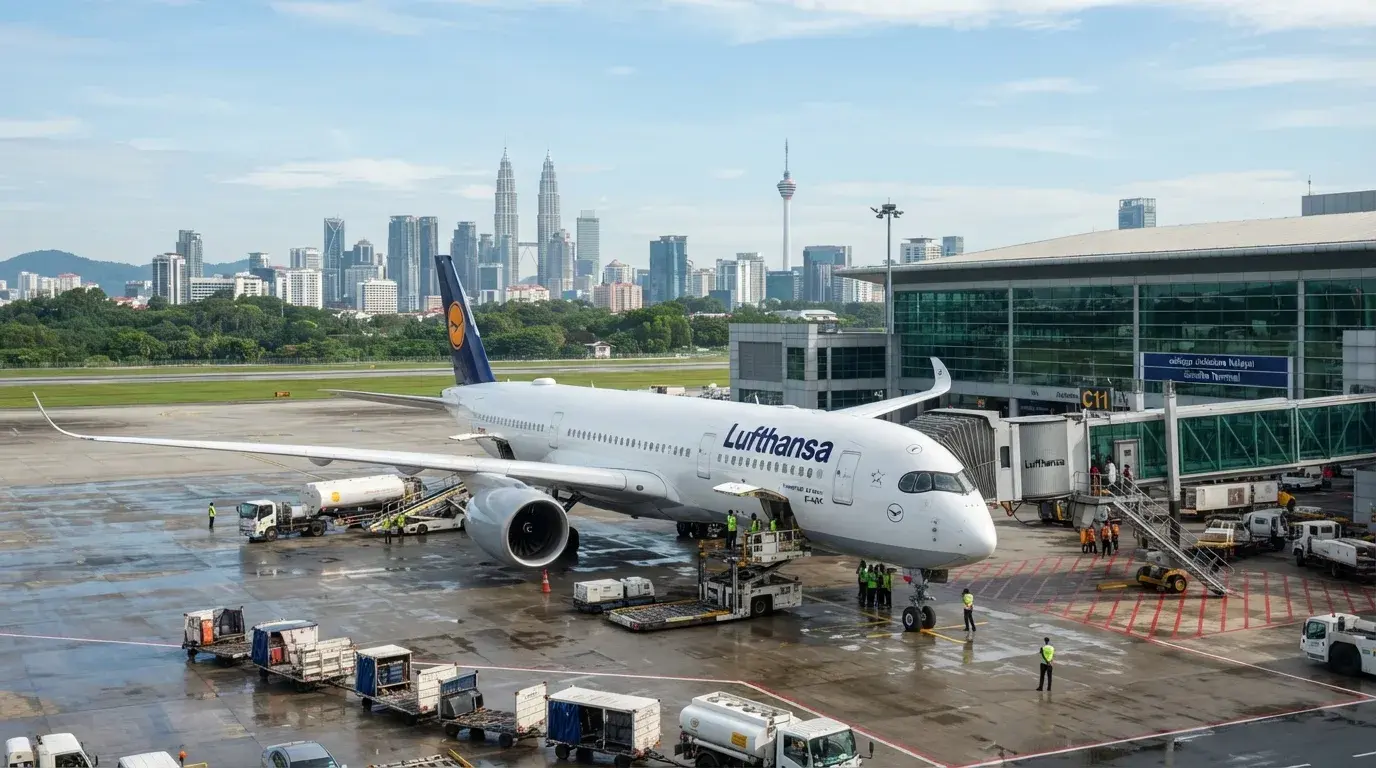
After nearly a decade, Lufthansa has restored its nonstop service between Frankfurt and Kuala Lumpur, operated year-round with five weekly flights using the Boeing 787-9. This new route marks a turning point for the German carrier’s long-haul network in Southeast Asia, aligning with a broader strategy to boost exchanges between Europe and Malaysia—a market where Germany holds a leading position.
The inaugural flight departed Frankfurt on Sunday, October 25, 2026, arriving in Kuala Lumpur the following morning, signaling the start of a new era for travelers between these two economic hubs. Behind this relaunch lies a clear commercial logic: streamlining business and leisure travel while leveraging connections through the German hub. An initiative that could reshape the map of air links between Europe and Southeast Asia.
With this route, Lufthansa now joins Bangkok, Singapore, and Phuket as destinations served in Southeast Asia from Frankfurt. For Malaysia, this presents an opportunity to enhance its tourism and economic appeal to European travelers, while Germany solidifies its position as Malaysia’s top EU trading partner. Bilateral ties are already evident, with over 700 German companies operating in the country.
A strategic route for business travelers and tourists
The schedule for this new service is designed to optimize connections from Frankfurt. Departures from the German hub are set for Mondays, Wednesdays, Fridays, Saturdays, and Sundays at 9:30 PM, arriving in Kuala Lumpur at 4:40 PM the next day. On the return leg, flights depart Mondays, Tuesdays, Thursdays, Saturdays, and Sundays at 11:55 PM, allowing passengers to reach Frankfurt by 6:00 AM. These slots offer ideal windows for travelers in transit to Europe or North America, while meeting the needs of Malaysian tourists eager to explore the continent.
For business travelers, this direct link provides an alternative to the often lengthy and costly layovers via other Asian hubs. Malaysia, with its dynamic economy and gateway status to Southeast Asia, becomes far more accessible from Europe. A major advantage for German companies based in Malaysia, as well as investors and expatriates seeking hassle-free travel to Europe without complicated connections.
For tourists, Kuala Lumpur and its surroundings boast a wealth of attractions, from iconic skyscrapers like the Petronas Towers to the beaches of Langkawi and the country’s rich cultural traditions. For travelers from Europe, this direct route significantly reduces travel time and eliminates the fatigue often associated with tedious layovers.
Boeing 787-9 Dreamliner and the new Allegris cabin
To operate this route, Lufthansa has assigned a Boeing 787-9 Dreamliner, a modern, fuel-efficient aircraft featuring 287 seats across three classes: 28 in Business, 28 in Premium Economy, and 231 in Economy. Among the latter, 34 seats offer extra legroom, catering to passengers seeking enhanced comfort on long-haul flights.
The Dreamliner is also equipped with the new Allegris cabin, a major innovation marking a significant step in Lufthansa long-haul modernization. This cabin, gradually rolled out across the airline’s long-haul network, stands out for its ergonomic layouts and premium materials, designed to elevate passenger comfort. With Allegris, Lufthansa aims to deliver a more pleasant and better-suited travel experience for modern passengers, whether in Business, Premium Economy, or Economy.
For Business Class passengers, the Allegris experience includes more spacious seats with adjustable headrests and footrests, as well as direct aisle access. In Premium Economy, seats are wider with extra legroom, while Economy passengers enjoy individual in-flight entertainment screens with Bluetooth compatibility and power outlets at every seat. Fast, free Wi-Fi for Miles & More loyalty program members rounds out the offering, making this route a benchmark for onboard comfort and service.
Cargo: an economic pillar of the Frankfurt-Kuala Lumpur route
While passengers are central to the project, cargo plays a key role in the economic balance of this new service. Frank Naeve, Senior Vice President of Global Sales at Lufthansa Group, emphasized the importance of this component during the inaugural flight reception. « The cargo contribution to these passenger services is extremely important to ensure economic viability », he explained. The holds of the Boeing 787-9 will thus support trade between Malaysia and Europe alongside passenger transport.
This synergy between passengers and cargo is a hallmark of Lufthansa’s long-haul routes, enabling the airline to maximize aircraft utilization and offer competitive fares while meeting growing demand for goods transport between Europe and Asia. A model that could inspire other carriers in an industry where profitability remains a critical challenge.
For Kuala Lumpur International Airport, this launch marks another milestone in its development. According to Malaysia Airports, the return of Lufthansa brings the number of nonstop European destinations served from KLIA to five. These routes carried 1.1 million passengers in the first nine months of 2026, a 29.7% year-on-year increase—a performance that underscores Malaysia’s growing appeal as a tourism and economic hub in Southeast Asia.
Increased frequencies planned for summer 2027
While the route is already a commercial success, Lufthansa has announced plans to expand its offering. During the inaugural flight reception, Frank Naeve confirmed a shift to daily service starting with the summer 2027 schedule. A decision reflecting the airline’s confidence in demand and the route’s medium-term growth potential.
This capacity boost aligns with Lufthansa’s broader strategy to expand its long-haul network in Asia. The airline continues to evaluate new route opportunities based on market trends and traveler needs. With this relaunch, Lufthansa sends a strong signal: Europe and Southeast Asia are more connected than ever, and this momentum is set to continue in the years ahead.
For travelers, this evolution means more choices, reduced travel times, and better access to destinations once difficult to reach. For businesses and investors, it ensures reliable and high-performance air links for professional travel. A welcome development for all those who see this relaunch as an opportunity to seize.
As Southeast Asia continues to gain prominence on the global economic stage, airlines like Lufthansa play a pivotal role in integrating the region into the global economy. With the relaunch of the Frankfurt-Kuala Lumpur route, an entire region becomes more connected to the rest of the world—and travelers are the ones benefiting.
Stay tuned, as this route could well set a precedent for other openings in the years to come.
Be the first to comment on this article
On the same topictourism
- Transavia expands its Breton network with Seville: how to fly nonstop to Andalusia from Brest
- SWISS Launches Toulouse Route: Swiss Airline Expands into Southern Europe for Summer 2027
- French bee targets 14 weekly flights to La Réunion: Why the island captivates travelers
- Icelandair bets on Madrid and St. Louis for summer 2027: a revolution for your travels to America and Europe
- Finnair nearly triples flights to Tokyo: how to seize this opportunity for your next Japan trips
- Frontier Airlines launches in Colombia in December 2026: three low-cost routes from Orlando under €100 one-way