Boeing 737 MAX 10: Alaska Airlines Bets on the Future with Imminent FAA Certification
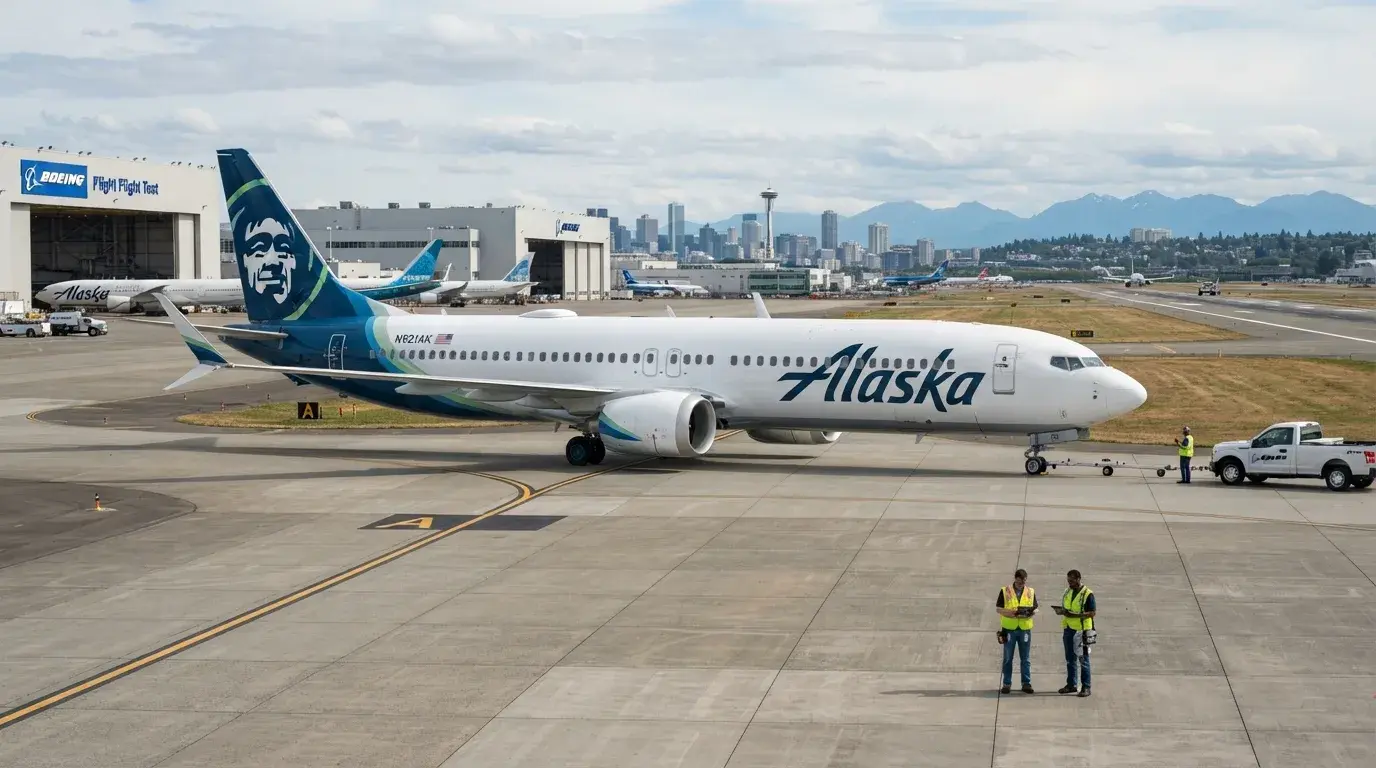
The race against time is on. Alaska Airlines is heavily investing in the Boeing 737 MAX 10, an aircraft whose certification by the FAA could be granted in the coming days. This approval would allow the U.S. carrier to become the world’s first operator of this longest version of the MAX family, offering passengers unprecedented capacity for its most in-demand routes.
If the announced schedule holds, Alaska Airlines will receive its first 737 MAX 10 in spring 2027. The Seattle-based group has already placed an order for 105 of these aircraft, with purchase rights for 35 more, under a historic $32 billion contract signed in January 2026. A colossal investment reflecting the carrier’s ambition to modernize its fleet while meeting growing demand on its key destinations.
The stakes go beyond mere technical renewal. The 737 MAX 10, with a maximum capacity of 230 passengers depending on configuration, will enable Alaska Airlines to strengthen its domestic and cross-border routes, particularly to Canada and Mexico. A direct response to the gradual saturation of major airports like Los Angeles, where slots are becoming increasingly scarce and expensive. The carrier is banking on the aircraft’s versatility to optimize its rotations while reducing operational costs through simplified maintenance and fuel savings estimated at 14% compared to previous models.
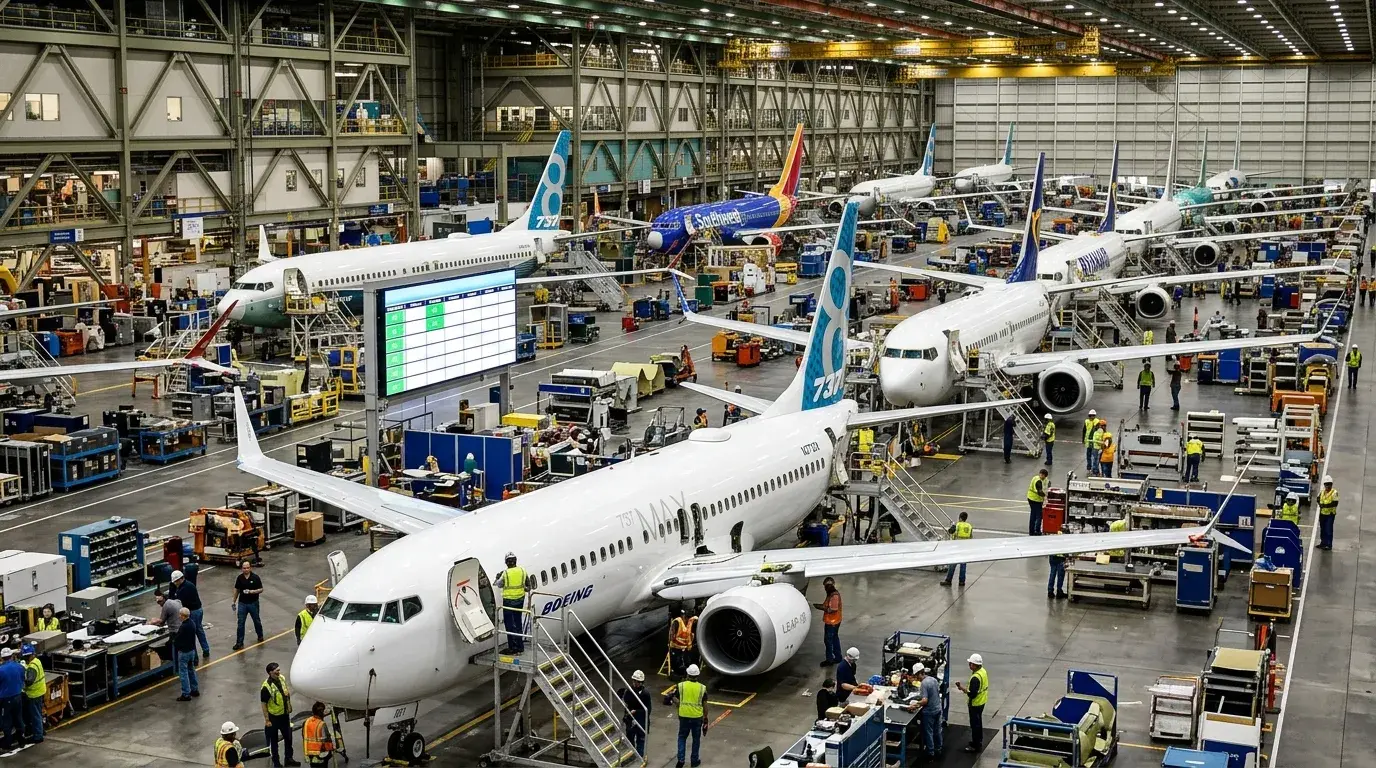
For Boeing, MAX 10 certification marks a crucial milestone. Commercially launched in 2017, the MAX program has faced successive delays, notably after engine crises and tightened regulatory requirements. The MAX 10, with its fuselage stretched by nearly 1.7 meters compared to the MAX 9, represents the cornerstone of the airframer’s single-aisle lineup. Without this approval, Boeing cannot fulfill pending orders and risks losing market share to Airbus and its A321neo.
Alaska Airlines, which already operates MAX 8 and MAX 9 aircraft, is banking on operational continuity. The integration of the MAX 10 into its existing fleet will allow it to share crew training and maintenance costs—a major advantage for a carrier whose network spans over 115 destinations across North America. The group has retained flexibility in its order: the option to switch to another 737 variant if market conditions demand it.
A Gamble on Innovation and Regulation
The FAA’s green light, expected before the end of September 2026, comes amid heightened regulatory scrutiny on Boeing. Following the 737 MAX 8 crises and safety investigations, U.S. authorities have tightened requirements, particularly on control systems and technical documentation. Kelly Ortberg, Boeing CEO, struck an optimistic tone during the third-quarter results presentation, citing certification as imminent after finalizing flight tests.
For Alaska Airlines, the wait is worth it. The carrier plans to bring the MAX 10 into service between April and mid-May 2027, once final technical validations are completed. A tight but realistic window, according to Jason Berry, Director of Operations: “The schedule is ambitious, but we’ve done everything to be ready.” The airline must also finalize the installation of head-up display systems for its pilots, a critical step before commercial launch.
The economic ripple effects are already anticipated. With the MAX 10, Alaska Airlines expects a 5 to 8% reduction in seat costs—a compelling argument in an industry where margin pressure remains constant. The carrier, which transported over 45 million passengers in 2025, plans to grow its fleet from 340 to over 400 aircraft by 2035, with an increasing share of MAX aircraft in its strategy.
A Strategy Aligned with North American Air Traffic Growth
The North American market, in full expansion, offers fertile ground for the MAX 10. According to IATA forecasts, passenger traffic in the U.S. and Canada is expected to grow by 4.5% annually until 2030. A dynamic Alaska Airlines intends to capture by densifying existing routes and opening new ones to secondary destinations.
The carrier is particularly focusing on the Seattle-Anchorage corridor, a historic route that could benefit from the MAX 10’s increased capacity. Another strategic axis: routes to Fairbanks and Juneau, where demand is driven by tourism and logistical needs tied to Alaska’s oil industry. The MAX 10 will also help bolster flights to Los Angeles, San Francisco, and Las Vegas—three major hubs where competition with Southwest and Delta is fierce.
On the environmental front, Alaska Airlines has set ambitious goals: reducing its CO₂ emissions by 50% by 2050 compared to 2005. The MAX 10, with its 14% lower fuel consumption than the 737 NG, aligns with this roadmap. The airline has also signed agreements for the purchase of sustainable aviation fuels (SAF), a pathway to partially offset its flights’ carbon footprint.
And Tomorrow? Could the MAX 10 Be a Game-Changer for the Industry?
If the MAX 10 certification proceeds as planned, Boeing could finally turn the page on the controversies that have plagued the MAX program. The aircraft, with its increased capacity and optimized range, could become a bestseller in the long-haul single-aisle segment—a niche currently dominated by the Airbus A321XLR. Analysts estimate the MAX 10 could capture 20 to 30% of the single-aisle market for aircraft with over 200 seats by 2030, a figure that would give Boeing a decisive edge over its European rival.
For Alaska Airlines, the stakes are twofold: proving the MAX 10 can be operated safely and demonstrating that the aircraft represents a sound investment. The carrier, which has already reduced its debt by 20% since 2020, is betting on organic growth to finance its transition to a more modern and sustainable fleet. With the MAX 10, Alaska Airlines isn’t just buying an airplane—it’s shaping the future of its air routes.
The FAA will have the final say in the coming days. If it gives its approval, the North American skies could see the takeoff, as early as next year, of a new generation of single-aisle aircraft—more efficient, more eco-friendly, and better suited to the challenges of tomorrow’s air transport.
Key Takeaways on the Boeing 737 MAX 10
The Boeing 737 MAX 10 is the longest version of the MAX family, with a fuselage stretched by nearly 1.7 meters compared to the MAX 9. It can accommodate up to 230 passengers depending on configuration and offers a maximum range of 3,300 nautical miles (6,100 km). Compared to previous models, it promises a 14% reduction in fuel consumption and CO₂ emissions, along with simplified maintenance thanks to its compatibility with the existing 737 MAX fleet. Boeing has already received firm orders for over 300 aircraft, including 105 for Alaska Airlines.
FAA certification, expected by the end of September 2026, is a prerequisite for Boeing to deliver the ordered aircraft. Alaska Airlines plans to bring the MAX 10 into service between April and May 2027, once final technical validations are completed.
Be the first to comment on this article