France Launches World’s Largest SAF Plant in Dunkirk: How It Will Transform European Flights
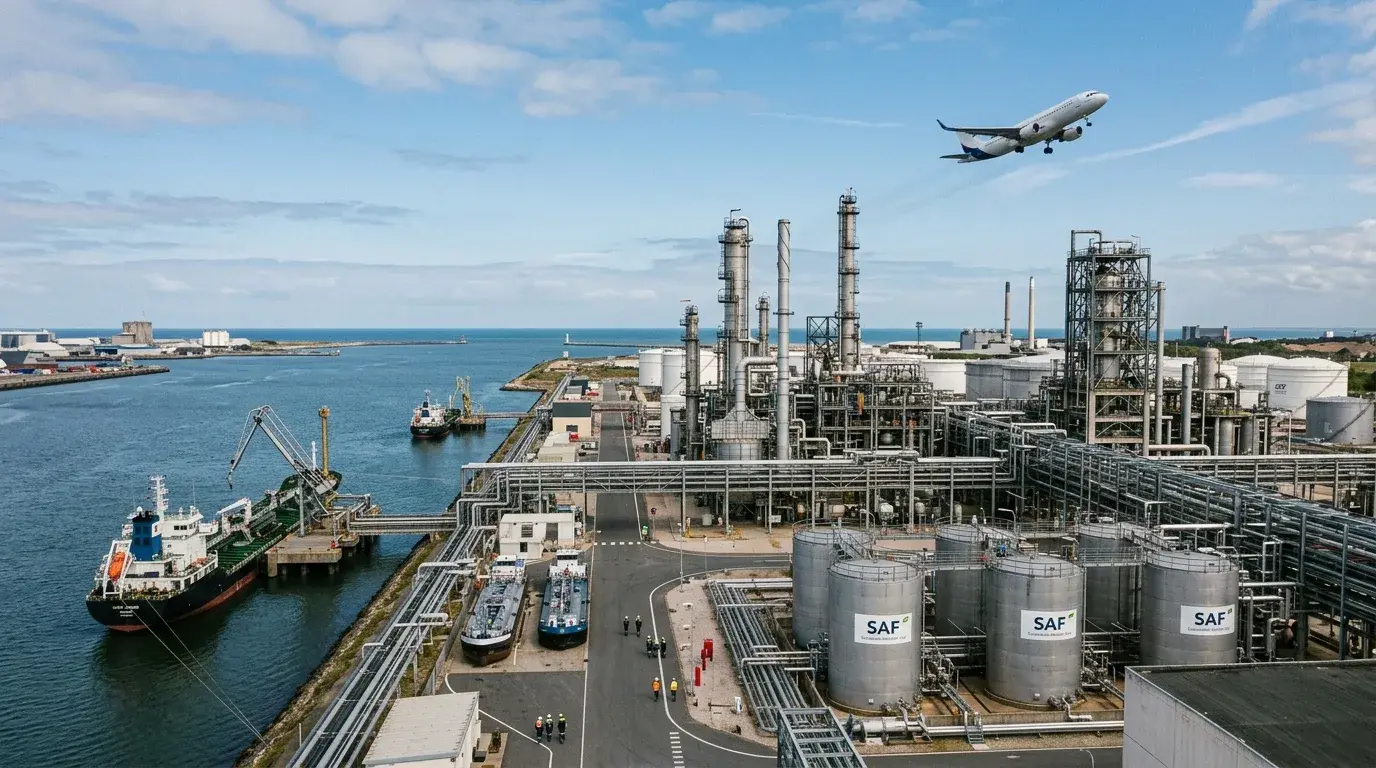
France has taken a historic step in the ecological transition of air transport with the official launch of Rebound, an unprecedented joint venture between Technip Energies, Airbus, Safran, and Tereos. This ambitious project aims to build the world’s largest sustainable aviation fuel (SAF) production unit using Alcohol-to-Jet (AtJ) technology, with a target capacity of 160,000 tonnes per year upon launch. Located at the strategic port of Dunkirk, this plant could become a symbol of a new era for European aviation, where sustainability finally aligns with large-scale industrialization.
For years, European airlines and regulators have announced decarbonization initiatives, but concrete progress has lagged behind ambitions. With Rebound, France positions itself as an industrial leader by establishing a fully integrated supply chain, from agricultural residue collection to SAF delivery at airports. This "field-to-aircraft" approach directly addresses growing regulatory demands, particularly the ReFuelEU Aviation regulation, which mandates SAF blending thresholds in jet fuel starting in 2025. For travelers, this means cleaner flights in the coming years, without waiting for distant promises of hydrogen or e-fuels.
The choice of Dunkirk is no coincidence: the northern port offers optimal logistics for transporting raw materials and distributing fuel, with direct access to maritime routes and efficient rail and road connections. For passengers, this could translate into better SAF availability on long-haul and medium-haul flights departing from Europe, reducing the carbon footprint of their journeys.
A promising yet lesser-known technology
The Alcohol-to-Jet technology at the heart of the Rebound project converts advanced ethanol—derived from agricultural or forestry residues—into fuel compatible with current engines and aircraft. Unlike first-generation SAFs, which relied on cooking oils or animal fats, this solution uses non-food resources, avoiding competition with food production. In France, the bioethanol sector already has a strong industrial base, particularly around beets and cereals, facilitating rapid deployment of this technology.
Projections indicate that Europe’s SAF demand will skyrocket in the coming years: 1.2 million tonnes annually by 2025, 4 million tonnes by 2030, and over 40 million by 2050. Rebound, with its 160,000 tonnes per year, will only cover a fraction of this demand, but it will serve as a catalyst for similar projects. For travelers, this could mean a gradual increase in SAF blends in jet fuel, reducing the environmental impact of flights in the coming years.
Airline members of the project, such as Airbus and Safran, have already announced their intention to source SAF produced by Rebound. For passengers, this means that flights using these fuels could multiply, particularly on European and Middle Eastern routes, where SAF demand is highest. A tangible advancement for those seeking to travel more responsibly without sacrificing frequency or quality.
A lever against fossil fuel dependence
The war in Ukraine and volatile jet fuel prices have reminded airlines of the urgency to reduce dependence on fossil fuels. While SAF is more expensive than traditional jet fuel, it offers a stable and predictable alternative, especially as regulators impose blending quotas. Rebound aligns with this logic by structuring a local supply chain, reducing dependence on oil or foreign-produced SAF imports.
For travelers, this could also mean better long-term cost control. While fuel surcharges are a recurring industry issue, the rise of SAF could stabilize ticket prices by limiting the impact of oil price fluctuations—a welcome development for those planning vacations or business trips with more predictable fares.
The Rebound project also includes a major social and economic component: the creation of local jobs in Hauts-de-France, a region already deeply rooted in aeronautics and agri-food industries. For passengers, this reinforces the idea that travel can align with environmental and economic responsibility by supporting sustainable industrial sectors in Europe.
A decisive step toward aviation’s climate goals
The International Civil Aviation Organization (ICAO) and the European Union have set ambitious targets to reduce aviation emissions: a 50% cut in CO₂ emissions by 2050 compared to 2005. SAF is currently the only available lever in the short to medium term to achieve this goal, complementing energy efficiency gains and technological innovations like hydrogen-powered aircraft, which are still under development.
With Rebound, France sends a strong signal to Europe and the world: the ecological transition of aviation is not a utopia but an industrial process already underway. For travelers, this means that tomorrow’s flights could be far cleaner than today’s, with airlines increasingly committed to this path. Another reason to favor carriers investing in SAF, such as Air France, KLM, or Lufthansa, which are already partners in similar European projects.
The port of Dunkirk, chosen as the site for this plant, could become a symbol of this new aviation era. Located near major European hubs and benefiting from optimal logistics, it could supply SAF not only to France but also to neighboring countries, accelerating the decarbonization of European skies. For passengers, this could mean a gradual increase in flights using SAF, particularly on long-haul routes where demand is highest.
What Rebound Means for Your Next Flights
If you’re planning a flight in Europe in the coming years, here’s what the Rebound project could mean for you:
Improved SAF availability on flights: With an annual capacity of 160,000 tonnes, the Dunkirk plant could supply tens of thousands of flights per year, increasing the share of sustainable fuel in airlines’ fuel mixes. For passengers, this means cleaner flights with an immediate reduction in carbon footprints.
More stable fares: By reducing dependence on traditional jet fuel, airlines could limit fuel surcharges, making ticket prices more predictable. A welcome development for travelers planning vacations or business trips in advance.
More responsible airline choices: Carriers sourcing SAF from Rebound—such as Air France, KLM, or Lufthansa—will strengthen their commitment to sustainability. For passengers, this offers an opportunity to favor airlines investing in concrete solutions to reduce their environmental impact.
Optimized logistics for travelers: The Dunkirk site, with its direct access to maritime routes and efficient rail connections, could streamline SAF distribution to major European hubs. For passengers, this could translate into a gradual increase in flights using SAF, particularly on long-haul routes where demand is highest.
Rebound: An Industrial Project Serving Sustainable Aviation
The launch of Rebound marks a crucial milestone in building a competitive and large-scale European SAF supply chain. With an annual capacity of 160,000 tonnes, this plant could supply thousands of flights per year, reducing the carbon footprint of air transport in Europe. For travelers, this means cleaner flights, more stable fares, and an aviation industry increasingly committed to ecological transition.
To learn more about aviation decarbonization initiatives or airlines investing in SAF, consult the official resources of ReFuelEU Aviation or the websites of manufacturers like Airbus and Safran, which detail their commitments to sustainable fuels.
Be the first to comment on this article
On the same topic
- FLY91 signs historic deal for 40 ATR 72-600s: Is the turboprop the future of European short-haul?
- Flynas and Saudi Arabia Bet $10 Billion on 25 Airbus Jets to Dominate Skies: How This Gamble Reshapes Travel
- Airbus Unveils Revolutionary Wings for Jets: The Future of Long-Haul Flights Will Be Faster and Cheaper
- Frontier Airlines Revolutionizes Airbus Fleet with Starlink Wi-Fi by 2027: What It Means for Budget Travel
- AirAsia Group Transforms into a Global Low-Cost Giant: How the Malaysian Airline Challenges Aviation Titans
- How AirAsia is Reshaping the Future of the A220 with High-Density and Potential A220-500