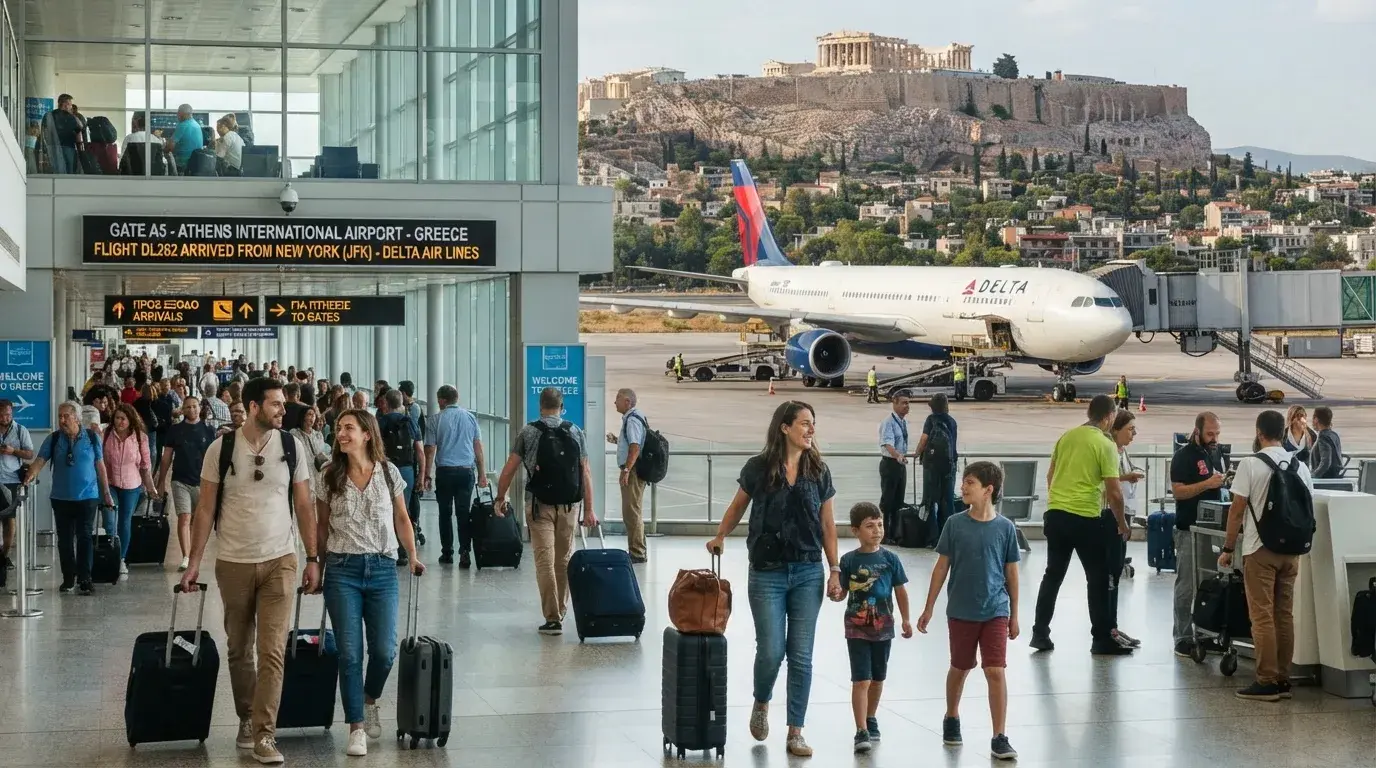
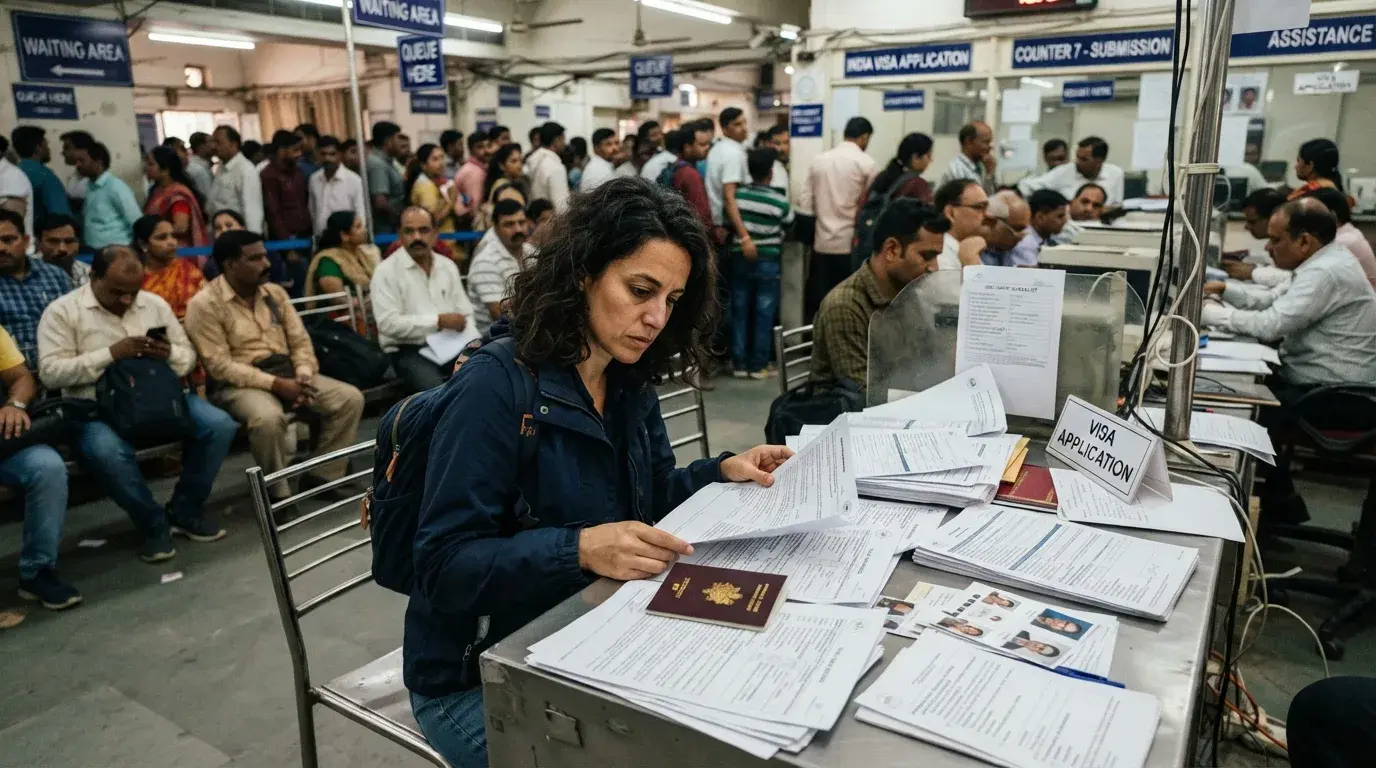
French travelers planning a trip to India in 2026 are discovering, to their dismay, that a new administrative hurdle has been added to their pre-departure checklist. Between the e-Visa, e-Arrival Card, and now Air Suvidha, the process of entering Indian territory has become a digital obstacle course. The lack of coordination between Indian authorities and the absence of prior notice have left travelers scrambling to meet last-minute requirements.
What should have been a straightforward additional formality has turned into a source of stress for thousands of travelers each month. Indian authorities have quietly introduced an online health declaration that is now mandatory for all passengers, regardless of nationality or travel purpose. This new requirement stacks atop two existing procedures, creating a redundant and time-consuming administrative nightmare.
Frédéric Moreau, a Paris-based consultant preparing for a business trip to Mumbai, sums up the collective frustration: « When I received the email from my client reminding me of the new obligation, I thought it was a joke. Then I spent two hours filling out forms across three different websites, with disjointed deadlines and validation steps. It’s as if no one in Delhi is talking to anyone. » His experience reflects the daily reality for travelers navigating this new administrative landscape, where even a minor input error can jeopardize boarding.
Air Suvidha: The Mandatory Health Declaration
The latest addition to India’s travel formalities is Air Suvidha, an online health declaration that must be completed within 24 hours of landing. The official website, airsuvidha.civilaviation.gov.in, imposes a tight submission window and blocks any attempts to fill it out earlier. Once validated, the form generates a QR code that must be presented upon arrival, either in digital or printed form.
Travelers frequently encounter issues with the platform’s validation process, where even a minor typo or formatting error can invalidate the entire submission. « The 24-hour window is simply unrealistic for overnight flights or tight connections, » explains Alexandre Demaille, co-founder of the specialized agency RapideVisa. « We now advise all clients to complete this declaration as soon as their flight number is confirmed, even if the departure is a week away. »
This new requirement joins two existing procedures: the e-Visa (required for most nationalities, including French travelers) and the e-Arrival Card. Three separate forms, three distinct websites, and three different validity periods—an administrative puzzle even seasoned travelers struggle to master.
A Triple Administrative Burden: The Illogical Reality
For a trip to India, travelers must now prepare three separate documents, each with its own set of rules and deadlines:
1. A passport valid for at least six months beyond the entry date, with two blank pages required. Emergency passports are no longer accepted, effectively excluding travelers in urgent situations.
2. The e-Visa, mandatory for the majority of nationalities. Options include the e-Visa Tourist for stays of 30 to 90 days or the e-Visa Business for professional trips. Processing typically takes about six days, but consular fees vary based on duration and visa type. Once obtained, the e-Visa must be printed and presented at boarding, or boarding may be denied.
3. The e-Arrival Card, an electronic arrival card that must be completed before departure within a narrow timeframe. This digital form replaces the previous paper version and must be validated in the days leading up to travel, or boarding may be blocked.
« Instead of consolidating these formalities—which would make logical sense for travelers—India has created a third, separate process on a third platform, » laments Alexandre Demaille. « It’s a bureaucratic nightmare, almost Kafkaesque. Travelers must juggle incompatible deadlines, input formats, and validation systems that don’t communicate with each other. »
Sensitive Regions: An Additional Permit Requirement
The administrative ordeal doesn’t end there for some travelers. Those planning to visit sensitive or protected regions—such as the North, Northeast, or the Andaman and Nicobar Islands—must obtain an additional permit. This requirement often comes as a surprise, frequently discovered too late, either at the departure airport or upon arrival.
« We’ve had clients forced to cancel trips at the last minute because they were unaware of this obligation or couldn’t secure the permit in time, » recounts Alexandre Demaille. « It’s a detail many travelers only discover too late, when an entire trip—personal or professional—hangs in the balance. »
To avoid such pitfalls, many travelers turn to specialists like RapideVisa. These agencies assist applicants in securing all necessary documents: tourist or business e-Visa, e-Arrival Card, and compliance with other requirements. Their role extends beyond form-filling; they verify every detail before departure to prevent boarding denials or arrival complications in India.
A Modest Cost for Invaluable Peace of Mind
The services provided by these agencies come with a fee ranging from €30 to €50, on top of the official e-Visa consular fees. While this may seem like a modest investment, it prevents far costlier scenarios: denied boarding, trip cancellations, or blocked arrivals in India.
« What our clients are paying for isn’t just someone to fill out a form for them, » explains Alexandre Demaille. « It’s the peace of mind of arriving in India knowing every document has been thoroughly checked—before departure and at every step. Each visa is reviewed by a person, not an algorithm, to avoid input or formatting errors. »
Experienced travelers know that India, with its cultural riches and breathtaking landscapes, is well worth the journey. But to fully enjoy it, they must first navigate the Kafkaesque administrative maze that precedes every trip. A process that, in 2026, has become as critical as booking a flight or choosing a hotel.
Why Have These New Rules Been Implemented?
Indian authorities justify these measures as part of a broader effort to strengthen the country’s sanitary and administrative security, particularly in the wake of the Covid-19 pandemic. The introduction of Air Suvidha aligns with a wider policy aimed at better controlling traveler flows. However, the lack of coordination between agencies has made implementing these rules particularly chaotic for travelers.
« India is our flagship destination, but it’s also where we see the most new rules introduced in recent months, » notes Alexandre Demaille. « Authorities announce new requirements overnight without any adjustment period for travelers or industry professionals. The result? Thousands of travelers face unexpected situations with potentially dramatic consequences for their trips. »
Practical Tips to Avoid Administrative Traps
For travelers planning a trip to India in 2026, here are some key recommendations to sidestep administrative pitfalls:
– Begin your paperwork at least two weeks before departure to allow time for corrections if needed.
– Use a specialized agency to secure your e-Visa, e-Arrival Card, and Air Suvidha. This saves hours of research and verification.
– Check specific rules if visiting sensitive or protected regions, as additional permits may be required.
– Always print your travel documents, even if some can be presented digitally. Local authorities or airlines may require a physical copy.
– Regularly consult official sources, such as the Embassy of India in France or Indian authorities, to stay updated on the latest administrative changes.
India’s Tourism Market Thrives Despite Bureaucratic Hurdles
Despite the added complexity, India remains a highly sought-after destination for French travelers. According to India’s Ministry of Tourism, France ranks among the top 10 source countries for foreign tourists, with over 200,000 French visitors to the subcontinent in 2024. This trend is expected to continue in 2025 and 2026, despite the additional administrative formalities.
« The complexity of the formalities isn’t deterring travelers from exploring India, » says Alexandre Demaille. « On the contrary, many are willing to put in the extra effort to discover this incredible destination. But they need guidance to navigate the administrative maze so their trip is memorable for all the right reasons—not as a source of stress. »
In 2026, India remains an unmissable destination for adventurers, culture seekers, and landscape enthusiasts. But a successful trip begins long before takeoff, with meticulous administrative preparation. A step that, for many, has become as crucial as booking a flight or choosing a hotel.
Be the first to comment on this article