Ryanair Targets 40 Million Passengers in Dublin by 2027: End of the Ceiling That Blocks Growth
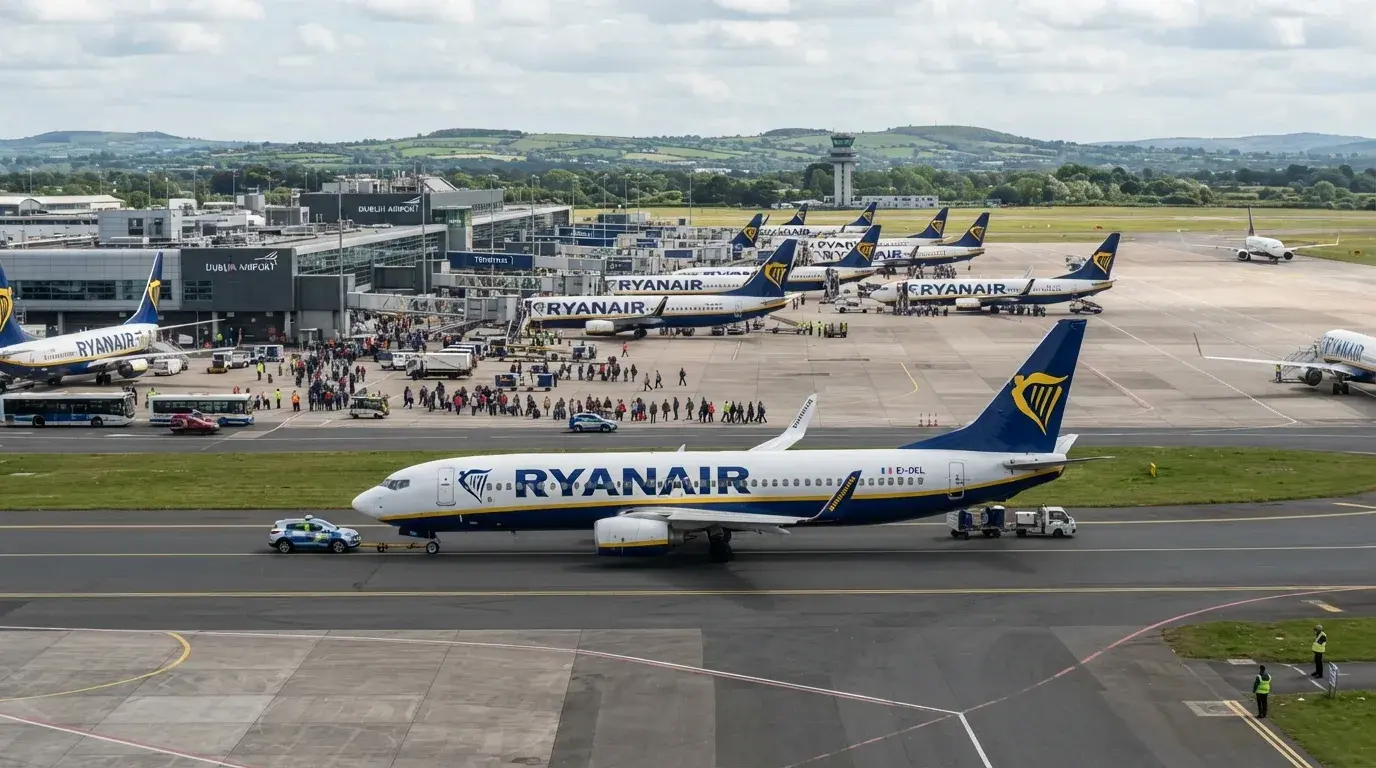
The Irish government must finally find the courage to scrap Dublin Airport’s 32-million-passenger ceiling. Ryanair is warning it may no longer be able to expand operations from Ireland’s capital if this outdated restriction remains in place. Already serving over 36 million passengers in 2026, the airline’s ambitions are being stifled by a European court ruling that upholds the cap—a decision that is costing travelers and the Irish economy dearly.
Michael O’Leary, Ryanair’s CEO, is blunt: “The time for hesitation is over.” In a scathing statement, he notes that the government of Micheál Martin pledged in 2021 to remove the cap, yet no action has been taken. Worse, a recent European Court of Justice ruling confirms the limit must be factored into slot allocations, meaning Ryanair could be denied additional slots even with Dublin’s two runways operational. A untenable situation for a carrier aiming to serve 40 million passengers by 2027.
The legal battle dates back to 2024, when the Irish Aviation Authority (IAA) capped Dublin’s capacity to comply with the ceiling. Ryanair and Aer Lingus challenged the decision, but the Court of Justice of the European Union ultimately sided with the restriction. Yet, Ireland’s Transport Minister now has the legal means to lift the cap thanks to a law passed in July 2026. So why the delay? Dublin could handle up to 60 million passengers annually with its two runways, yet a political decision is still missing.
Ryanair argues its case forcefully: passengers pay elevated airport fees to fund the second runway’s development and deserve to benefit from it. The airline highlights that Dublin already surpassed 36 million passengers in 2026, with demand continuing to rise. Removing the cap would unlock new routes, lower fares, and offer Irish travelers and tourists greater choice.
The debate extends beyond slot allocations. It’s a question of whether Ireland can remain competitive against European hubs like London, Amsterdam, or Paris. With a cap that throttles growth, Dublin risks losing market share to rivals. Ryanair, which already accounts for over 80% of Dublin’s traffic, cannot afford to stagnate.
The 32-million-passenger cap: A court decision hobbling Dublin
The Court of Justice of the European Union’s ruling in case C-857/24 is unambiguous: the 32-million-passenger cap is a legal restriction that must be considered in slot allocations. Yet this decision merely confirms what Ryanair has long argued: Dublin is underutilized. With two runways operational since August 2022, the airport could accommodate far more traffic, but an obsolete regulation stands in the way.
The issue stems from terminal expansion permits granted in 2007 and 2008, which set the annual passenger ceiling at 32 million. At the time, the limit addressed concerns over ground access, but today it is obsolete. Ryanair points out that the two main runways could handle 60 million passengers per year, making Dublin one of Europe’s most underused airports.
The airline also stresses that passengers are paying for this cap: Dublin’s airport fees are higher than elsewhere to fund the second runway’s development, yet travelers are denied the benefits. The cap prevents Ryanair from launching new routes or increasing frequencies on existing ones.
Ireland’s Transport Minister, Darragh O’Brien, has indicated he intends to act “as quickly as possible” following an environmental assessment. Yet no firm timeline has been set for lifting the cap—a delay that is costing the Irish economy dearly.
Ryanair on the frontline: Growth stifled by Dublin’s ceiling
While Ryanair isn’t the only airline affected, it is the hardest hit. Already serving over 36 million passengers in 2026, the carrier exceeds the cap by 18% and plans to reach 40 million passengers in 2027. Such growth is impossible without an immediate end to the restriction.
Ryanair outlines several benefits of lifting the cap: more choices for passengers, lower fares, and improved connectivity. The airline also notes that IAA’s 2026 decision to reduce airport fees should allow cost savings to be passed on to ticket prices. But without the cap’s removal, these advantages cannot materialize.
The urgency is heightened by the fact that other European hubs, like London-Gatwick or Amsterdam-Schiphol, operate without such limits and continue to expand. Dublin, which markets itself as the UK’s air gateway without a new runway, risks losing its competitive edge if nothing changes.
Ryanair has issued a stark warning: if the cap remains, the airline may be forced to scale back its ambitions or shift traffic to other hubs. A scenario that alarms Irish authorities, as it could curb the country’s economic growth.
What happens if Dublin remains capped?
If the Irish government fails to lift the 32-million-passenger ceiling, Ryanair and other airlines operating in Dublin will face severe constraints. Two main scenarios could unfold:
First, Ryanair may be forced to reduce frequencies or axe certain routes to comply with the cap. This would mean fewer choices for passengers and potentially higher fares, as demand continues to grow while supply remains constrained.
Second, the airline could opt to transfer some of its traffic to other Irish airports, such as Cork or Shannon, or even to foreign hubs like London or Amsterdam. Such a shift would weaken Dublin’s status and reduce its appeal as a connecting hub.
Finally, if Ryanair cannot expand in Dublin, other airlines might seize the opportunity to gain market share. However, this would not benefit the Irish economy, as jobs and revenue generated by air traffic would remain limited.
The risks are clear: a loss of competitiveness for Dublin and stunted economic growth for Ireland. A situation that neither authorities, airlines, nor passengers can afford.
Dublin 2027: A hub at a crossroads
Dublin stands at a critical juncture. On one hand, the airport boasts two operational runways, surging demand, and enormous potential. On the other, an outdated legal cap is throttling its growth and threatening its competitiveness. Removing the 32-million-passenger ceiling is now a matter of survival for Dublin as a major European hub.
The Irish government now has the legal tools to scrap the restriction, thanks to the law passed in July 2026. Yet political will to act swiftly is still lacking. A decision must be made urgently, as delays come at a cost: lost economic opportunities, uncreated jobs, and frustrated travelers.
Ryanair, ready to invest heavily in Dublin’s expansion, is waiting for a clear response. The airline emphasizes that passengers are paying for this cap and that the time for compromise is over. Either the Irish government lifts the ceiling, or Dublin risks losing its status as a major European hub.
One thing is certain: in an aviation sector undergoing rapid transformation, where connectivity and competitiveness are paramount, Dublin can no longer afford to be shackled by a decision made over 15 years ago. Scrapping the cap is an absolute urgency.
Further reading
To understand the impact of this cap on Ireland’s air traffic, consult the official data from the Irish Aviation Authority. Ryanair has also published a detailed statement on its demand to lift the cap, available on its official website.
Be the first to comment on this article
On the same topic
- Ryanair Slashes Winter Frequencies to Counter Soaring Fuel Costs—Here’s How It Affects Your Travels
- Why European Airfares Will Skyrocket Until 2029: Expensive Fuel to Reshape the Industry
- Ryanair snubs France in 29 new 2027 routes: UK regional airports and Morocco take center stage
- Boeing 737 MAX 10: Why the Software Bug Is Blocking Certification and How It Affects Your Bookings
- Ryanair doubles Baltic traffic with massive investment plan
- Ryanair and Google Cloud Partner to Revolutionize Flights with AI by 2026