Delta-Aeromexico Alliance Saved at the Last Minute: How This Legal Victory Changes Your US Flights
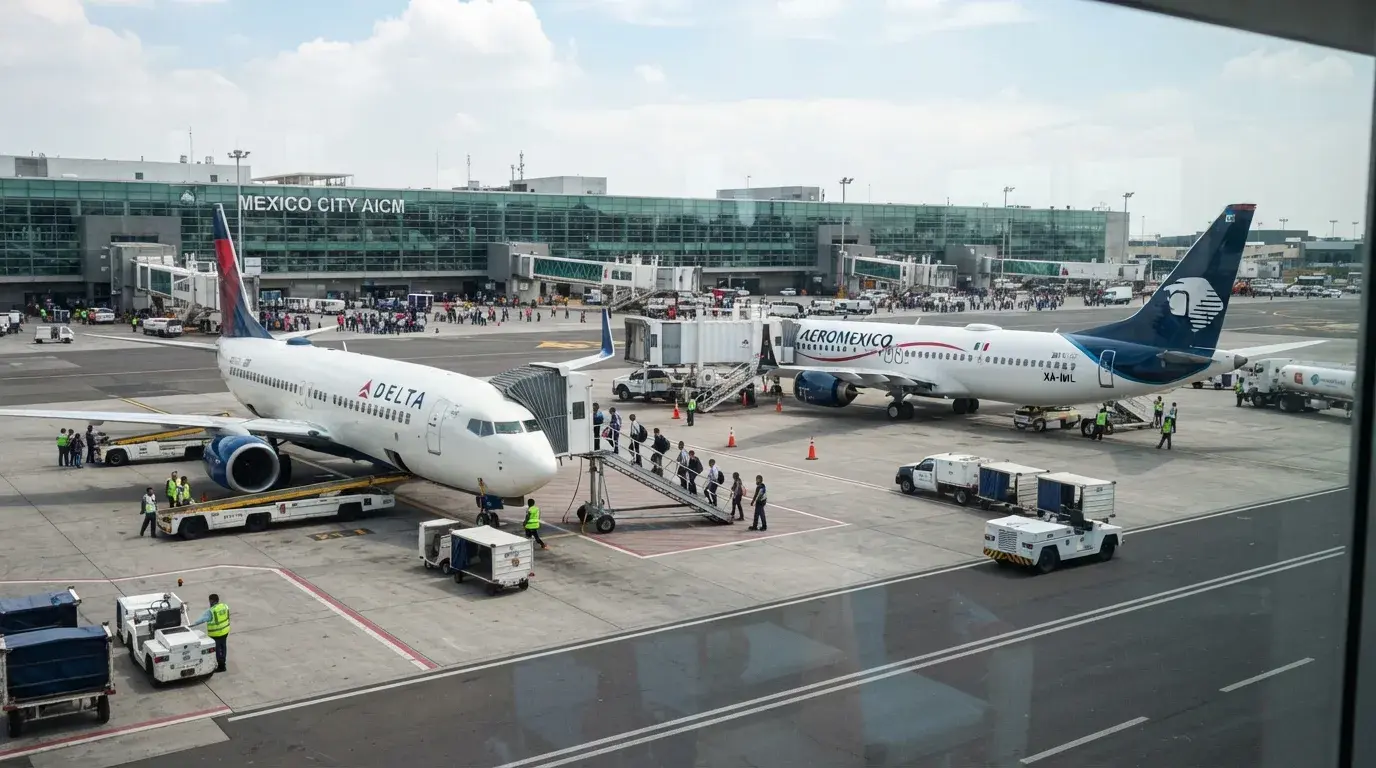
The US justice system has just delivered a verdict that could reshape your next trips between the United States and Mexico. After months of tensions between Washington and Mexico City, the US 11th Circuit Court of Appeals overturned a decision by the Department of Transportation (DOT) to dissolve the cross-border joint venture between Delta Air Lines and Aeromexico. While the ruling carries significant legal weight, its impact on passengers is immediate and tangible.
Consider booking a flight between Los Angeles and Cancún, or Dallas and Mexico City, expecting competitive fares and optimized schedules. Thanks to this alliance, these options remain—and are even strengthened. Delta and Aeromexico, both members of the SkyTeam alliance, secured a hard-won legal victory after nearly a year of court battles. Their partnership, which coordinates flight schedules, fares, and connections between the two countries, is now preserved. A boon for travelers—and for local economies on both sides of the border.
For passengers, this means the 731,335 seats scheduled monthly between the US and Mexico by this alliance will not vanish overnight. According to OAG data, Delta and Aeromexico together account for 20.4% of total capacity on this route—a significant share that ensures a diverse offering and controlled pricing. Aeromexico, with 12.3% market share, and Delta, with 8.1%, form a formidable duo against competitors like Volaris (24.5%) and American Airlines (18.5%).
A turning point for your travel plans
The conflict between Delta, Aeromexico, and US authorities dates back to 2025, when the DOT moved to terminate their joint venture, citing insufficient competitive analysis. However, the court ruled the decision was “arbitrary and capricious”, based on an overly narrow market study. The DOT had focused primarily on Mexico City’s Benito Juárez Airport without considering the broader transborder market, which is critical for millions of travelers.
This legal victory was swiftly celebrated by both airlines. Delta and Aeromexico reaffirmed their commitment to delivering “more choice, smoother travel, and enhanced connectivity”. For passengers, this translates to easier connections, better-coordinated schedules, and improved access to domestic networks in both countries. Aeromexico, whose hub is in Mexico City, benefits particularly: travelers from the US can now reach destinations like Oaxaca, Cancún, or Mérida with fewer layovers.
Beyond immediate benefits, this ruling sends a strong signal to regulators and other airlines. It underscores that well-regulated strategic alliances can enhance consumer choice and maintain competitive pricing. A lesson for travelers seeking to optimize routes between North and Latin America.
A high-stakes transborder market
The dispute between Delta, Aeromexico, and the DOT is more than a bureaucratic quarrel—it reflects broader US-Mexico tensions over airport management and slot allocations. Washington had accused Mexico City of favoring Aeromexico by restricting access to Benito Juárez, the country’s main hub. The DOT even alleged “legalized collusion”, claiming the alliance controlled nearly 60% of operations at Mexico City.
Yet the court found these concerns insufficient to justify dissolving the partnership. It highlighted the lack of updated market share data and future competitive impact assessments. Today, Delta and Aeromexico can continue operating as an integrated network without fear of abrupt service disruptions.
This stability is especially vital as the US-Mexico market remains one of the world’s most dynamic. With nearly 7.8 million travelers visiting the three host cities for the 2026 FIFA World Cup in June and July, Mexico’s appeal as a destination is undeniable. Air links between the two countries are essential to sustain tourism, business, and cultural exchange.
What this victory means for your bookings
Planning a trip between the US and Mexico in the coming months? Here’s how this decision affects you:
More flexible routing: With the Delta-Aeromexico alliance, combining tickets is now easier. For example, a Los Angeles–Mexico City flight on Aeromexico can seamlessly connect to Cancún or Guadalajara without a separate booking—saving time and money.
Better fare control: Coordinated flight programs help stabilize pricing. Both airlines can adjust fares in real time based on demand, avoiding sudden spikes or chaotic promotions. During peak periods like school holidays or national celebrations, this stability is invaluable.
Frequent flyers, especially business travelers, also benefit from shared loyalty programs. Miles earned on Delta or Aeromexico can be redeemed across either network, broadening travel options.
Enhanced connectivity to secondary destinations: Aeromexico serves over 50 destinations in Mexico, including less accessible cities from the US. With Delta’s support, these routes become more attractive as part of a cohesive global network. For instance, a Dallas–Monterrey flight can extend to Oaxaca or Puerto Vallarta without a connection break.
A boost for local economies
Beyond passenger benefits, this alliance plays a key role in the economies of both nations. Mexico, which welcomed 47.8 million international tourists in 2025, relies on aviation to attract more visitors. Links to the US, the top source market, are vital to this sector. Thanks to Delta and Aeromexico, American travelers can more easily access destinations like Mérida, Oaxaca, or Los Cabos, while enjoying a secure, competitive air offering.
For Aeromexico, this legal victory is a relief after years of challenges, including the pandemic and technical issues with its Embraer E195-E2 fleet. By solidifying its partnership with Delta, the airline strengthens its position in the North American market and prepares for expansion, including the launch of new routes like Mexico–Milan in March 2027.
What’s next? Will the DOT fight back?
Despite this victory, the case isn’t entirely closed. The DOT has announced it is reviewing “all available legal options” to challenge the ruling. The US Department of Transportation may attempt to appeal or circumvent the decision, possibly by strengthening its arguments on Mexican airport management.
For travelers, however, the message is clear: the Delta-Aeromexico alliance is here to stay. Even if new tensions arise, the current stability of air services between the two countries ensures peace of mind for future bookings. The airlines, for their part, have every incentive to maintain this cooperation, which keeps them competitive against rivals like United Airlines and American Airlines.
So, if you’re planning a trip between the US and Mexico, explore the options offered by this alliance. Whether for a beach vacation, cultural discovery, or business travel, the 731,000 monthly seats guarantee choice and convenience. And with the 2026 FIFA World Cup shining a spotlight on Mexico’s hospitality, there’s never been a better time to plan your next getaway.
Stay updated on developments with this alliance—it could inspire similar partnerships worldwide, all to the benefit of travelers.
Be the first to comment on this article
On the same topic
- Athens emerges as the new US gateway to Greece: Why this hub is winning over travelers
- Tel Aviv: Direct North American Flights Return in 2026 – What It Means for Travel
- How Delta Air Lines’ refinery strategy is reshaping airline fuel costs and ticket prices
- The Grand Return of First Class in the Skies
- Rising Fuel Costs: Delta Air Lines Posts Loss, Cuts Capacity, and Raises Fares