Istanbul overtakes Heathrow in July: Why Turkey is becoming the new star of air travel
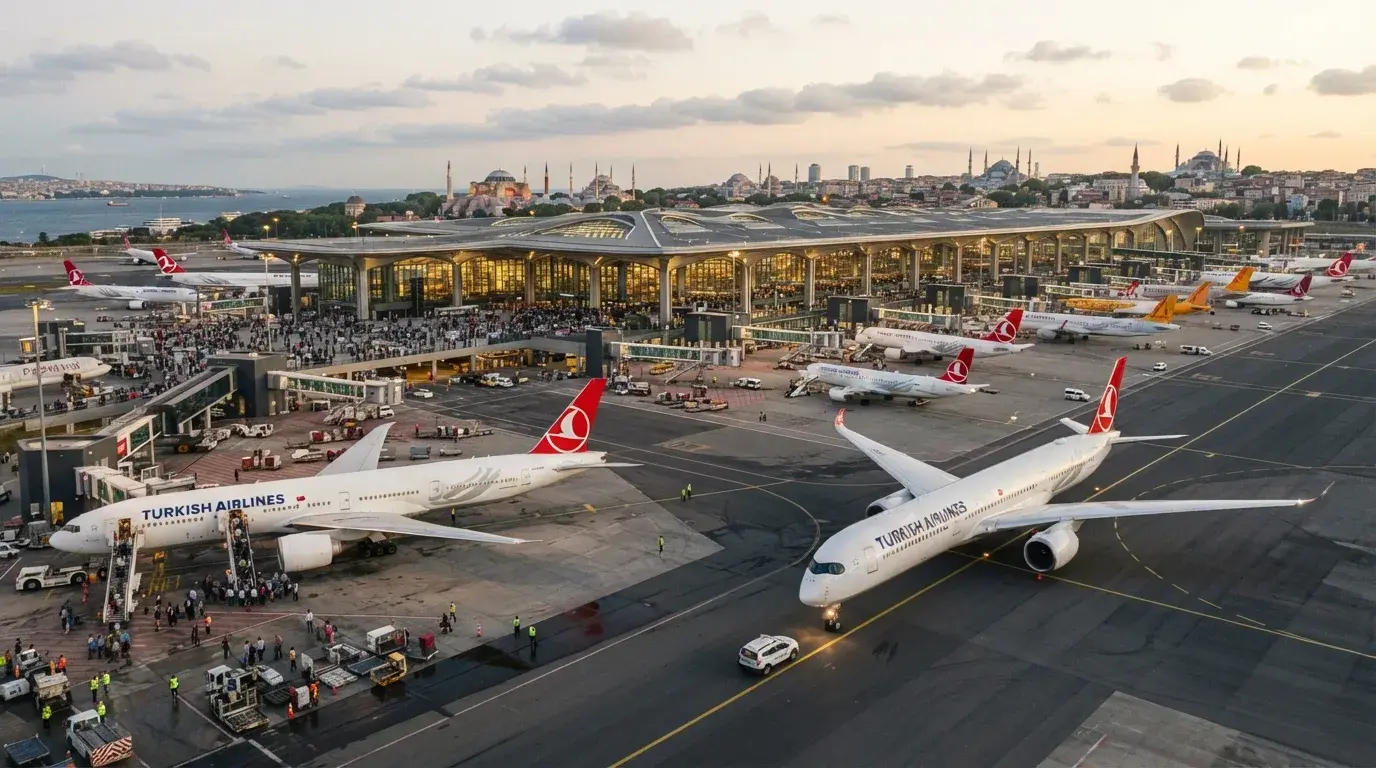
Istanbul Airport achieved a historic milestone in July 2026 by surpassing London Heathrow, becoming the first European hub to do so. This breakthrough, confirmed by official figures from Turkey’s General Directorate of State Airports, marks a significant shift in the global air traffic landscape. Behind this performance lies a strategic airport and airline policy that positions Turkey at the heart of international flows, amid a particularly volatile geopolitical context.
Between January and July 2026, Turkish airports welcomed 138.76 million passengers, a 2.6% increase compared to the same period the previous year. Domestic traffic accounted for 60.48 million travelers, while international flights represented 78.22 million passengers. In July alone, the country’s airports recorded 26.8 million travelers, including 16.31 million on international routes. These impressive figures stem from sustained tourism growth, but also from Turkey’s ability to attract travelers now avoiding Middle Eastern hubs.
Turkish Minister of Transport and Infrastructure, Abdulkadir Uraloğlu, highlighted that the number of passengers traveling by air in Turkey exceeded the combined population of 18 EU member states in the first seven months of the year. A performance that underscores the scale of air traffic growth in the country, driven by major tourist destinations such as Antalya, Izmir, Dalaman, Milas-Bodrum, and Gazipaşa-Alanya, which together welcomed 32.19 million travelers during this period.
Istanbul Airport, the country’s main hub, handled 8.15 million passengers in July, including 6.33 million on international flights. London Heathrow, previously Europe’s busiest airport, received 7.86 million passengers in the same month. This milestone, confirmed by data from Turkey’s State Airports Authority, reflects a reshaping of air traffic flows, influenced by disruptions linked to the conflict between the United States and Iran. These tensions have led to a decline in routes to the Middle East, with a roughly 20% drop in traffic at major Gulf hubs such as Doha, Abu Dhabi, and Dubai in July.
Turkey, strategically located at the crossroads of Europe, Asia, Africa, and the Middle East, is benefiting from this situation. Istanbul Airport, the country’s primary international gateway, boasts an extensive network of connections, supported by significant airport capacity and 24/7 operations. Turkish Airlines, the national carrier, operates nearly 158 international destinations from here, making it a key transit point for travelers seeking to avoid detours or overflight restrictions in the region.
While Istanbul’s rise does not yet reflect in annual airport rankings, it confirms a long-term trend: Turkey is establishing itself as a major transit hub for connections between Europe, Asia, and Africa. The national carrier, with its modern fleet and dense network, plays a pivotal role in this momentum. With 48.07 million passengers processed between January and July 2026—including 38.02 million on international flights—Istanbul is solidifying its status as an indispensable hub.
Istanbul’s two airports, Istanbul Airport and Sabiha Gökçen, have handled over 76 million passengers since the start of the year. This performance is complemented by other Turkish airports, which benefit from dynamic domestic traffic and growing appeal for international travelers. With its diverse landscapes, rich cultural heritage, and modern airport infrastructure, Turkey is emerging as a standalone destination for travelers while serving as a transit hub for millions of passengers.
A bold airport and airline strategy
Turkey’s air traffic growth is not solely driven by tourism. It also results from an ambitious airport policy, with massive investments in infrastructure and continuous modernization of facilities. Istanbul Airport, opened in 2019, is designed to accommodate up to 200 million passengers annually, making it one of the world’s largest airports. Its capacity to handle massive international traffic is a major asset for Turkey amid the reshaping of air traffic flows.
Turkish Airlines has leveraged this infrastructure to expand its network. The carrier now operates flights to over 150 international destinations from Istanbul, with high-frequency services and capacity tailored to traveler needs. Its hub model, based on quick connections and quality service, allows it to capture travelers avoiding Middle Eastern hubs due to geopolitical tensions.
Turkey is also capitalizing on diverse tourist destinations capable of attracting visitors year-round. Antalya, for instance, is a popular destination for its beaches and Mediterranean climate, while cities like Izmir and Ankara draw visitors for their historical and cultural heritage. This diversity enables Turkey to appeal to a broad audience, from vacationers to business travelers and cultural tourists.
Turkey’s strategy also includes favorable tax policies for airlines, which has attracted carriers like Wizz Air, which recently announced the opening of a base in Istanbul. Scheduled for 2027, this base will allow the Hungarian low-cost carrier to strengthen its presence in Eastern Europe and Turkey, capitalizing on the country’s traffic growth and modern infrastructure.
A geopolitically favorable context for Turkey
Istanbul’s rise as a major air hub occurs amid a particularly complex geopolitical landscape. The conflict between the United States and Iran has disrupted operations and connections at several Middle Eastern hubs, including Doha, Abu Dhabi, and Dubai. Overflight restrictions, route modifications, and market uncertainties have led to a decline in routes to the region, benefiting Istanbul.
Turkey, positioned at the crossroads of Europe, Asia, and Africa, has become a natural alternative for travelers and airlines. Istanbul Airport, with its capacity to handle massive international traffic and modern infrastructure, has emerged as a mandatory transit point for travelers seeking to avoid detours or overflight restrictions in the region. This situation has allowed Turkey to capture a share of travelers who would otherwise have transited through Gulf hubs.
This reshaping of air traffic flows has also been fueled by the recovery of inbound tourism to Turkey, particularly driven by travelers from China and Japan. Foreign visitors accounted for 44.4% of Istanbul Airport’s total traffic in Q2 2026, a record high. Transit traffic at the airport surged by 18.1% year-on-year to 4.24 million passengers, confirming Turkey’s growing appeal as a transit hub.
While other platforms, such as those in Eastern Europe or Central Asia, could also benefit from this realignment of traffic flows, Istanbul holds a decisive advantage: its geographical position, modern infrastructure, and dense air network make it a destination of choice for airlines and travelers alike.
What does this mean for travelers?
For travelers, Istanbul’s emergence as a major air hub offers several advantages. First, Turkey now provides shorter connections and more direct routes between Europe, Asia, and Africa. Travelers can avoid traditional detours through the Middle East, reducing flight times and associated costs.
Second, Turkey offers a wide variety of tourist destinations capable of attracting visitors year-round. Antalya, Izmir, and Ankara are cities rich in history and culture, while Mediterranean coastal resorts draw visitors for their climate and beaches. Travelers can combine technical layovers with cultural or beachside discoveries.
Finally, Turkey has become a standalone destination for travelers. With its diverse landscapes, historical heritage, and modern infrastructure, the country is increasingly attracting international tourists. Airlines like Turkish Airlines now offer direct flights between Istanbul and numerous European cities, making Turkey more accessible to travelers.
For airlines, Turkey represents a major opportunity. Carriers can develop regional hubs, tap into new markets, and benefit from favorable tax policies. The presence of Wizz Air in Istanbul, for example, will allow the Hungarian low-cost carrier to strengthen its footprint in Eastern Europe and Turkey, capitalizing on the country’s traffic growth and modern infrastructure.
In conclusion, Turkey is establishing itself as the new star of air travel, thanks to an ambitious airport and airline strategy, a favorable geopolitical context, and a wide range of tourist destinations. Istanbul, with its modern airport and dense network, has become an indispensable hub for travelers and airlines amid the reshaping of global air traffic flows.
Travelers seeking shorter connections, more direct routes, or diverse destinations now have a new option to consider: Turkey. With its modern infrastructure, dense air network, and varied landscapes, the country has become a standalone destination for travelers and a major transit hub for airlines.
How to take advantage of this trend?
For travelers looking to capitalize on this new dynamic, several options are available. First, it’s possible to book flights with a layover in Istanbul, taking advantage of connections offered by Turkish Airlines or other carriers. These layovers allow travelers to explore the city, its landmarks, and culture while enjoying a more direct route to their final destination.
Second, Turkey now offers direct flights from numerous European cities, making the country more accessible to travelers. Airlines like Turkish Airlines and low-cost carriers such as Wizz Air operate regular routes to Istanbul or other Turkish cities at competitive prices. Travelers can combine a stay in Turkey with a trip to another destination, leveraging the connections offered by Turkish airports.
Finally, for travelers eager to explore Turkey, the country offers a wide range of tourist destinations. From historic cities like Istanbul, Ankara, or Izmir to Mediterranean beach resorts, the Taurus Mountains, or the unique landscapes of Cappadocia, Turkey has something to captivate every type of traveler. With its modern infrastructure and dense air network, the country has become an unmissable destination for travel enthusiasts.
Be the first to comment on this article
On the same topic
- Turkish Airlines makes bold move: 150 Boeing 737 MAX ordered, a daring bet to reshape European skies
- Istanbul Airport’s New East-West Runway Revolutionizes Global Air Traffic
- Singapore Airlines Tops 2026 Airline Rankings: Air France Wins Best First Class
- Turkish Airlines Revives Premium Economy in 2028: What Travelers Need to Know
- Turkish Airlines Suspends 18 Destinations Amid Soaring Jet Fuel Prices