Paris-Orly 2027: The New Carriers Set to Transform Your European Travels
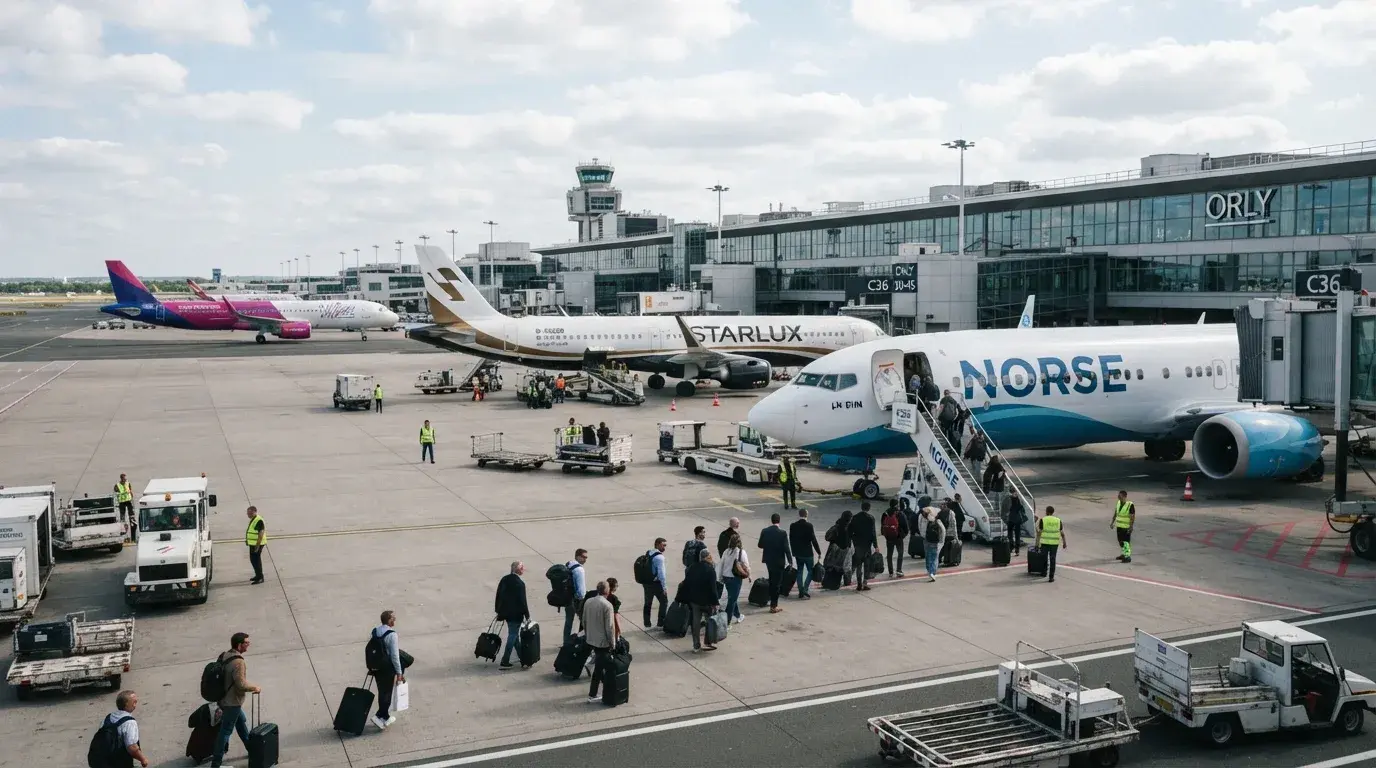
Paris-Orly is poised for a major transformation in summer 2027, with the arrival of four new carriers set to expand the airport’s European route offerings. Eurowings, Middle East Airlines, Air Arabia Maroc, and SkyUp MT have secured slots to serve Düsseldorf, Beirut, Fès, and Chisinau, providing travelers with fresh options for urban escapes, cultural trips, or family reunions. This redistribution of slots, made possible by Ryanair’s withdrawal, marks a turning point in Paris-Orly’s development strategy, where demand far outstrips available supply.
These four airlines—two of which already operate in Europe—will introduce a diversity of services and pricing that could appeal to passengers seeking flexibility. Eurowings, a Lufthansa Group subsidiary, will offer competitive fares on the Paris-Düsseldorf route, while Middle East Airlines, Lebanon’s renowned carrier, will launch a service to Beirut. Air Arabia Maroc, a specialist in low-cost flights to North Africa, will connect Paris to Fès, and SkyUp MT, Ukraine’s operator, will link the French capital to Chisinau. These routes, still in the planning phase, could become essential for travelers from the Île-de-France region by 2027.
The allocation of these slots comes amid sustained demand for flights to Europe, despite economic uncertainties. According to Cohor, the body responsible for slot coordination at Paris-Orly, over 21,000 slot requests were submitted for just 4,368 available slots—a five-to-one ratio. This pressure underscores the airport’s enduring appeal as a major gateway for international travel from France.
The new operators must now finalize their commercial plans, with launch dates and schedules to be announced in the coming months. For travelers, this diversification could mean more affordable fares, broader geographic coverage, and easier connections to previously underserved destinations from Paris.
Slots Freed by Ryanair’s Exit
Ryanair’s decision to abandon its Paris-Orly project played a pivotal role in this redistribution. The Irish carrier, which had planned to launch routes to Bratislava and Bergamo in 2025, ultimately did not proceed, freeing up additional slots. According to Antoine Lapert, Director of Cohor, roughly a third of the 4,368 redistributed slots stemmed from Ryanair’s abandoned project. This decision created an opportunity for other carriers to develop new routes from the Parisian airport.
For passengers, this shift could translate into increased frequencies on certain routes or the launch of entirely new services. The successful airlines must now finalize their plans, balancing operational constraints with traveler expectations. The first three carriers—Eurowings, Middle East Airlines, and Air Arabia Maroc—will operate their flights using Airbus A320s, while SkyUp MT will use a Boeing 737-800 to connect Paris to Chisinau.
Redistribution Governed by EU Rules
The slot allocation followed strict European Union regulations, which prioritize half of the available slots for “new entrants.” This technical designation does not necessarily apply to airlines entirely unknown to the airport but rather to operators that were not previously active there or had not operated flights recently. The 2,184 slots reserved under this priority were allocated accordingly.
The selected carriers must now confirm their routes by winter 2027-2028 or risk losing their slots. This requirement ensures that new services are actually launched and benefit travelers. For the airlines, this redistribution represents an opportunity to strengthen their presence in a highly competitive Parisian market.
Other beneficiaries of this redistribution include Air Corsica (Ajaccio), LOT Polish Airlines (Gdańsk), Transavia Airlines (Salerno), easyJet Europe (Belgrade and Belfast-City), French bee (Dubai-Al Maktoum), and Royal Air Maroc (Tétouan, Laâyoune, and Zagora). These allocations highlight that the diversification of Paris-Orly’s offerings extends beyond new operators to include established carriers on other routes.
Opportunities for Travelers in Île-de-France
For passengers residing in the Île-de-France region, the arrival of these new carriers could be a game-changer for travel within Europe and beyond. Routes to Düsseldorf, Beirut, Fès, and Chisinau offer opportunities for short getaways or business trips, potentially at more attractive fares than those offered by existing carriers at Orly.
Travelers can look forward to new connections to previously less accessible destinations or simply benefit from increased competition on existing routes. Airlines will now need to differentiate themselves through service quality, pricing, or frequency to win over passengers from the region. This slot redistribution could mark the beginning of a new era for Paris-Orly, where travel options expand and diversify.
Travelers interested in these new routes should stay tuned for announcements from the airlines, which will detail launch dates and booking procedures in the coming months. With such strong demand, these new services are likely to gain rapid popularity upon launch.
A Bold Gamble for Paris-Orly’s Future
The allocation of slots to four new carriers is a bold bet for Paris-Orly, which aims to bolster its appeal against other Parisian airports like Charles de Gaulle. With an annual capacity of 4,368 slots, the airport remains a key player in European air transport, but surging demand demands rigorous management of its resources.
The new operators must now prove their ability to operate these slots efficiently and profitably while meeting traveler expectations. For Cohor, this redistribution is a response to growing demand for flights to Europe, where travelers seek increasingly diverse and accessible options.
With these new routes, Paris-Orly could reclaim some of its former dynamism, when travelers could choose from a multitude of destinations without needing to connect through other airports. The challenge for the airlines will be to turn this opportunity into commercial success while delivering a high-quality travel experience to passengers.
Be the first to comment on this article
On the same topic
- TAP in search of a new partner: Why France and Germany are vying for the Portuguese flagship
- EU Cracks Down: Carbon Tax Extended to Short-Haul Flights from 2029 – Costs for Airlines and Travelers
- Biometric checks at Schengen borders: European airports under strain
- Schiphol freezes its charges for 2026: what impact on ticket prices and competition between European hubs?
- Dubai sets a new record with 46 million travellers in the first half of the year
- Lyon-Saint Exupéry: an artistic and interactive adventure for travellers before their flight