easyJet Expands Winter Routes from the UK: A Strategy Set to Transform European Getaways
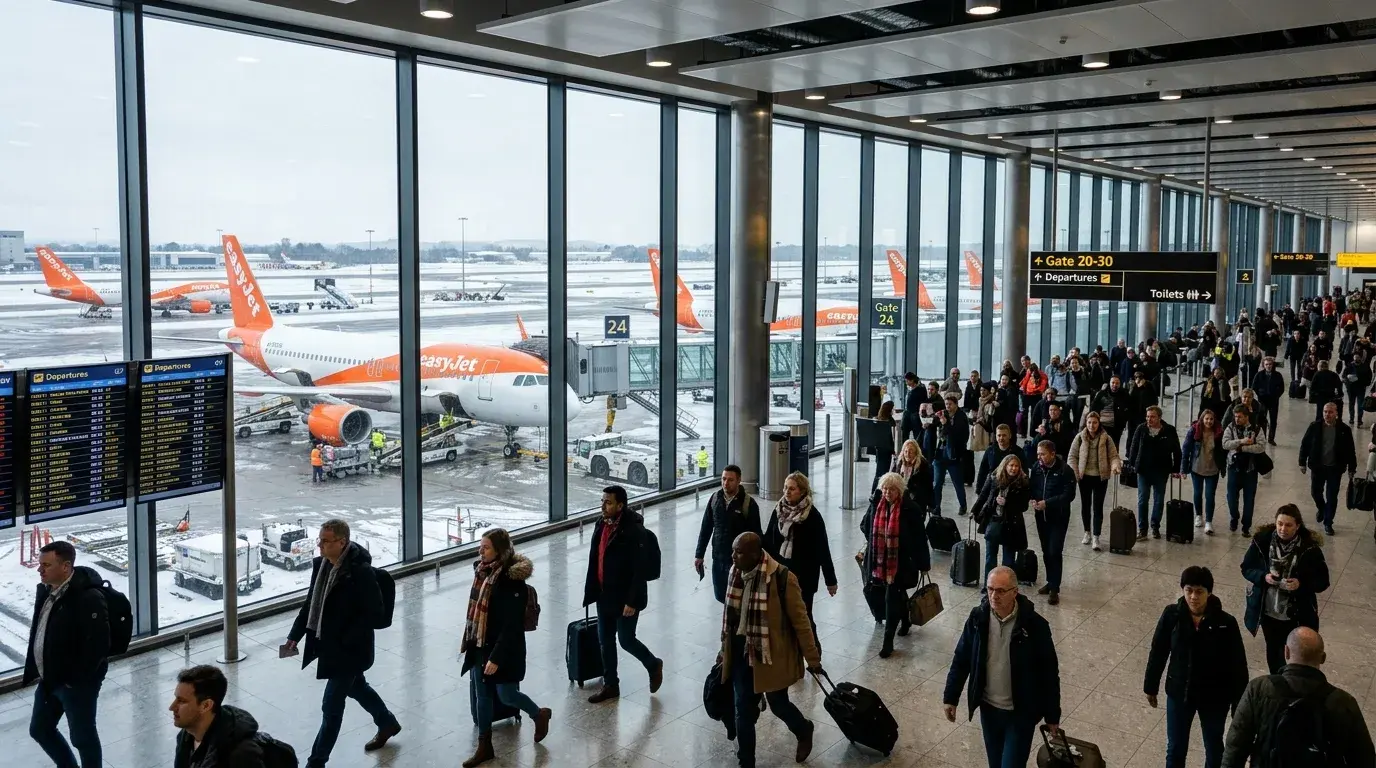
As winter approaches, easyJet is making a bold move by launching 13 new winter routes from eight UK airports. This commercial offensive is set to transform the travel experience for European holidaymakers during the off-season. With a mix of sun destinations, urban getaways, and ski resorts, the UK-based low-cost airline is diversifying its offering to capture every segment of the leisure market, as competitors focus on pricing and flexibility.
easyJet’s strategy hinges on a daring bet: desaisonnalizing air traffic by targeting travelers who previously only flew in the summer. By introducing routes like London-Luton to Kittilä in Finland or Reykjavik, the airline is directly appealing to winter sports enthusiasts—a rapidly growing market. Meanwhile, connections like London-Southend to Edinburgh or Birmingham to Copenhagen cater to city-break demand, which remains strong even in winter. The crowning achievement? A first international route from Newquay in Cornwall to Geneva, opening up Switzerland to passengers from the UK’s most remote regions.
The numbers speak for themselves: easyJet expects to carry over 50 million passengers during the 2026 summer season, a volume that positions the airline as Europe’s leading low-cost carrier. This growth is driven by a targeted expansion of regional airports, a strategy that proves effective against the structural limitations of London’s major hubs. Manchester, Newcastle, and Liverpool… These cities are becoming the new engines of the easyJet network, with routes that respond to strong local demand often overlooked by other carriers.
Manchester to Cairo: A Direct Flight Redefining Egypt’s Tourism Map
Among the most notable announcements, easyJet will become the only airline to offer a direct flight between Manchester and Cairo, via Sphinx International Airport, located just a stone’s throw from the Pyramids of Giza. This route, aligned with the strong winter tourism trend in Egypt, provides privileged access to the Red Sea region and western Cairo—two areas experiencing rapid tourism growth. For UK travelers, it promises a hassle-free journey without layovers or connections, a compelling argument in a market where convenience trumps price.
Egypt, already a favorite among European tourists for its beach resorts like Hurghada, is solidifying its status as a must-visit winter destination. easyJet is capitalizing on this momentum by offering tailored frequencies, with departures timed to align with UK school holidays. A winning strategy, as the country invests heavily in its tourism infrastructure to attract an increasingly diverse clientele.
This route also highlights a broader trend: the emergence of new gateways to traditional destinations. By avoiding London’s congested hubs, easyJet reduces travel time and logistical constraints—a major advantage for time-strapped or family travelers.
Newcastle, Liverpool, and the UK Regions: The New Face of Low-Cost Aviation
easyJet’s expansion into UK regional airports marks a turning point in the low-cost airline strategy. In Newcastle, where the airline opened a base in March 2026, the network has quadrupled in just a few months, growing from 8 to 31 destinations. This rapid expansion reflects surging local demand but also easyJet’s goal to reduce its dependence on London’s crowded and costly hubs.
Liverpool, with its new routes to Reykjavik and Kittilä, reinforces this trend. Long seen as a secondary airport, Liverpool is now a springboard for UK travelers seeking access to Scandinavian or Icelandic ski resorts. Meanwhile, Newquay’s first international flight to Geneva opens the door to a new clientele—travelers from the UK’s most remote regions, who often had to route through London for their trips.
This strategy is built on a simple observation: UK regional travelers are willing to pay more to avoid the hassles of major airports. easyJet has capitalized on this by offering tailored frequencies, optimized schedules, and a streamlined on-board experience—without the endless queues typical of London’s airports.
A Winter Offer Reflecting Europe’s Changing Tourism Landscape
The 2026-2027 winter season is shaping up to be one of diversification. easyJet is no longer limiting itself to sun destinations; the airline is now offering a balanced mix of urban getaways, winter sports, and cultural trips. Berlin, Copenhagen, Strasbourg, Hurghada, Cairo… These cities and regions are now more accessible thanks to this expanded offering.
For French travelers, this expansion presents a unique opportunity. Routes from the UK to destinations like Finland or Iceland can serve as starting points for longer itineraries, particularly to Scandinavia or the Baltic states. Similarly, city breaks to Berlin or Copenhagen become more affordable, with fares often lower than those from Paris or Lyon.
The low-cost carrier isn’t stopping there: it’s also forging partnerships with local providers to offer all-inclusive packages, including accommodation and activities. An approach that increasingly appeals to budget-conscious travelers who refuse to compromise on quality.
What’s Next? Europe’s Low-Cost Market Faces Its Challenges
easyJet’s offensive comes at a time of intense competition in the European market. Ryanair, Jet2, and Wizz Air are rolling out similar announcements, while traditional carriers like Air France and Lufthansa are adapting by developing their own low-cost offerings. The battle over pricing and connectivity is fiercer than ever, with major implications for regional airports and tourist destinations alike.
For passengers, the benefits are twofold: a wider range of options and more attractive fares, even in the off-season. However, this dynamic also raises questions about the environmental sustainability of air travel. Like its competitors, easyJet will need to justify its choices in the face of growing criticism over the aviation sector’s carbon footprint. The airline is banking on newer aircraft and better rotation management to minimize its impact, but the equation remains complex.
One thing is certain: The 2026-2027 winter season is poised to be a pivotal period for European tourism. Thanks to bold strategies like easyJet’s, travelers will have the chance to explore off-the-beaten-path destinations, avoid summer crowds, and enjoy competitive fares. A revolution in the making that could reshape travel habits for years to come.
For those dreaming of skiing in Finland, discovering Copenhagen in December, or escaping to Cairo without routing through Paris, now is the time to book. Spaces are limited, and opportunities abound.
Be the first to comment on this article
On the same topic
- Aegean Airlines to Take Control of Volotea: What It Means for Your European Travels
- Wizz Air invests $100 million in Brașov: The A321neo set to revolutionize travel in Eastern Europe
- Frontier Airlines Revolutionizes Airbus Fleet with Starlink Wi-Fi by 2027: What It Means for Budget Travel
- Norwegian Acquires Nordic Leisure Travel Group: The Norwegian Low-Cost Giant Becomes an Integrated Travel Powerhouse
- How AirAsia is Reshaping the Future of the A220 with High-Density and Potential A220-500