Saint-Martin in 2026: Why This Caribbean Gem Is Booming and How to Visit on a Budget
The Caribbean draws millions of travelers every year, but one destination is standing out in 2026: Saint-Martin, the dual-island shared by France and the Netherlands. With an 18% increase in tourist arrivals between April 2025 and March 2026, according to figures from the Caribbean Hotel and Tourism Association, the island is cementing its status as the beacon of the Antilles, far ahead of its neighbors. In the first quarter of 2026, air arrivals soared by 23% compared to the previous year—a record that raises a question: what’s behind this success, and how can you enjoy it without falling into the traps of crowded layovers or sky-high accommodation prices?
Saint-Martin captivates with its perfect balance of pristine beaches, multicultural heritage, and nautical experiences. No longer just a cruise stop or a quick tourist pitstop, the island has emerged as a standalone destination where you can alternate between relaxation on secluded coves, exploration of colorful villages, and catamaran getaways between the islands. Yet behind this momentum lie logistical challenges and sometimes steep costs. Here’s how to plan a trip to Saint-Martin in 2026 without getting bogged down by queues or blown budgets.
The key to fully enjoying Saint-Martin lies in thorough preparation. The island, split between a French north and a Dutch south, offers radically different vibes: on the French side, Grand Case and its gourmet restaurants, or on the Dutch side, Philipsburg and its lively beaches. To avoid crowds, timing is everything. Peak season (December to April) remains the most popular, but since 2025, the season has stretched year-round, with record crowds even in summer. Local authorities are actively promoting this off-peak travel, as evidenced by the new slogan “It’s Always St. Martin”, encouraging visitors to explore the island in a less conventional way.
Why is Saint-Martin such a hit? First, its enhanced air connectivity plays a major role. Princess Juliana International Airport (SXM) on the Dutch side has become a regional hub, facilitating connections to nearby islands like Anguilla, Saint-Barthélemy, or Saint-Thomas. In March 2026, it even recorded a record of nearly 11,000 transit passengers in a single day—a figure that underscores its central role in Caribbean air traffic. For travelers coming from France, Air Caraïbes and Air France have progressively deployed the Airbus A350 to Saint-Martin, offering superior comfort (quieter cabins, more spacious premium seats) and a reduced environmental footprint. Since July 3, 2026, a direct route between Fort-de-France and Saint-Martin has even been launched by Air Caraïbes, operating twice weekly, further simplifying access from mainland France.
But beyond flights, it’s the range of activities that sets Saint-Martin apart. A catamaran cruise between Saint-Martin and Saint-Barthélemy remains a must-do to experience the turquoise Caribbean at its best. Providers like Catlante Catamarans or Dream Yacht Charter offer multi-day itineraries combining sailing, snorkeling, and dips in crystal-clear waters. On the French side, Grand Case, dubbed the island’s “culinary capital,” delights with its seaside restaurants and local markets, while Marigot, the capital, invites leisurely strolls along the waterfront and a visit to Fort Louis for panoramic views. The beaches never disappoint: Orient Bay for its festive vibe, Anse des Colombiers for its wild side, or Maho, famous for the planes flying overhead during takeoff.
A Destination in Transition: Infrastructure and Sustainability Take Center Stage
Beyond the beaches and restaurants lies another reality: Saint-Martin is reinventing itself. Ratified in July 2026, the border agreement between France and the Netherlands finally clarified territorial uncertainties, particularly around Oyster Pond, a key tourist hub. This breakthrough has paved the way for new real estate and hotel projects, with accommodation capacity increasing by 3,500 rooms, all while adhering to a sustainable development approach. Several operators have earned GSTC (Global Sustainable Tourism Council) certification, and an electric tourist train has been introduced in Sint Maarten to reduce the carbon footprint of local transport.
Cultural events are also driving this off-peak diversification. The Saint-Martin Carnival, SXM Festival, Heineken Regatta, and St. Maarten Flavors (a month dedicated to gastronomy) now punctuate the year, attracting visitors well beyond the traditional winter months. For travelers seeking authenticity, these initiatives offer an alternative to classic tourist getaways while supporting the local economy.
But be warned: this controlled growth doesn’t mean Saint-Martin has become an affordable destination. High-end accommodations, cruises, and gourmet restaurants come with steep price tags, especially during peak season. To keep costs in check, it’s wise to book early, particularly for direct flights from France (Air France and Air Caraïbes offer competitive fares if you plan ahead) and catamaran rentals. Flight comparison tools like Skyscanner or Kayak can help snag discounted tickets, while booking platforms like Booking or Airbnb offer more accessible lodging options on the French side of the island.
How to Avoid Pitfalls and Make the Most of Your Stay
First rule: choose your timing wisely. If you prefer to steer clear of crowds, opt for April, May, or October, when temperatures remain pleasant and prices are more reasonable. Avoid December to March at all costs—this is when flight and hotel prices can double. Second tip: diversify your experiences. Instead of sticking to one beach or village, explore both sides of the island. For example, spend a day on the French side to savor the cuisine in Grand Case, then another on the Dutch side for shopping in Philipsburg and a day at Maho Beach.
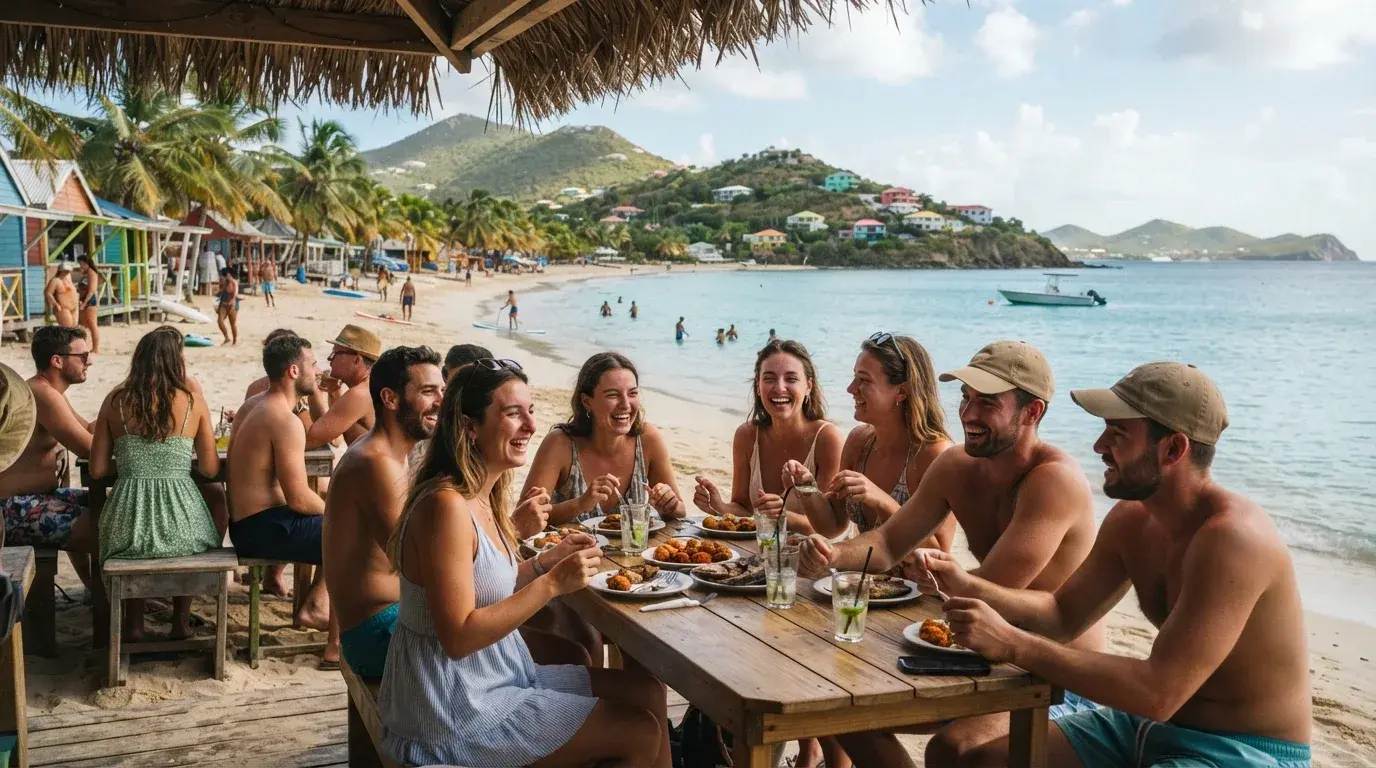
For transport, renting a car is often essential for exploring the island at your own pace. Local agencies offer vehicles at varying rates, but watch out for hidden fees (insurance, fuel). An alternative is to use local taxis or minibuses, which are cheaper but less flexible. For activities, favor excursions organized by local providers over international tour operators, which tend to be pricier. And don’t forget to sample the local specialties: conch fritters, fresh grilled fish, or cod fritters are must-tries at the island’s beachside eateries.
Saint-Martin in 2026: A Two-Speed Destination?
Behind Saint-Martin’s apparent success lie challenges. The surge in tourist arrivals has put pressure on local infrastructure, particularly waste management and water supply. Authorities emphasize the need for responsible tourism, but travelers must also do their part by avoiding harmful behaviors (such as collecting coral or dumping waste at sea).
For those seeking authenticity, Saint-Martin still offers hidden gems far from the tourist hotspots. The Anse Marcel nature reserve on the French side or the hiking trails to viewpoints like Pic Paradis on the Dutch side reveal untouched nature. Divers will appreciate the Man of War Shoal Marine Park, where marine biodiversity is exceptional.
In short, Saint-Martin in 2026 is a destination that has evolved to appeal to a broader audience without sacrificing its authenticity. Its success lies in a unique blend of paradise beaches, multicultural culture, and nautical adventures, all within a framework where sustainability is becoming a priority. To make the most of it, all it takes is careful trip planning—avoiding peak periods and favoring local experiences. One thing’s certain: the island will surprise you, whether you’re here for a catamaran getaway or a mix of gastronomy and relaxation.
Ready to discover Saint-Martin in a new light?
Book a flight to Saint-Martin with Air Caraïbes
Book a flight to Saint-Martin with Air France
Explore catamaran cruises between Saint-Martin and Saint-Barthélemy
Be the first to comment on this article