Air Canada Launches A321XLR on Lyon Route: The Long-Haul Revolution Transforming Travel
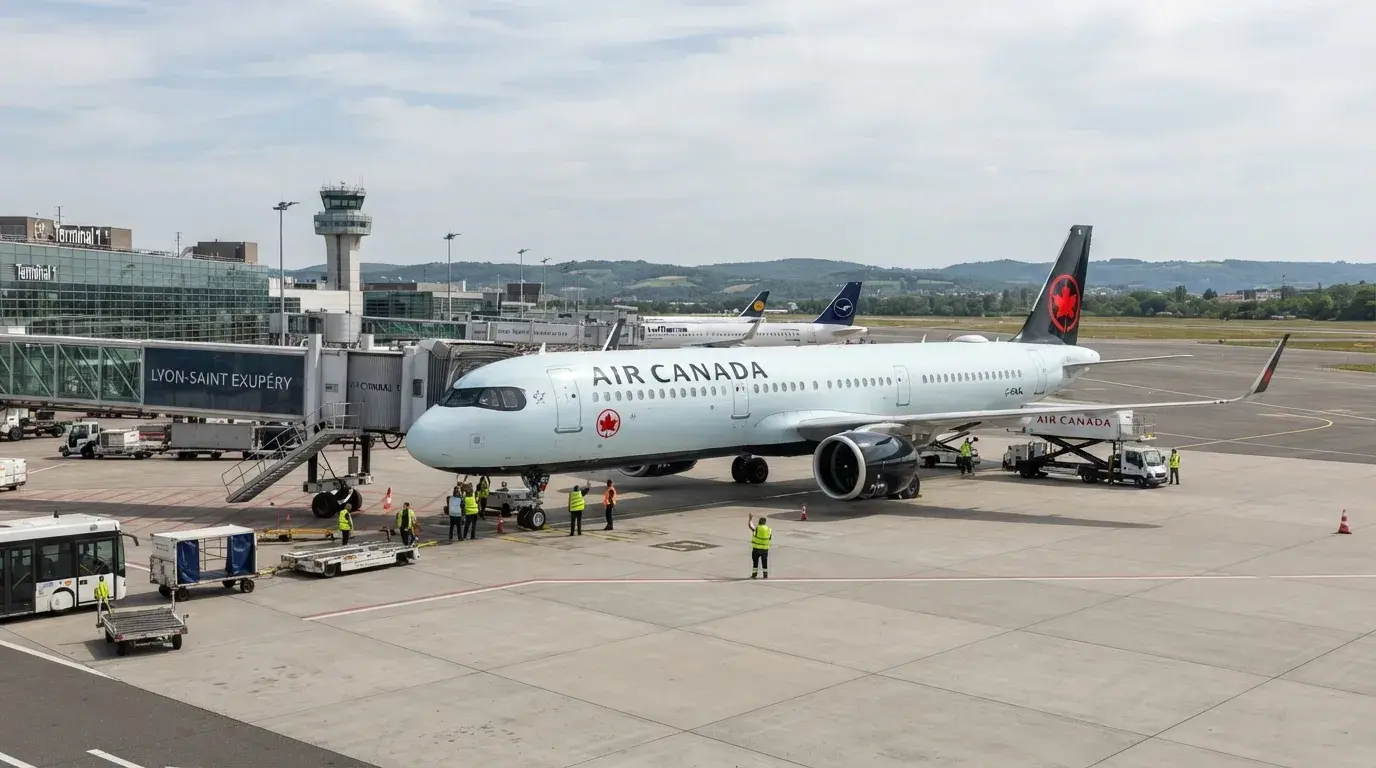
Lyon’s skies are transforming with the arrival of an aircraft that redefines the rules of transatlantic travel. Since September 8, Air Canada has operated its Airbus A321XLR on the regular route between Montréal-Trudeau and Lyon-Saint Exupéry, offering travelers a more flexible alternative to traditional widebodies. This long-haul narrowbody, designed to connect lower-density destinations nonstop, marks a key milestone in the strategy for Lyon’s airport connectivity.
The aircraft, configured in a two-class layout with 14 lie-flat seats in Air Canada Signature business class and 168 seats in economy, delivers long-haul service in a more compact frame. With a range of 8,700 km and an endurance of eleven hours, the A321XLR enables direct connections where traffic demand doesn’t justify an Airbus A330 or Boeing 787. For Lyon, this service builds on a route opened in 2016, now enhanced by a product better aligned with market evolution.
Air Canada is leveraging this innovation to attract both business and leisure travelers seeking increased frequencies and simplified connections. The Canadian carrier plans up to five weekly rotations this fall, emphasizing that Lyon remains Air Canada’s only year-round French stopover between Canada and Europe using the A321XLR—an exclusive that could appeal to efficiency-focused travelers.
With this addition, Lyon is positioning itself as a strategic hub for connections to Canada, the United States, Mexico, and the Caribbean. Passengers also benefit from the U.S. preclearance facility in Montréal, sparing them from arrival formalities in the United States—a feature particularly valued by business travelers.
This initiative reflects a broader trend: the adaptation of fleets to air traffic realities. While widebodies still dominate intercontinental routes, aircraft like the A321XLR enable airlines to better match capacity and open new routes without excessive costs. A quiet revolution with major implications for travelers.
The A321XLR: Redefining Long-Haul Standards
The Airbus A321XLR is unlike any other aircraft. Designed to fly up to 4,700 nautical miles (8,700 km) and endure eleven hours aloft, it combines the agility of a narrowbody with the comfort and range of a long-haul jet. Its primary advantage lies in serving lower-traffic destinations without compromising service quality—a boon for cities like Lyon, where transatlantic demand doesn’t always justify an Airbus A350 or Boeing 777.
Airbus positions the A321XLR as ideal for routes carrying 180 to 220 passengers in a two-class configuration. For Air Canada, it also meets the expectations of a discerning clientele, particularly in business class. The 14 lie-flat seats in Signature cabins offer space and comfort comparable to top-tier long-haul products, all within a more fuel-efficient aircraft. A compelling argument in an era where sustainability is a key traveler consideration.
The aircraft’s configuration on the Lyon route is a textbook example: 182 seats total, with individual in-flight entertainment screens, power outlets at every seat, and complimentary Wi-Fi for Aeroplan members. An offering designed to appeal to both business travelers and leisure passengers seeking flexibility.
This strategy aligns with a broader trend of fleet modernization. Airbus has already delivered over 100 A321XLRs to carriers like Qantas, Delta Air Lines, and JetBlue, underscoring strong market appetite. For Air Canada, the A321XLR’s arrival in Lyon marks a European first, following summer trials in Toulouse and Nantes—a testament to innovation extending beyond primary hubs.
Lyon: Air Canada’s New Transatlantic Gateway
Since its launch in 2016, the Lyon–Montréal route has seen steady growth, driven by demand from French and Canadian travelers. With the A321XLR, Air Canada is taking a significant step forward by offering increased frequencies and a product better tailored to market needs. Up to five weekly flights are scheduled this fall, with plans to scale up by summer 2027.
Lyon Airport, which is expanding its international connectivity, sees this as a strategic asset. Élodie Demonceaux, Commercial and Marketing Director at Aéroports de Lyon, highlights how the A321XLR fosters “more sustainable connectivity” while enhancing the region’s appeal. A vision shared by the airline, which is leveraging Lyon to feed its Montréal hub and offer connections across North America, Latin America, and the Caribbean.
For passengers, the benefits are manifold: more flexible schedules, simplified connections via U.S. preclearance in Montréal, and an optimized travel experience. The A321XLR also allows Air Canada to better respond to seasonal fluctuations—a critical advantage for a route like Lyon–Montréal, where demand varies sharply between summer and winter.
This service aligns with Air Canada’s broader strategy to strengthen its European presence. With the A321XLR, the airline gains a flexible tool to launch new routes or adjust capacity based on demand. An approach that could inspire other carriers, particularly in Europe, where many transatlantic routes operate at lower traffic densities.
Connections and Services: What the A321XLR Changes for Travelers
One of the A321XLR’s standout features is its ability to deliver a long-haul experience on direct routes. For business class passengers, the 14 lie-flat seats in Signature cabins ensure optimal comfort, with personal space comparable to premium long-haul products. Fully reclining seats enable sleep akin to first class—a major draw for business travelers.
In economy, the offering remains competitive with spacious seats, individual in-flight entertainment, and power outlets at every seat. Air Canada also emphasizes its Aeroplan program, allowing members to earn miles on this route—a further incentive for frequent flyers.
For passengers connecting in Montréal, the advantages are twofold: U.S. preclearance enables immigration formalities to be completed before departure, eliminating queues upon arrival in the United States. A particularly useful option for travelers transiting to New York, Los Angeles, or Mexico.
Finally, the A321XLR allows Air Canada to better meet the expectations of travelers seeking flexibility. With increased frequencies and capacity better matched to demand, the airline can adjust its offerings during peak periods. An approach likely to resonate with travelers prioritizing efficiency and comfort.
Winter Season on A330, A321XLR Returns in 2027
The A321XLR’s operation on the Lyon route will be temporary. Starting October 25, 2026, the service will switch to an Airbus A330-300, with up to four weekly flights. This shift reflects seasonal demand, as transatlantic traffic typically declines in winter. The A330, better suited to higher volumes, will enable Air Canada to maintain a regular offering on the route.
However, the A321XLR’s return is already planned for summer 2027. The Canadian carrier aims to provide a more flexible alternative capable of adapting to market fluctuations. A strategy that could inspire other operators, particularly in Europe, where many transatlantic routes at lower traffic densities could benefit from such aircraft.
For travelers, this alternating use of the A321XLR and A330 offers a unique opportunity: experiencing long-haul service on a narrowbody during peak demand, followed by a more spacious aircraft in winter. A flexibility that could become the norm on mid-density transatlantic routes.
This approach underscores a fundamental industry trend: the alignment of fleets with market realities. While widebodies still dominate intercontinental routes, aircraft like the A321XLR enable airlines to optimize capacity and open new routes without excessive costs. A quiet revolution with far-reaching implications for travelers.
Be the first to comment on this article
On the same topic
- Toulouse-Blagnac bets on A330neo and A321XLR to revolutionize long-haul flights this winter
- Emirates reinvents its fleet: Why the 777X could replace 35 Dreamliners
- British Airways Revives East Africa Routes: Kilimanjaro and Zanzibar from London
- RwandAir bets on long-haul with four additional Airbus A330-200s: here are the targeted destinations
- Emirates Weighs Swapping Boeing 787s for 777Xs: A Strategic Shift That Could Transform Long-Haul Travel
- Lufthansa Challenges Boeing with Shark Skin on A330: A Green Revolution Reshaping Air Travel