Azul restores all Embraer E195-E2s to service: end of Brazil’s recurring engine issues
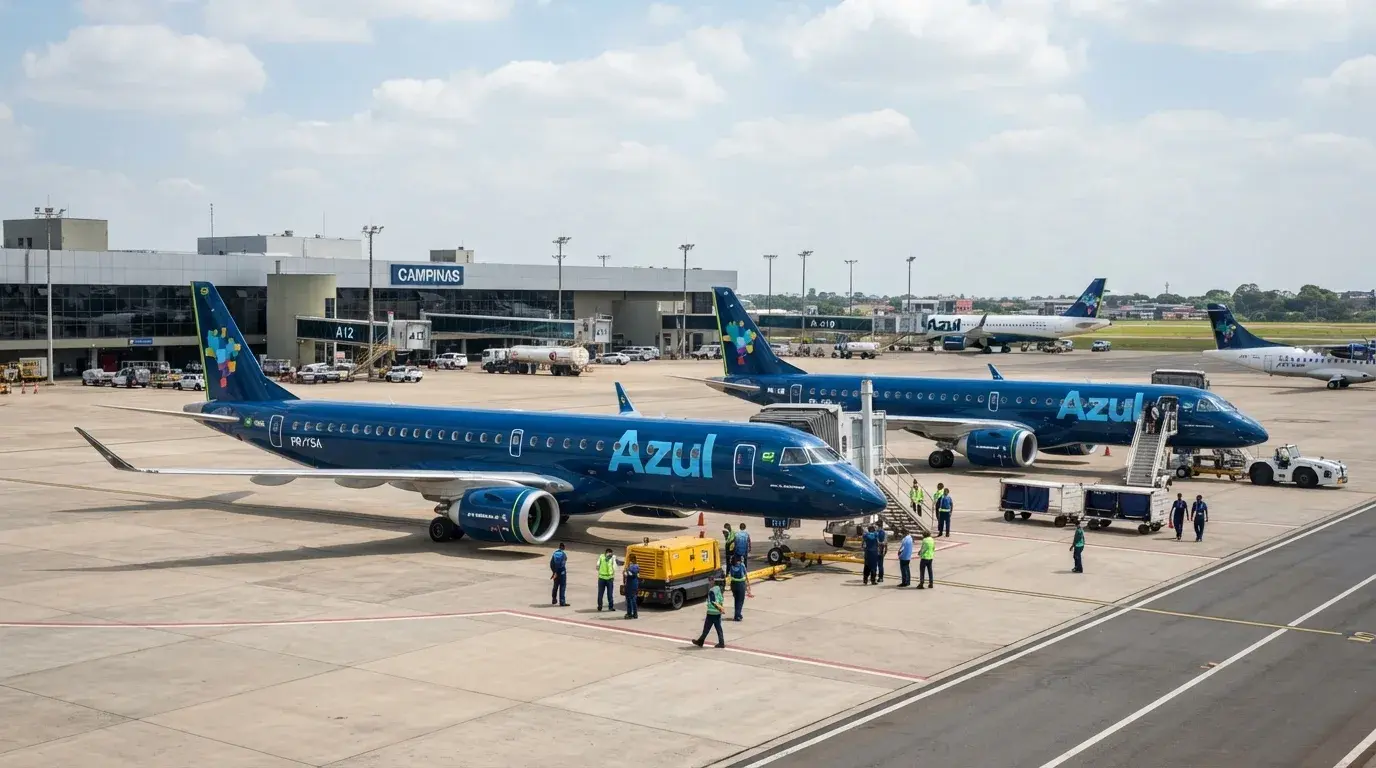
For over four years, passengers traveling in Brazil with Azul faced the fallout from a relentless string of engine failures on its Embraer E195-E2 fleet. Despite being central to the Brazilian airline’s modernization strategy, these aircraft were frequently grounded due to persistent issues with the Pratt & Whitney PW1900G turbofans. The situation forced Azul to scale back capacity, reduce frequencies, and left travelers contending with frequent flight delays or cancellations. But that chapter is now closed.
During the presentation of its quarterly results, Azul CEO John Rodgerson confirmed that “all Embraer E195-E2s are now back in service.” The announcement follows years of intensive efforts to resolve GTF engine reliability and maintenance capacity challenges. Azul now operates 40 E195-E2s, up from 31 a year ago, marking a pivotal step in its fleet overhaul. The airline has also phased out its older E195-E1s, reducing their numbers from 25 to just eight in a single year.
For travelers, the return to full service means a return to more stable and predictable operations. The E195-E2, configured with 136 seats in two classes (including 20 in Economy Xtra), is ideally suited to Brazil’s domestic and regional routes. Its ability to serve secondary destinations—often overlooked by larger aircraft like the Airbus A320neo—makes it a strategic asset for Azul. With engine availability now stabilized, the airline can fully leverage the aircraft to expand networks and offer more consistent frequencies.
The PW1900G: a promising but temperamental engine
Azul’s E195-E2s are powered by the Pratt & Whitney PW1900G, a variant of the Geared Turbofan (GTF) family designed to deliver reduced fuel consumption, lower noise, and improved environmental performance over earlier generations. Yet, despite its technical promise, the engine has posed significant operational challenges for Azul and other carriers. Persistent issues with engine availability and maintenance capacity have kept E195-E2s sidelined for years, even as the aircraft formed the backbone of Azul’s modernization plans.
The PW1900G was developed specifically for the second generation of E-Jets, including the E195-E2. Azul, which has relied on these aircraft to modernize its domestic network and replace older E1s, has been among the hardest-hit operators. The airline was forced to grapple with grounded aircraft at a time when the E195-E2 was becoming increasingly central to its growth strategy. The resolution of these technical issues marks a turning point for Azul, allowing it to shift focus from crisis management to operational expansion.
A fully operational E2 fleet at last
As of June 30, 2026, Azul had 40 Embraer E195-E2s available for scheduling, a significant increase from 31 a year earlier. This fleet now accounts for a dominant share of the airline’s domestic capacity, with 94.1% of capacity provided by new-generation aircraft. The average age of Azul’s fleet has dropped to 7.3 years, reflecting the successful modernization of its fleet.
The restored availability of the E195-E2s enables Azul to better plan its flight schedules, reduce last-minute adjustments, and maximize the efficiency of its aircraft. The airline has also confirmed that groundings of Airbus A320neo aircraft powered by Pratt & Whitney PW1100G engines should drop to zero “within the next 15 to 30 days,” according to Azul President Abhi Shah. While distinct from the E195-E2 issues, this improvement contributes to a more optimistic outlook on the airline’s operational reliability.
For travelers, this translates into more reliable service, better adherence to schedules, and increased capacity on Brazil’s regional routes. Azul, which expects a total of 38 E195-E2s, plans to take delivery of three additional aircraft in 2026, followed by five per year from 2027 to 2029. This expansion is expected to further strengthen its position in the domestic market.
A challenging economic backdrop
Despite this operational milestone, Azul continues to operate in a tough economic environment. In Q2 2026, the airline reported a net loss of 1.04 billion reais (€170 million), compared to a net profit of 1.29 billion reais (€210 million) a year earlier. The decline is largely attributed to a 61.8% surge in fuel prices year-over-year and a 12.6% increase in operating expenses, totaling 5.14 billion reais (€840 million).
To counter these pressures, Azul has adopted a capacity discipline strategy, reducing its overall capacity by 10.6% year-over-year. The airline has offset some of these constraints with fare increases: average fares rose by 9.5%, and unit revenue (RASK) increased by 12.7%. This approach, combined with the restored availability of its fleet, should help Azul better position its flights on the most profitable routes.
John Rodgerson emphasized that “we believe we are the most rational and disciplined competitor in the market when it comes to capacity.” The return of all E195-E2s gives Azul greater flexibility to execute this strategy—not by indiscriminately adding flights, but by carefully selecting the markets and schedules where its most efficient aircraft can be deployed most effectively.
What this means for travelers
For passengers planning trips to or through Brazil, the return of Azul’s Embraer E195-E2s to full service is a game-changer. Here’s what travelers can expect:
More reliable and better-planned flights: With a fully operational E195-E2 fleet, Azul can now offer more stable schedules and enhanced frequencies on its regional routes. Flight delays and cancellations linked to engine failures should become far less common, making travel planning easier.
Better fare management: By optimizing the use of its most modern and efficient aircraft, Azul can better control costs and offer more competitive fares. The recent trend of rising average fares may ease as the airline regains operational stability.
Improved domestic connectivity: The E195-E2 is particularly well-suited to routes between Brazil’s secondary cities, where air travel options are often limited. With greater availability of these aircraft, Azul can strengthen its networks and provide travelers with more flexible travel options.
For frequent travelers to Brazil, this improvement comes at a critical time. As the country looks to tourism to boost its economy, a reliable domestic aviation sector is essential. Azul, one of Brazil’s leading airlines, plays a key role in this dynamic. Book your tickets now to take advantage of the new opportunities offered by a fleet that is finally fully operational.
If you’re planning a trip to Brazil in 2026 or 2027, keep an eye on Azul’s offers. With its fleet and balance sheet in full recomposition, the airline may introduce attractive fares to fill its new aircraft. And with the E195-E2s now back in service, travelers can set off with greater peace of mind—free from the worry of last-minute delays.
Be the first to comment on this article
On the same topic
- LATAM Doubles Fleet with 11 New Aircraft Financed 80% Under Green Criteria
- Embraer Smashes Financial Records: How the E2 Family Will Reshape Your Future Flights in 2026
- British Airways and Porter Airlines: The Winning Duo for Exploring Canada Nonstop
- Embraer E195-E2 Surpasses 500 Orders: Why This Regional Jet Captivates Airlines Worldwide
- Luxair Accelerates Network Expansion in 2026 with Nine New Destinations and a Modernized Fleet