Volotea Slashes Fleet to 30 Aircraft: What It Means for French Travelers
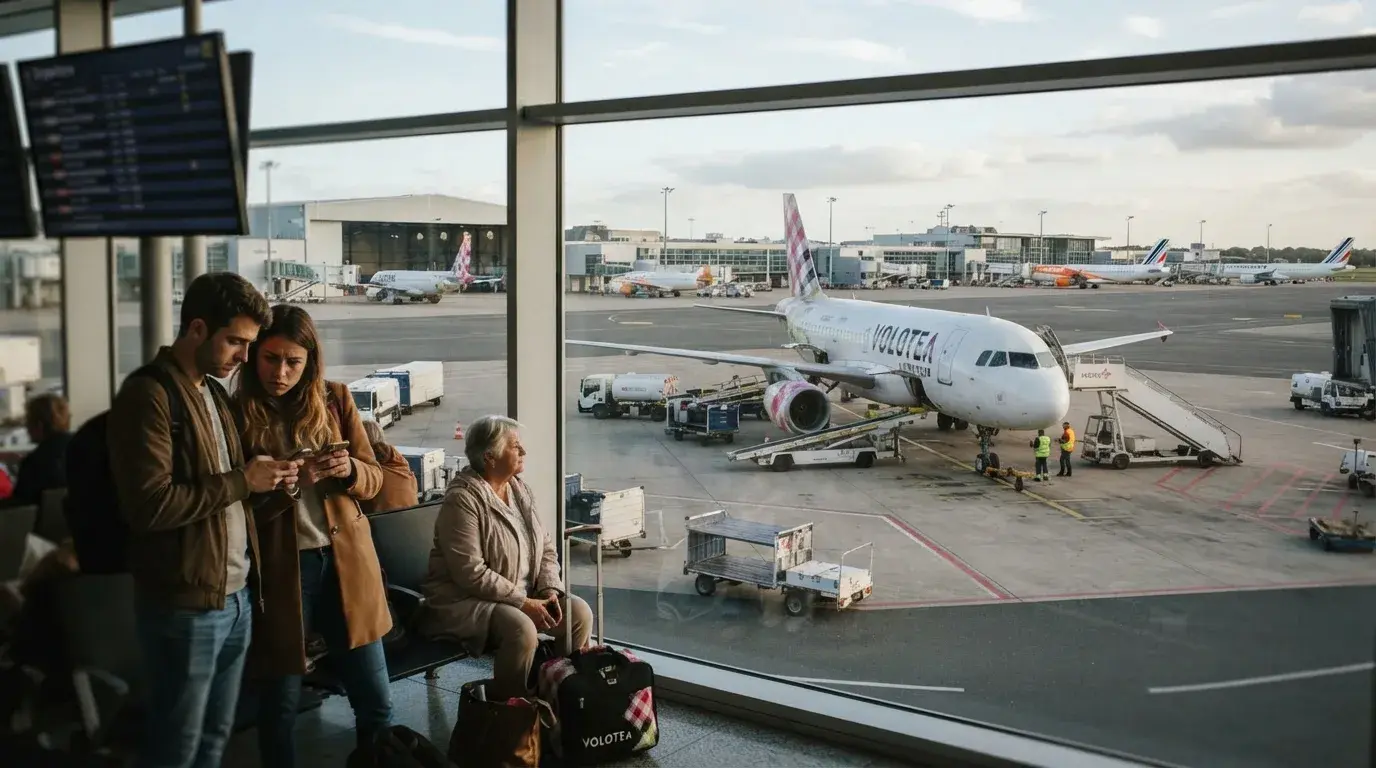
Spanish low-cost airline Volotea is navigating unprecedented turbulence. Between financial restructuring, mass cancellations, and a sharp decline in operational capacity, French travelers are questioning the future of their bookings. Gilles Gosselin, Volotea’s France director, has sought to reassure the market by unveiling the contours of an ambitious recovery plan. Yet, in practice, the airline will slash its fleet from 44 to 30 aircraft—a decision that directly impacts regional routes from France.
This announcement follows months of tense negotiations with creditors and Spanish authorities. In September 2026, Volotea initiated a preventive restructuring procedure, the preconcurso de acreedores, to avoid collective bankruptcy. Already weakened by the pandemic and soaring fuel prices, the Spanish carrier is now aiming to stabilize its business model. However, this rescue operation comes with a drastic refocus on its most profitable markets, with France at the forefront.
For travelers, the immediate consequence is a significant drop in available flights. Volotea will reduce its fleet from 44 to 30 aircraft—primarily Airbus A320s—cutting its overall capacity by a third. This reduction has already led to mass cancellations, particularly at Lille-Lesquin, where nearly 100 additional flights were scrapped for the holiday season. While load factors remain high, at around 93-94%, the reduced capacity could drive up prices on certain routes.
A financial restructuring to avoid collapse
Volotea’s financial situation is precarious. The airline carries an estimated debt of €356 million, a legacy of the Covid-19 pandemic and its struggle to recover. In 2022, it secured a €200 million participatory loan from Spain’s SEPI solvency fund, but successive renegotiations have failed to restore balance. Rising fuel costs have exacerbated the crisis, forcing the management to take drastic measures.
Negotiations with creditors are progressing, but their outcome remains uncertain. Volotea aims to conclude talks by January or February 2027, with a capital increase under discussion. The airline insists these measures will preserve its operations, especially in France, where it transports over 7 million passengers annually. Yet, flight cancellations and fleet reductions could undermine this position.
A fleet refocused on Airbus A320s
Volotea has opted to prioritize Airbus A320s, which offer greater capacity than the Airbus A319s. This decision partially offsets the reduction in aircraft numbers but requires a complete overhaul of frequencies and assignments. Travelers will board larger planes but with fewer total flights available.
The airline is banking on its regional routes to sustain operations. In France, Volotea remains a key player in connecting major cities with secondary destinations. However, the fleet reduction may lead to route cancellations or reduced frequencies on certain services. Travel agencies and passengers are urged to regularly check the status of their bookings.
Gilles Gosselin emphasizes the loyalty of travelers and agencies despite the disruptions. He notes that France will remain Volotea’s top market, with a projected 2% growth in 2026. Yet, mass cancellations and reduced capacity could jeopardize this ambition. French travelers will need to adapt to a new reality—fewer flights, higher prices on some routes, and heightened scrutiny of booking conditions.
What this means for travelers
For passengers, Volotea’s restructuring translates into several key changes. First, a reduced offering with fewer flights available, particularly during the holiday season when cancellations are mounting. Second, potential fare hikes on certain routes due to lower capacity. Finally, travelers must exercise greater caution when booking, as last-minute cancellations may become more frequent.
Volotea has apologized to distributors for the disruptions but urges passengers to plan ahead. It is advisable to monitor flight statuses regularly and consider cancellation insurance. The airline promises to stabilize its 2027 schedule, but caution is warranted in the meantime.
An uncertain future for Volotea
Despite management’s efforts, Volotea’s future remains uncertain. Fleet reductions, mass cancellations, and ongoing financial negotiations could weaken the airline in the medium term. French travelers, accustomed to a dense regional network, will need to adapt to a new landscape—fewer flights and heightened vigilance.
The situation echoes that of other European low-cost carriers, such as Wizz Air or EasyJet, which have also scaled back capacity amid economic and operational challenges. Volotea must prove its resilience and ability to maintain service quality despite the turbulence. In the meantime, passengers are advised to closely follow developments and adjust their travel plans accordingly.
Volotea’s restructuring is a stark reminder of the fragility of Europe’s aviation sector. Between economic crises, rising costs, and competitive pressures, airlines must constantly adapt to survive. For travelers, this means greater vigilance, flexibility, and attention to booking conditions.
Volotea still holds a trump card: its regional foothold in France and historical loyalty. Yet, in an uncertain economic climate, the airline must demonstrate it can navigate these turbulent skies.
Be the first to comment on this article
On the same topic
- Air Calédonie: Vital transfer from Magenta to La Tontouta in March 2026
- Lufthansa restructures its activities to promote the integration of its subsidiaries
- Spirit rejects Frontier's latest merger proposal and continues its restructuring process
- Air Belgium in difficulty: four months to find a new buyer