LATAM Doubles Fleet with 11 New Aircraft Financed 80% Under Green Criteria
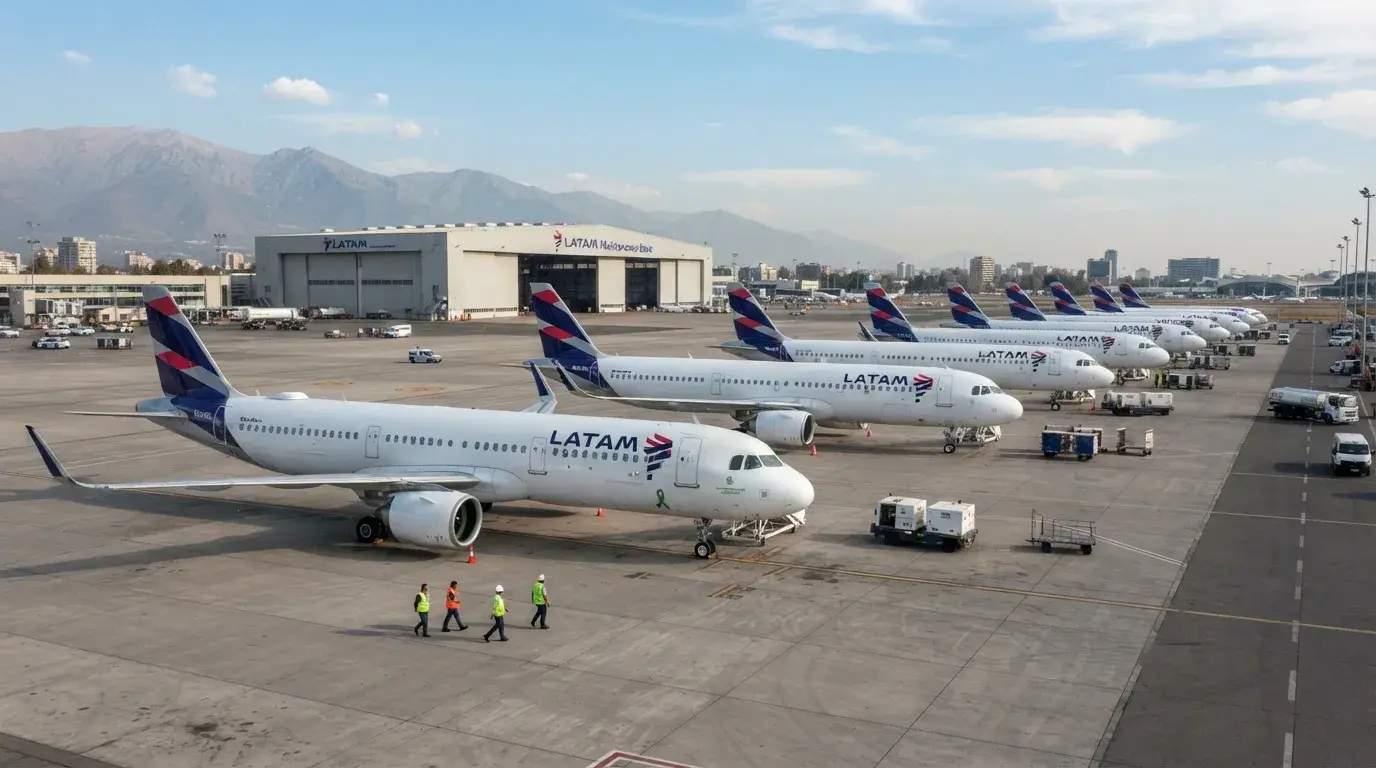
LATAM Airlines Group has taken a major step in its modernization and decarbonization strategy with a record financing deal exceeding $500 million for 11 new aircraft. This unprecedented operation combines industrial growth with environmental commitment, with 80% of the funds linked to CO₂ emission reduction targets.
Developed in partnership with BNP Paribas, this exceptional financial structure enables the airline to finalize the acquisition of eleven next-generation aircraft, including six Embraer E195-E2s, four Airbus A321neos, and one Airbus A320neo. These models are designed to consume up to 25% less fuel than their predecessors while drastically reducing noise and pollutant emissions. This technological shift aligns with LATAM’s roadmap to achieve net-zero carbon emissions by 2050.
The long-term financing arrangement marks a global first for the airline: it is the first time LATAM has used such a structure to acquire Embraer aircraft. This decision underscores the group’s commitment to diversifying its funding sources while maintaining competitive terms in international markets. Financial and environmental sustainability criteria were integrated from the outset, with tariff incentives directly tied to the airline’s performance in reducing its carbon intensity.
A technological and ecological leap for South America’s fleet
Among the acquired aircraft, the Embraer E195-E2s stand out for their unmatched efficiency on domestic and regional routes. These next-generation twinjets, set to be deployed primarily on Brazil’s network, will allow LATAM to enhance coverage of intermediate destinations while reducing its carbon footprint. Their introduction is part of a broader fleet renewal plan, with over 40 new units scheduled for 2026 and up to 130 additional aircraft by 2030.
The Airbus A321neos and A320neos will provide increased flexibility on South American and U.S. medium-haul routes. Equipped with CFM Leap-1A engines, these aircraft offer superior range and reduced consumption while meeting the strictest current standards. Their arrival also paves the way for the upcoming introduction of the Airbus A321XLR in 2027, capable of operating transatlantic routes with optimized fuel efficiency.
Andrés del Valle, Corporate Finance Director at LATAM Airlines Group, emphasized the strategic significance of this deal: « We are combining three key elements: diversifying our funding sources, supporting fleet growth, and embedding environmental responsibility into our development. This innovative financial structure enables us to advance toward our sustainability goals while maintaining our market competitiveness. »
Green criteria that lower the bill
The exceptional nature of this financing lies in its incentive mechanism. Up to $400 million of the total $505 million is directly linked to LATAM’s environmental performance. The lower the airline’s CO₂ emissions per passenger-kilometer, the more favorable the loan’s financial terms become. This system rewards proactive measures and encourages innovation in air operations management.
This approach aligns with ambitious targets: reducing carbon intensity by 6% by 2030 compared to 2019, followed by net-zero emissions by 2050. This trajectory positions LATAM as a key player in Latin America’s aviation ecological transition. The deal follows a Sustainability-Linked Loan secured in December 2024, reaffirming the group’s commitment to transforming every aspect of its operations into a sustainability lever.
The new aircraft, with their optimized aerodynamic design and drag-reduction systems, will contribute to this reduction. According to manufacturers, energy efficiency gains could reach 20–25% compared to previous-generation aircraft—a figure confirmed by operational tests conducted by LATAM during initial flights.
A modernized fleet for an expanding network
With the arrival of these 11 aircraft, LATAM will operate over 410 aircraft by the end of 2026. This reflects the accelerated renewal underway for several years, with 40 new units integrated in the first half and 28 more expected by December. This momentum is accompanied by a geographic diversification of operations, particularly with the introduction of Embraer E195-E2s on high-demand domestic routes in Brazil, where the model is set to bridge the gap between regional jets and long-haul aircraft.
The deployment of these aircraft is part of a broader strategy to improve connectivity across South America while strengthening LATAM’s position as a leading regional air transport player. The Embraer E195-E2s, in particular, are expected to play a central role in optimizing costs and flight frequency on domestic routes, where demand remains robust despite economic fluctuations.
For passengers, this modernization will translate into an enhanced travel experience, with quieter cabins and ergonomic seats designed for comfort on medium-haul flights. Next-generation onboard technologies, such as advanced air purification systems and high-resolution touchscreens, reflect LATAM’s commitment to offering premium experiences accessible to a broader audience.
The 11 new aircraft will also bolster LATAM’s cargo capacity, a rapidly growing segment for the airline. The Embraer E195-E2s, for example, can transport up to 2 tons of goods in their holds, while the Airbus A321neos will offer increased capacity for urgent and sensitive shipments, particularly in the pharmaceutical and medical sectors.
Could this model be replicated across the industry?
LATAM’s approach with this innovative financing could inspire other airlines worldwide. By combining traditional financial criteria with strict environmental requirements, the Brazilian group demonstrates that profitability and ecological responsibility can go hand in hand. A strategy that aligns with the growing expectations of investors, passengers, and regulators, all increasingly focused on aviation’s carbon impact.
Industry analysts view this deal as a reflection of a broader trend: integrating climate considerations into financial decisions is becoming a competitiveness criterion. Airlines that can demonstrate their ability to align economic growth with emissions reductions will be better positioned to attract funding and strengthen their consumer appeal.
With this financing, LATAM isn’t just expanding its fleet—it’s redefining industry standards for responsible investment. An initiative that could well set a benchmark for years to come as the aviation sector seeks to balance expansion with ecological transition.
What does this mean for travelers?
For passengers, the arrival of these new aircraft will deliver tangible improvements in the flying experience. The Embraer E195-E2s, for instance, offer a level of comfort comparable to modern airliners, with leather seats, increased legroom, and larger windows. Their introduction on Brazilian domestic routes will also allow for more frequent flights, reducing wait times and offering greater flexibility in travel planning.
The Airbus A321neos will bring significant enhancements in cabin comfort and onboard services. Next-generation cabins, equipped with more efficient climate control systems and adjustable LED lighting, will create a more pleasant environment for passengers. Additionally, advanced noise-reduction technologies will enable quieter travel—a notable advantage on medium-haul flights where engine noise is often a key consideration for noise-sensitive travelers.
Operationally, this modernization could also reduce delays and cancellations, thanks to a more reliable fleet better suited to South America’s weather conditions and airport constraints. Improved reliability will directly benefit passengers, especially on regional routes where disruptions are more frequent.
Be the first to comment on this article
On the same topic
- LATAM Airlines Brazil Bets on Embraer E195-E2 to Revolutionize Domestic Air Travel
- Azul restores all Embraer E195-E2s to service: end of Brazil’s recurring engine issues
- Embraer Smashes Financial Records: How the E2 Family Will Reshape Your Future Flights in 2026
- British Airways and Porter Airlines: The Winning Duo for Exploring Canada Nonstop
- Embraer E195-E2 Surpasses 500 Orders: Why This Regional Jet Captivates Airlines Worldwide
- Luxair Accelerates Network Expansion in 2026 with Nine New Destinations and a Modernized Fleet