Lost Luggage Scandal at Rome-Fiumicino: How to Avoid Being Left Without Your Suitcase in Italy
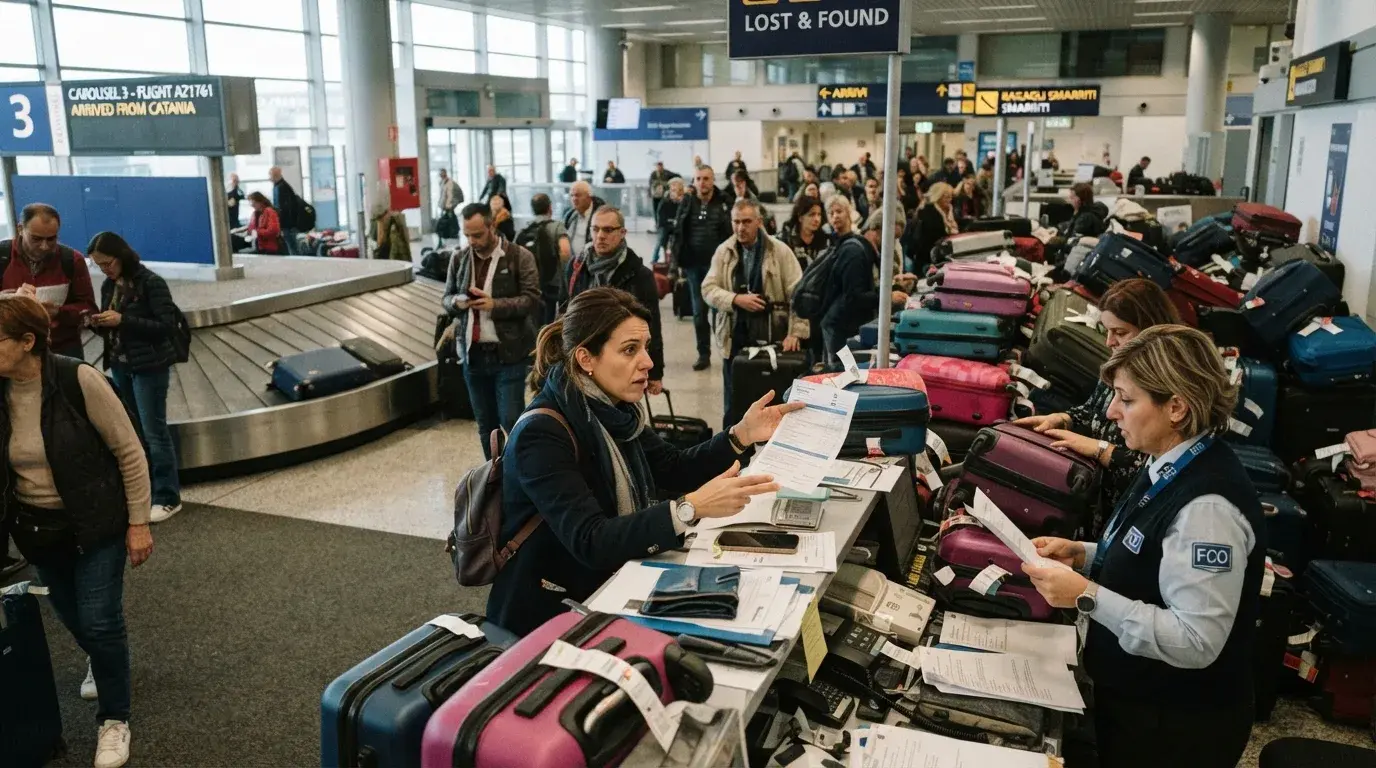
A recent incident at Rome-Fiumicino has exposed a major flaw in air baggage handling, after passengers on a Wizz Air flight from Egypt disembarked while their suitcases continued their journey to Lampedusa. Nearly 80 passengers were left without their luggage, some facing the absence of spare clothes or medication. This episode raises crucial questions about baggage management in Europe and travelers’ rights.
On August 28, a Wizz Air flight from Marsa Alam landed at Rome-Fiumicino 15 minutes early. Yet, after 45 minutes waiting at the baggage carousel, some luggage was still nowhere to be seen. Passengers—including those in transit or reliant on medication packed in their suitcases—quickly formed a WhatsApp group of over 80 people to address the issue. It was only thanks to a GPS tracker embedded in one suitcase that they located their belongings, still on board the aircraft, which had already departed for Lampedusa.
The incident is not an isolated case but a symptom of broader dysfunction in baggage handling at Rome-Fiumicino. The Italian union FAST Confsal has highlighted recurring issues with Aviation Services, the handling provider responsible for baggage operations. According to the union, problems include insufficient staffing, excessive workload, poor team organization, and a lack of operational resources. « What happened is a serious issue that cannot be dismissed as a mere inconvenience », FAST Confsal stated in a press release.
The Italian Civil Aviation Authority, ENAC, has been notified to verify whether mass procedures, load distribution, and aircraft balancing were correctly followed. The union has also urged ENAC to ensure that undischarged baggage was properly identified before the next departure. These checks aim to prevent such incidents from recurring, especially as air traffic across Europe remains under strain following summer disruptions.
For travelers, the incident underscores the importance of purchasing baggage insurance and keeping luggage tags and boarding passes safe. Under the Montreal Convention, passengers can claim compensation for essential expenses incurred due to delayed baggage, with a liability cap of €1,780 per traveler. It is also advised to file a Property Irregularity Report (PIR) immediately to formalize the claim.
Why Do Baggage Issues Happen So Easily in Italy?
The Rome-Fiumicino incident is unfortunately not an isolated case. Ground handling—often underfunded and underequipped—remains a weak link in the aviation industry. At Rome-Fiumicino, as in many European airports, handling providers must manage massive passenger and baggage flows in record time. However, budget constraints and reduced staffing make this task particularly challenging.
FAST Confsal has emphasized that issues at Aviation Services are not new. Delays in baggage processing, sorting errors, and lost suitcases are recurring problems, exacerbated by a shortage of qualified personnel and pressure to meet tight deadlines. « Travelers should not have to bear the consequences of these failures », the union reiterated.
In response to these criticisms, ENAC has announced plans to strengthen oversight of handling providers. Unannounced inspections could be conducted to assess working conditions and resources at Aviation Services. If serious shortcomings are identified, sanctions may be imposed, potentially including temporary suspension of the provider’s license.
Despite these announcements, passengers remain skeptical. Frequent strikes in the handling sector—such as the one planned by FAST Confsal on September 13 at Rome-Fiumicino and Ciampino—risk worsening the situation. Travelers are therefore urged to anticipate risks and take precautions to avoid being left without their luggage.
What to Do If Your Luggage Is Lost or Delayed
If you experience delayed or lost luggage, the first step is to visit your airline’s counter or the baggage claims office to report the incident. Present your boarding pass, baggage tag, and, if possible, your flight number. The airline must then issue a Property Irregularity Report (PIR) to formalize your claim.
Next, keep all receipts for essential purchases made while waiting for your luggage to be recovered, such as clothing, hygiene products, or medication. These expenses may be partially reimbursed by the airline, up to the €1,780 cap set by the Montreal Convention. Note that reimbursements are only possible if the luggage is later recovered and returned.
If your suitcase is declared permanently lost, the airline must compensate you under the same rules. However, the process can be lengthy and complex, especially if the airline disputes liability. In such cases, seeking mediation or legal assistance from an aviation law specialist may be necessary to secure compensation.
Tips to Minimize the Risk of Lost Luggage
To avoid finding yourself in a similar situation, follow these practical tips before and during your trip. First, opt for soft-sided luggage and ensure your baggage tags are clearly visible and legible. Avoid overpacking and place valuables in your carry-on. If possible, use a GPS tracker or smart tag to monitor your suitcase in real time.
When checking in, take a photo of your luggage and its contents before handing it over to airport staff. This will help prove its original condition in case of a dispute. Finally, arrive at the airport early to allow time to report any issues to your airline before departure.
What Are the Consequences for Rome-Fiumicino Airport?
The incident has highlighted the shortcomings of Italy’s busiest airport, often criticized for delays, strikes, and difficult working conditions. Rome-Fiumicino, which serves over 40 million passengers annually, is a major hub for European and international airlines. Yet, baggage handling failures and repeated strikes risk deterring travelers from choosing this airport for their connections.
Faced with this situation, ENAC and local authorities may be compelled to accelerate reforms to improve working conditions for handling staff and modernize infrastructure. Better coordination between airlines, service providers, and airport authorities is essential to ensure a high-quality experience for passengers.
In the meantime, travelers are advised to remain vigilant and familiarize themselves with their rights in cases of lost or delayed luggage. Rome-Fiumicino must urgently implement sustainable solutions to prevent further incidents from tarnishing its reputation.
In conclusion, the lost luggage scandal at Rome-Fiumicino is a stark reminder of persistent flaws in the aviation industry. As flights multiply and passenger expectations rise, industry stakeholders must invest in staff training, infrastructure upgrades, and more transparent procedures. Only a comprehensive approach will restore traveler confidence and ensure smooth journeys. If problems arise, stay calm, keep all documents, and assert your rights—your trip should not be ruined by a missing suitcase.
Be the first to comment on this article