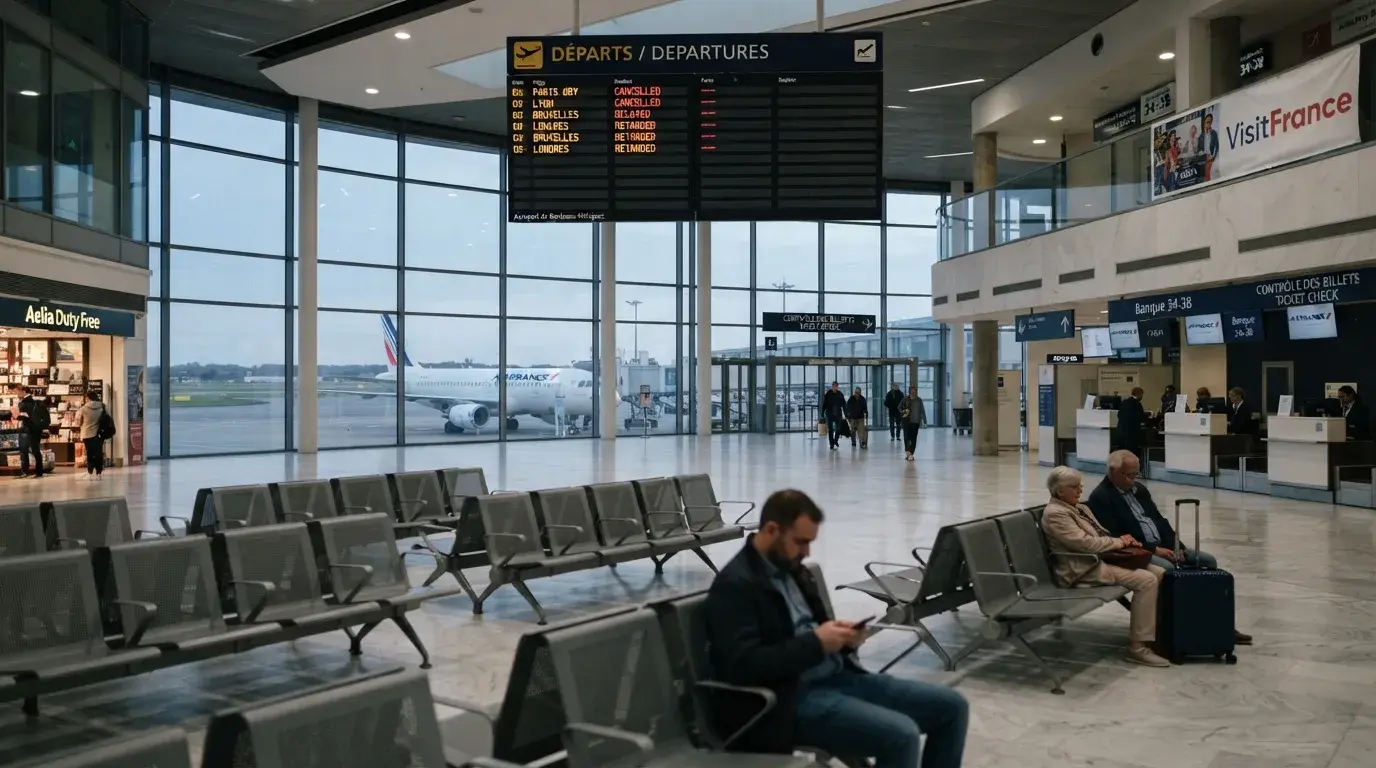
While Europe sets passenger traffic records in 2026 with nearly 10 billion travelers and a trend that continues into 2027, France stands out as an exception. Despite favorable conditions—marked by new route openings and sustained demand—French airports are struggling to keep pace with the rest of the continent.
The numbers speak for themselves: in 2025, French airports welcomed 180 million passengers, a 2% decline compared to 2024. This drop contrasts sharply with the 4% average increase recorded by other European countries. The trend continued in 2026, with French traffic stagnating while hubs like Istanbul, Dubai, and Doha shattered records. Several factors explain this decline, including costs, competition, and regulatory changes.
The first key factor is the cost of air transport in France. Since 2023, airport taxes and fees have risen by 15%, pushing airlines to favor cheaper transit points in neighboring countries. Official data from the DGAC (French Civil Aviation Authority) confirms that average ticket prices from Paris have increased by 22% over the same period, compared to just an 8% rise across Europe.
At the same time, environmental regulations have tightened, with the introduction of carbon taxes and restrictions on short-haul flights. While these measures aim to reduce the sector’s carbon footprint, they directly impact the competitiveness of French airports. Low-cost carriers like Ryanair and easyJet have shifted operations to bases in Belgium, the Netherlands, or Germany, where constraints are less stringent.
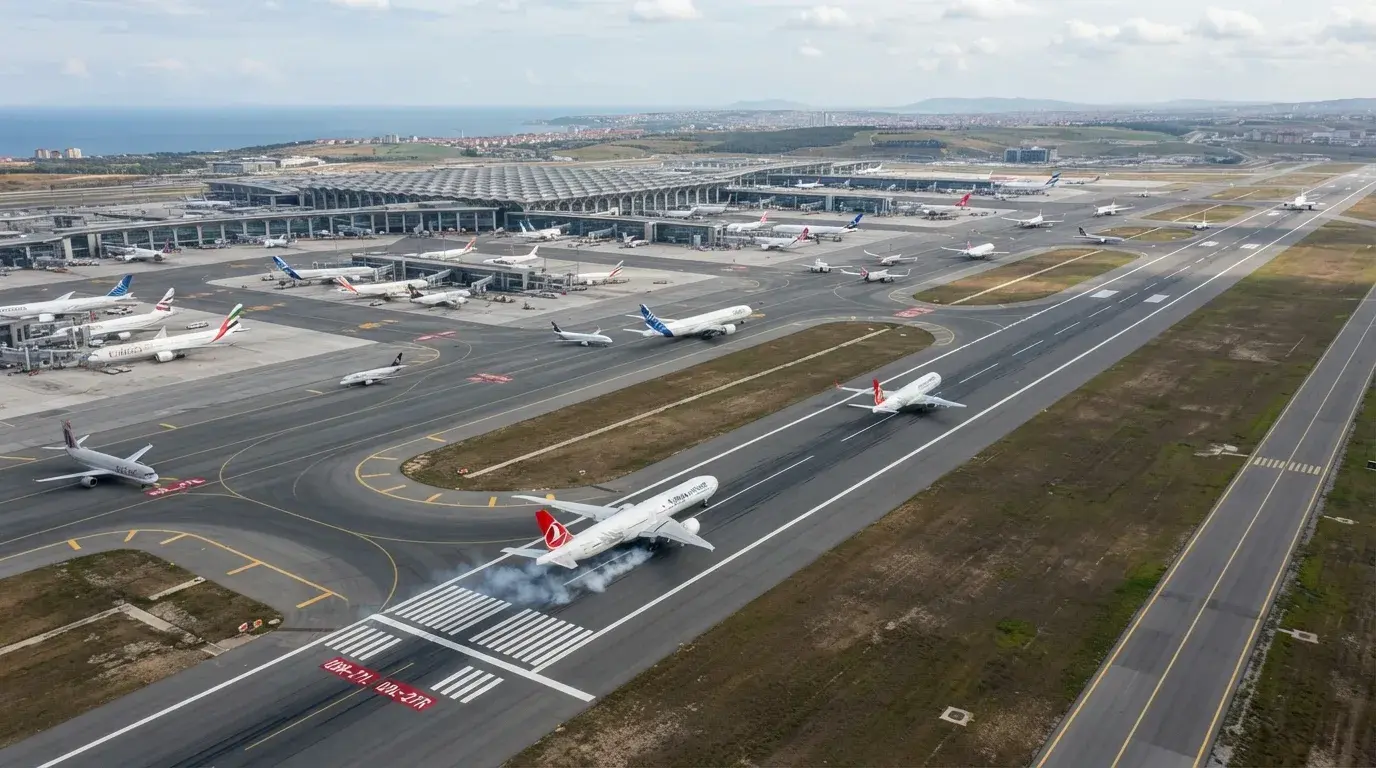
The second factor is the growing competition from foreign hubs. Platforms like Istanbul Airport, which saw a 50% traffic increase in two years, or Dubai, where transit passengers now account for 30% of activity, are capturing a share of French travelers. These airports offer more advantageous connections, shorter wait times, and lower operational costs. As a result, an increasing number of French travelers opt for flights with foreign layovers rather than direct connections from France.
Finally, ground transportation infrastructure plays a role in this decline. Unlike countries like Germany or the Netherlands, where rail and highways provide quick access to airports, France suffers from a lack of high-performance infrastructure. Frequent TGV delays and congested road networks around Paris and Lyon deter some travelers, particularly those coming from the provinces.
Faced with this situation, French aviation stakeholders are calling for urgent reform. The Paris Chamber of Commerce and Industry recently published a report highlighting the need to reduce airport costs and modernize infrastructure to remain competitive. “Without strong action, France risks losing its role as a major European hub,” warns its president, Pierre-Antoine Gailly.
Local initiatives are also underway to stem the decline. Marseille-Provence Airport is focusing on developing new routes to North Africa and Sub-Saharan Africa, while Nice Airport is targeting business tourism and air cruises. In Lyon, the planned high-speed rail line to Saint-Exupéry Airport, set for 2028, could boost the regional hub’s appeal.
For travelers, this situation translates into less competitive prices and a sometimes less flexible offering. Flight comparison sites indicate that tickets to destinations like Lisbon or Barcelona—directly accessible from France—are now cheaper than those to cities like Rome or Athens, despite being closer to Paris. A trend reversal that raises questions about the future of French air transport.
Among Europe’s Highest Airport Costs
Data from ACI Europe (Airports Council International) ranks France among the countries with the highest airport fees. With average charges of €18.50 per passenger in 2026—compared to €12.30 in Germany and €10.80 in the Netherlands—the country lags far behind its main competitors. This disparity is partly due to infrastructure investments but also to high maintenance and security costs, particularly at major Parisian airports.
Airlines frequently criticize these fees, which eat into their margins and limit their ability to offer attractive fares. “When an airport like Frankfurt or Amsterdam charges us €10 per passenger, we can pass that savings on to ticket prices. In France, that’s impossible,” explains a spokesperson for the Fédération Nationale de l’Aviation Marchande (FNAM).
To address this issue, the DGAC launched a cost-reduction plan in 2026, aiming for a 10% decrease in fees by 2028. However, civil aviation unions are concerned, fearing this could lead to lower safety or maintenance standards. “The priority must remain service quality, not just price,” emphasizes a representative of the Syndicat National des Aéroports Civils (SNAC).
The Rise of Foreign Hubs
While French airports struggle to grow, hubs like Istanbul Airport, Dubai, and Doha are recording double-digit growth. In 2026, Istanbul Airport welcomed over 60 million passengers, a 50% year-on-year increase. This surge is driven by an aggressive strategy to expand new routes—particularly to Africa, Asia, and North America—as well as significantly lower operational costs compared to European airports.
For French travelers, these hubs offer major advantages: smoother connections, shorter wait times, and often more competitive fares. A study by OAG shows that passengers traveling from Paris and transiting through Istanbul save an average of 1.5 hours compared to transiting through a European airport. “This time and comfort gain often justifies choosing a foreign layover,” notes the analyst.
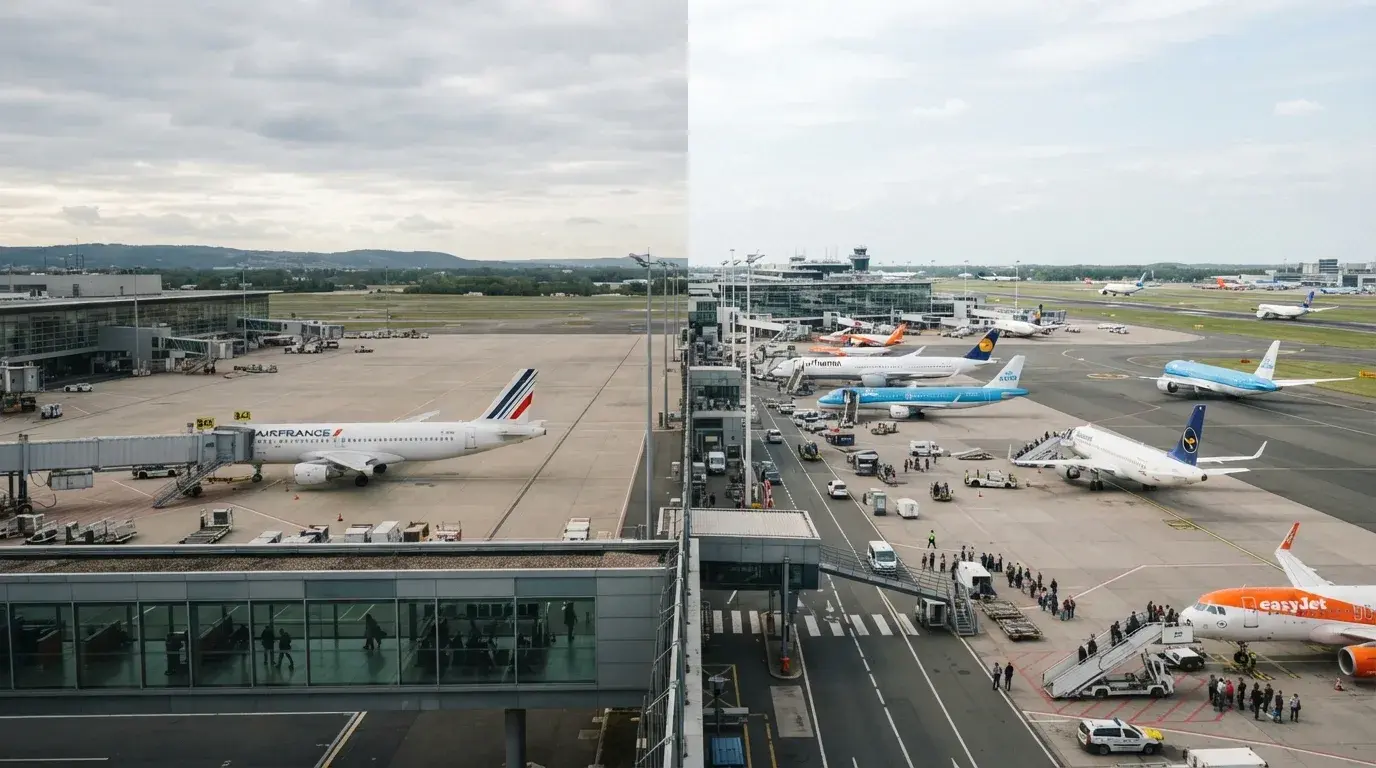
In response to this competition, French airports are fighting back. Paris-Charles de Gaulle is leveraging its status as an international hub with connections to over 300 destinations, while Lyon-Saint-Exupéry is targeting business tourism. However, these efforts struggle to offset market share losses to better-positioned competitors.
The Impact of Environmental Regulations
Since 2024, France has implemented strict measures to reduce the aviation sector’s carbon footprint. These include the air ticket tax, ranging from €1.50 to €18 depending on the destination, and the phasing out of short-haul flights, with a gradual ban on domestic routes replaceable by high-speed rail. While these measures are necessary to meet climate goals, they directly impact traffic at French airports.
Low-cost carriers, in particular, have relocated some operations to less restrictive countries. Ryanair, for example, has shifted flights from Belgium and Germany, where taxes are lower. “We are forced to revise our development plans in France because the additional costs make our routes less competitive,” explains an Irish airline spokesperson.
Yet these regulations could also present an opportunity. French airports could position themselves as leaders in sustainable mobility by developing innovative solutions like sustainable fuels or electric aircraft for short-haul routes. Toulouse Airport, for instance, is currently testing sustainable fuels for regional flights.
The Challenge of Ground Infrastructure
Another major challenge for French airports is accessibility from major cities. Unlike countries like Germany or the Netherlands, where rail links reach airports in under an hour, France suffers from a lack of high-performance infrastructure. Only 30% of passengers using Parisian airports arrive by public transport, compared to over 60% in Frankfurt or Amsterdam.
Frequent TGV delays and congested road networks around Paris and Lyon deter many travelers. A study by Alstom shows that average travel times to Parisian airports have increased by 22% since 2020 due to traffic jams and rail line construction. “To remain competitive, it is urgent to modernize connections between major cities and airports,” emphasizes a transport expert.
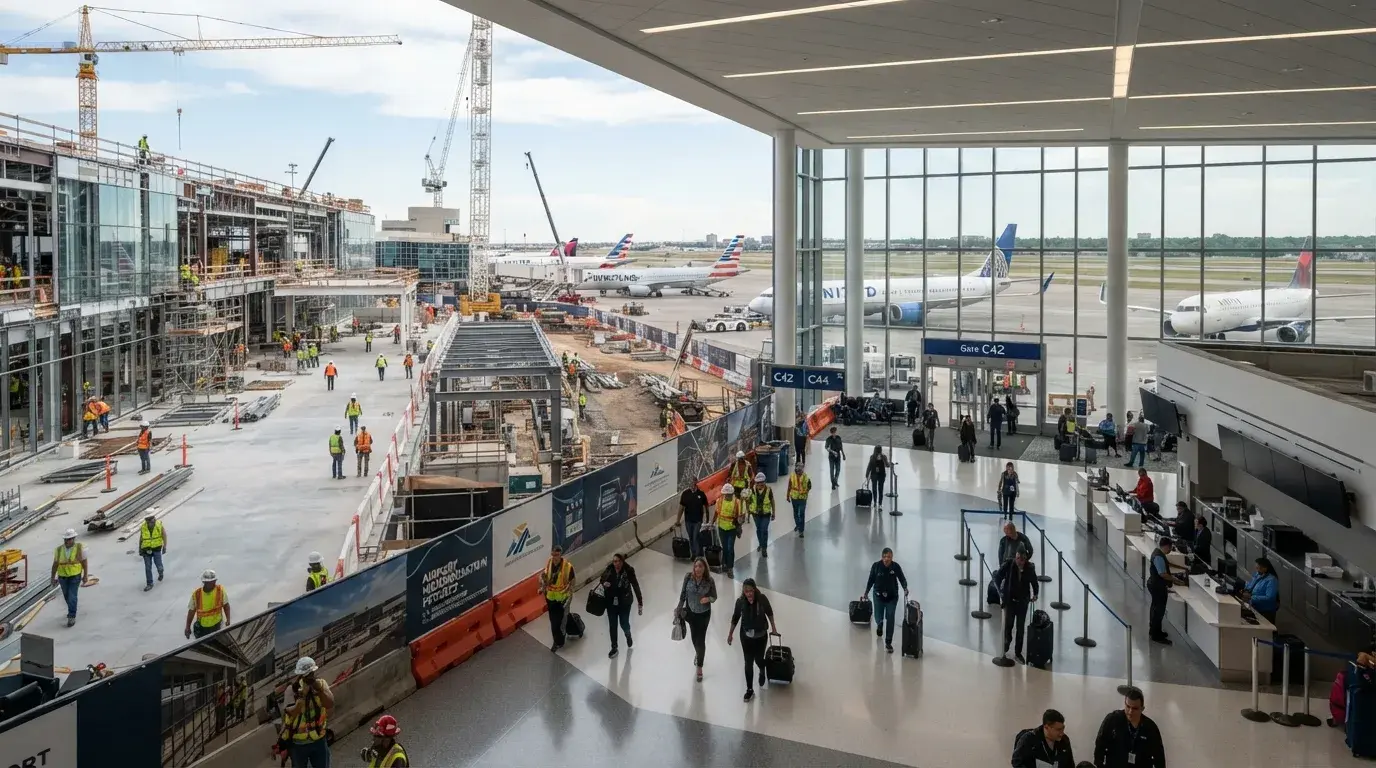
Projects are underway, such as the high-speed rail line to Lyon-Saint-Exupéry Airport, slated for 2028, or the extension of RER B to Paris-Charles de Gaulle. However, these initiatives are years behind real sector needs.
Faced with this situation, travelers and industry stakeholders are calling for swift action. Without an ambitious reform of costs, regulations, and infrastructure, French airports risk losing further market share to increasingly fierce European and international competition.
How to Reverse the Trend?
Several solutions are being proposed to revitalize French airports and regain market share. The first is to reduce airport costs by aligning fees with those in neighboring countries. This could involve reforming local taxes or optimizing maintenance and security spending.
Another solution is to streamline environmental regulations, finding a balance between reducing carbon footprints and maintaining sector competitiveness. This could include financial incentives for airlines using sustainable fuels or electric aircraft.
Finally, it is crucial to improve ground transportation infrastructure by developing fast, reliable rail links between major cities and airports. Projects like the high-speed line to Lyon-Saint-Exupéry or the extension of RER B must be accelerated to offer travelers attractive alternatives to driving.Be the first to comment on this article