Heathrow delays its mega-project: third runway pushed back to 2039 instead of 2035
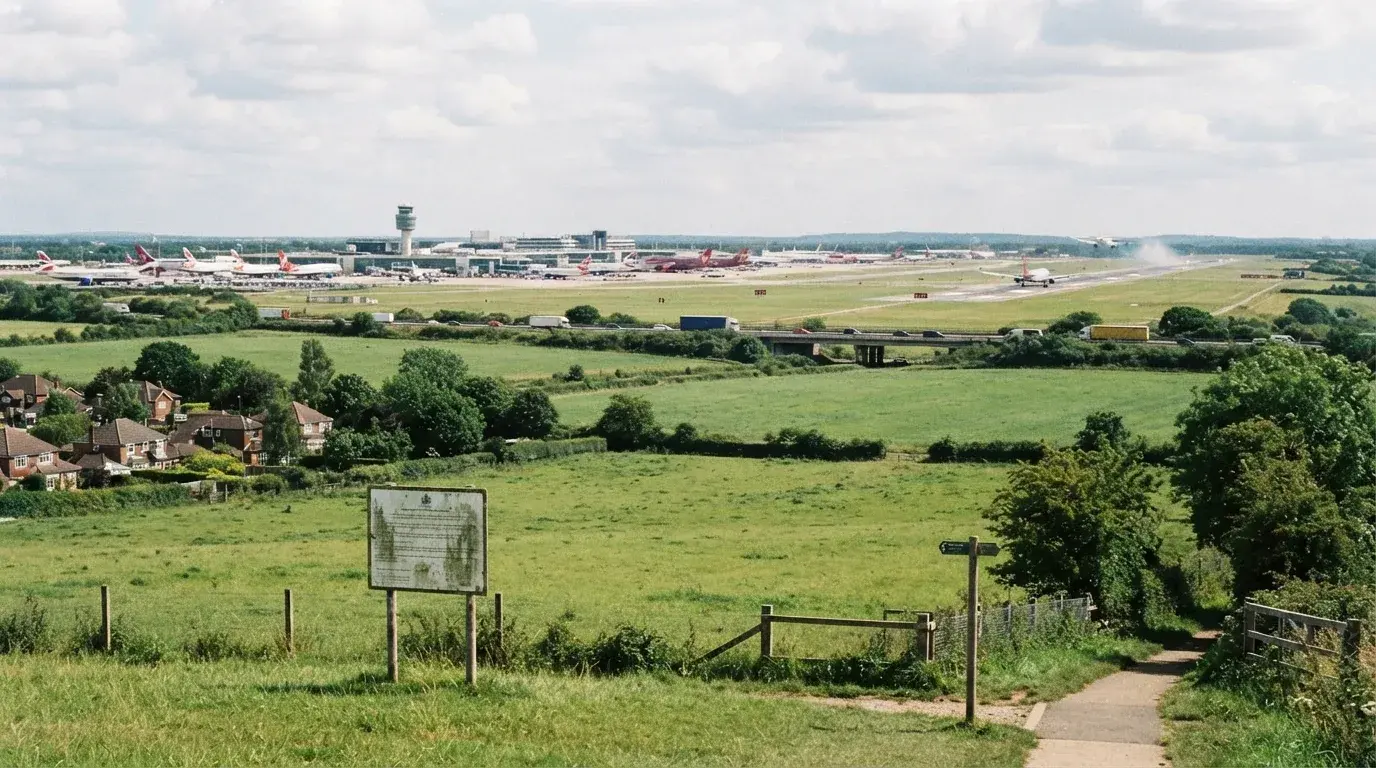
London-Heathrow Airport, one of the world's busiest hubs, has just dropped a bombshell by pushing back the opening of its third runway from 2035 to 2039. This decision comes in a context of increasingly stringent regulatory and environmental constraints, even as the project once aimed to double the airport’s capacity.
Heathrow has long presented 2035 as a realistic deadline for commissioning this infrastructure, deemed essential by the airport operator to absorb air traffic growth and compete with other major European hubs. Today, however, the airport acknowledges that this timeline was “ambitious” and that the time required to secure approvals and complete the works far exceeds initial projections.
The Heathrow spokesperson clarified that the priority remains securing planning permission by 2029. Once this hurdle is cleared, it could take up to another ten years for the runway to become operational. The 2039 horizon is now the new reference scenario, provided the project is ultimately approved.
This shift underscores the growing challenges facing major airports worldwide. Between environmental demands, public consultations, and the complexity of infrastructure projects, expansion initiatives are becoming increasingly difficult to deliver on schedule.
Yet the stakes are enormous. Today, Heathrow is capped at two runways and a limit of 480,000 annual air movements. With a third runway, the airport’s capacity could reach 756,000 movements and 150 million annual passengers. Such an increase would free up slots for new international routes and better meet growing travel demand.
The new runway, planned northwest of the airport, would stretch up to 3,500 meters. Its alignment would require diverting a section of the M25 motorway beneath the runway and expanding terminal capacities. For airlines, the stakes are high: Heathrow envisions at least 30 new daily routes, pending the project’s full realization.
The total cost of the expansion and modernization program is estimated at £49 billion, funded by private capital. This colossal sum breaks down into £21 billion for the runway and associated infrastructure, £12 billion for new terminal capacity, and £15 billion for upgrading existing facilities. A budget that reflects the scale of work needed to transform Heathrow into a world-class airport.
But beyond the numbers, it’s the question of regulation that looms large. The UK Department for Transport notes that “the timeline has always been ambitious” and that the project remains subject to rigorous regulatory and environmental scrutiny. The public consultation on the new National Planning Framework, launched in June 2026, closed on September 1st. This text must still clear parliamentary stages before it can be applied.
Above all, this consultation does not constitute a construction permit. Heathrow will need to submit a detailed application, which will be reviewed before any final decision is made. The assessment must consider the project’s impact on climate, air quality, noise, and road and rail access. These are just some of the issues that could further delay the project’s realization.
The UK government, aware of the tensions between economic development and environmental constraints, seems keen to strike a balance. It continues working with stakeholders on the framework needed to assess a future application, while acknowledging that timelines are now longer than anticipated.
For travelers and airlines, this announcement is a clear signal: Heathrow’s expansion will neither be quick nor straightforward. The accumulated delays could impact flight offerings and available slots in the coming years. A reality that adds to the other challenges facing air transport, from climate imperatives to infrastructure saturation.
A mega-project at the heart of an air network under strain
Heathrow is not alone. Other major European and global airports face similar challenges in expanding capacity. But the London hub holds a unique place in the global aviation landscape. With over 84 million passengers in 2025 and nearly 480,000 annual movements, it is already operating at near-maximum capacity. The third runway was touted as the solution to ease traffic congestion and meet rising travel demand.
The figures put forward by Heathrow are staggering. The third runway would accommodate up to 276,000 additional annual movements, a nearly 60% increase over current limits. For airlines, this would represent a major opportunity to expand their networks and offer new destinations. Passengers, meanwhile, could benefit from a wider range of options and better connections.
Yet delivering this project raises complex questions. Diverting the M25 motorway, for example, requires major engineering works and specific approvals. Terminal capacities will also need to be expanded to handle increased traffic. These factors complicate planning and extend timelines.
The project’s financing is another concern. With a total estimated cost of £49 billion, Heathrow is relying on private capital to fund the works. A risky strategy in a context where investors are increasingly sensitive to environmental and social criteria. Project promoters will need to prove that Heathrow’s expansion is compatible with the UK’s CO₂ reduction and noise abatement goals.
Airlines, for their part, are eagerly awaiting a resolution. Heathrow envisions at least 30 new daily routes once the third runway is operational. But for now, uncertainties persist. Delays could impact carriers’ development strategies, forcing them to adapt their plans accordingly.
Environment and regulation: the two major challenges of the project
The main obstacle to Heathrow’s third runway is not technical but regulatory and environmental. The project must clear a series of complex administrative hurdles, compounded by technical and financial challenges. The public consultation on the new National Planning Framework, for instance, has highlighted concerns from local residents and environmental groups.
The text must still clear parliamentary stages before it can be applied. Even after that, Heathrow will need to submit a detailed application to obtain the construction permit. This assessment must evaluate the project’s impact on climate, air quality, noise, and road and rail access. These are just some of the issues that could further delay the project’s realization.
The UK government, mindful of the tensions between economic growth and environmental constraints, seems determined to strike a balance. It continues working with stakeholders on the framework needed to assess a future application. But at this stage, no specific date has been set for the construction permit’s issuance.
Environmental groups, for their part, are stepping up legal challenges to try to block the project. They highlight the third runway’s climate impact, warning it would significantly increase Heathrow’s CO₂ emissions. According to them, the airport is already one of Europe’s largest emitters, and its expansion would only worsen the situation.
Local residents, meanwhile, are concerned about noise pollution and air quality. Diverting the M25, for example, could lead to increased road traffic in the region, with consequences for air quality. These are just some of the issues fueling debates and complicating decision-makers’ task.
For Heathrow, the ball is now in the authorities’ court. The airport operator will need to convince that the project is compatible with the UK’s environmental goals. A tall order in a context where pressure to reduce CO₂ emissions is only growing.
What Heathrow’s third runway would mean for travelers
For travelers, Heathrow’s third runway would represent a genuine revolution. With capacity boosted to 150 million annual passengers, Heathrow would become one of the world’s largest airports. Passengers could benefit from a wider range of destinations, better connections, and an improved travel experience.
Heathrow envisions at least 30 new daily routes once the third runway is operational. These new connections would link London to emerging markets such as Sub-Saharan Africa, Latin America, or South Asia. For airlines, this would be a major opportunity to expand their networks and tap into new markets.
Passengers, meanwhile, could benefit from more competitive fares thanks to increased competition between carriers. Connections would also be smoother, with a more efficient and better-organized hub. These factors could make London an even more attractive travel destination.
For now, travelers will have to wait. Delays in the third runway’s delivery mean benefits won’t materialize until 2039 at the earliest. In the meantime, Heathrow will need to manage growth with existing infrastructure, which could lead to congestion and delays in the coming years.
Airlines, for their part, will need to adapt their strategies. Some may choose to prioritize other European hubs, such as Paris-Charles de Gaulle or Amsterdam-Schiphol, to avoid capacity constraints at Heathrow. A scenario that could impact the London hub’s competitiveness.
Conclusion: an expansion project that raises more questions than it answers
The third runway at Heathrow is an ambitious project, but one that raises numerous questions. Between regulatory hurdles, environmental concerns, and infrastructure complexity, delays are piling up. The shift from a 2035 to a 2039 deadline is the most tangible proof of this.
For travelers and airlines, this announcement is a wake-up call. Heathrow, already operating at near-maximum capacity, will need to manage growth with its current infrastructure in the coming years. Delays could impact flight offerings, fares, and service quality.
For UK authorities, the challenge is twofold: reconciling economic development with environmental constraints. The third runway project will need to prove it is compatible with the UK’s CO₂ reduction and noise abatement goals. A daunting task in a context where environmental protection pressures are only intensifying.
In the meantime, Heathrow remains an indispensable hub for travelers and airlines. But its future hinges on its ability to overcome the challenges standing in its way. The third runway, if it ever materializes, could well symbolize the struggle between economic ambition and environmental responsibility.
Be the first to comment on this article