Brussels Airport under pressure: How will Europe save border controls?
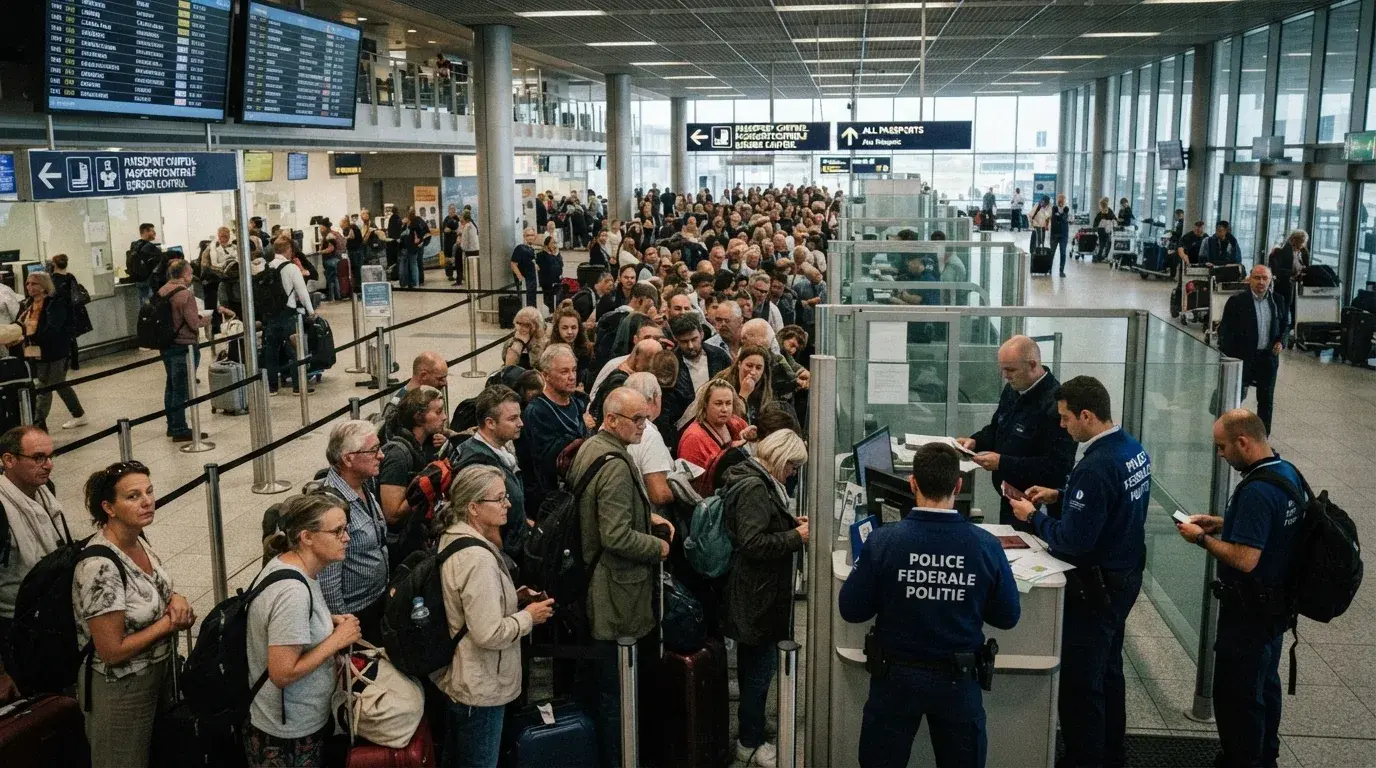
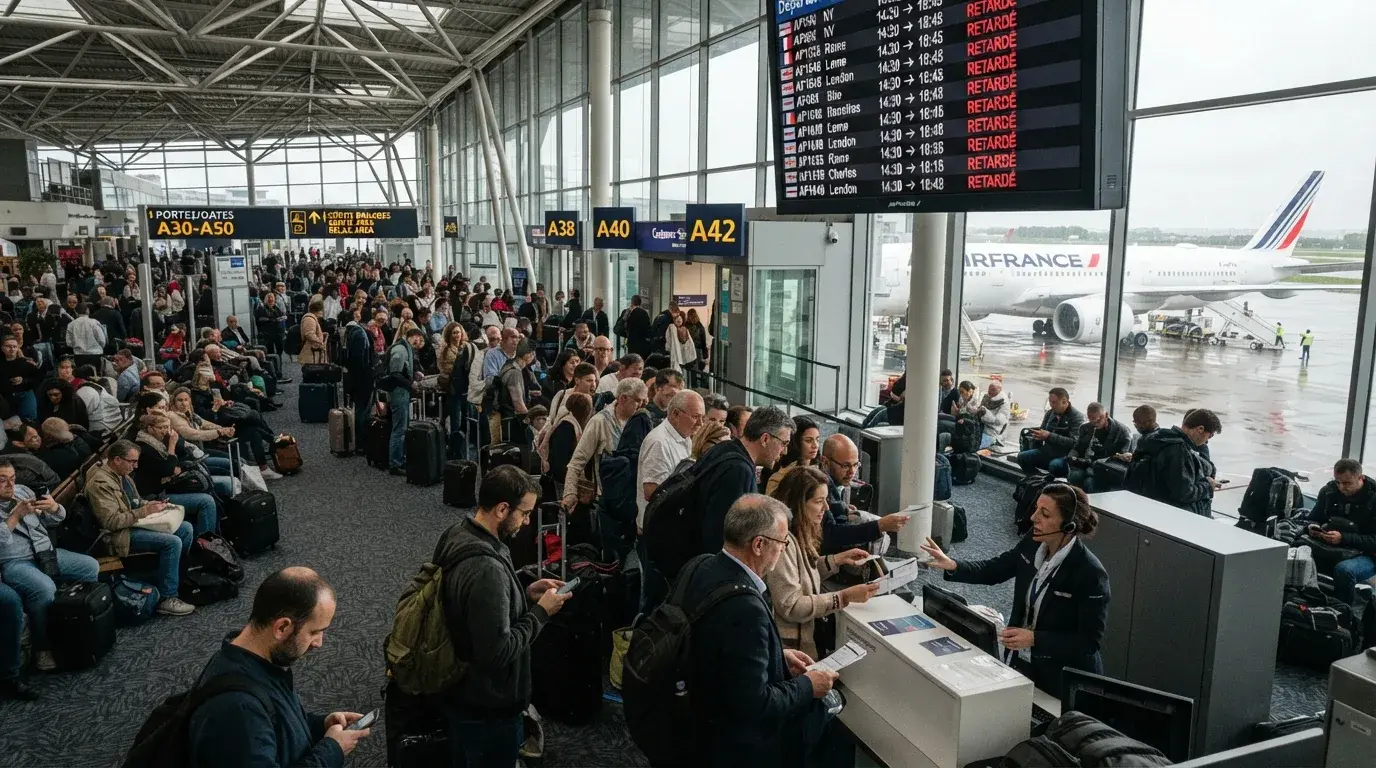
Queues at the EES controls at Brussels Airport are now approaching five hours for non-European travelers. The situation is worsening despite initial adjustments made ahead of the deployment of the European Entry-Exit System (EES). Facing this crisis, Brussels Airport is scrambling for solutions: eight additional manual posts in December 2026, followed by six new automated gates in 2027. But will these measures be enough to prevent a complete standstill in passenger flows?
Since the EES entered into force in late 2025, biometric formalities—fingerprint registration and facial photography—have doubled or tripled processing times compared to initial projections. In Brussels, where morning peaks see queues of up to five hours, the impact is devastating. Non-European travelers, often visa holders, find themselves trapped in endless lines, while cascading delays threaten the reputation of Belgium’s main hub as a European gateway.
The causes of predictable congestion
The difficulties have not surprised specialists. The EES imposes additional checks and systematic biometric registration before reaching the counters, unlike the old manual control systems. Yet Brussels Airport failed to anticipate the surge in demand for trained staff. Worse still: the sixty pre-registration kiosks installed in 2025 remain unused, victims of “technical issues” with public suppliers. A technological waste that deprives the airport of a key tool to ease congestion.
“Average processing times per passenger subject to visa requirements are two to three times longer, resulting in unbearable queues,” the airport admitted in a statement. Biometric data, once reserved for certain travelers, has become the norm for all non-Europeans—a operational revolution that caught infrastructure unprepared.
Solutions up to the challenge?
To stem the crisis, Brussels Airport has proposed a two-phase plan. First, the addition of eight manual posts in December 2026, increasing control capacity from twelve to twenty desks—a 66% boost expected to ease peak-hour queues. Second, the deployment of six additional automated gates in early 2027, adding to the twelve already in place, a 50% increase in automated capacity.
But these measures will be ineffective without two critical conditions: the activation of pre-registration kiosks and accelerated agent training. The airport mentions “additional police officers in training,” but the timeline is tight. Brussels is also pushing for European adaptation: it is advocating for a temporary suspension of biometric registration in cases of saturation, while maintaining security checks.
This request aligns with those from ACI Europe (Airports Council International) and airlines via Airlines for Europe, which are calling for operational flexibility to avoid endless queues.
Europe’s responsibility
The problem extends far beyond Brussels Airport. Across the continent, the EES has exposed the flaws in a system designed to tighten controls but without the human and technical resources to implement them. In France, Germany, and the Netherlands, airports are already reporting chronic delays. The European Commission, contacted by several organizations, has yet to respond to calls for flexibility.
The risks are twofold: loss of competitiveness for European hubs compared to Dubai or Istanbul, and traveler dissatisfaction, particularly among Asian visitors who spend significantly more than local tourists. “If this continues, the consequences will be dire for the holiday season,” warns an industry executive, speaking on condition of anonymity.
What to do in the meantime?
For travelers, patience will be essential. Brussels Airport advises allowing extra time, arriving early at counters, and using automated gates where possible. Airlines are adapting their schedules: some are reorganizing rotations to avoid peak times, while others recommend passengers download biometric data in advance via the EES app.
But the lasting solution lies elsewhere: in Europe’s ability to massively fund infrastructure, train agents, and deploy reliable technological tools. Without this, the dream of a borderless Europe will remain a logistical nightmare.
The EES: an underestimated system
The European Entry-Exit System (EES) aims to replace manual stamps with a biometric database for all third-country nationals. The stated goal: to strengthen the fight against irregular immigration and terrorism. But in practice, the EES has turned every control into a time-consuming operation, ignoring the operational realities of airports.
At Brussels Airport, the system has become a systematic bottleneck. Non-European travelers, often in transit, bear the brunt: missed connections, unplanned hotel nights, and a degraded overall experience. The pre-registration kiosks, designed to streamline controls, remain a mirage. Their activation is “indefinitely delayed” due to unresolved technical issues.
Despite the airport’s communications about its efforts, the verdict is clear: the EES was launched without a safety net. European airports, underfunded and underequipped, are on the front lines of a reform whose contours still elude regulators.
Automated gates: a partial solution
Automated gates, which scan passports and record biometric data in seconds, offer a breath of fresh air for Brussels Airport. But their effectiveness depends on two factors: traveler eligibility and equipment reliability. Not all non-Europeans can use these machines, and technical failures remain frequent.
The airport promises six new gates in 2027, but their impact will be limited without a targeted traveler awareness campaign. For now, most queues still concentrate at manual counters, where each passenger must be processed individually.
The urgency of European coordination
Facing the urgency, Brussels Airport and other European hubs are calling for harmonized practices. Why not extend the use of automated gates to all non-European travelers? Why not allow agents to conduct random checks instead of systematic ones during peak times?
These questions, championed by ACI Europe, await a response from the European Commission. But legislative timelines are long, and airports have no choice but to improvise.
For now, Brussels Airport is banking on transparent communication with passengers. The airport provides real-time updates on wait times via its mobile app and information screens. A pragmatic approach, but one that does not address the core issue: the EES, in its current form, is a poorly calibrated system for operational reality.
And tomorrow?
In the medium term, several avenues are being explored. First, a reform of the EES to allow less stringent checks during peak hours. Second, dedicated European funding for biometric infrastructure to equip all airports in time. Finally, enhanced collaboration between member states, airlines, and airport operators to avoid bottlenecks.
But these solutions will take months, if not years. Until then, Brussels Airport and its passengers must contend with a harsh reality: border control in Europe has become a nightmare.
Be the first to comment on this article