Paris-Charles de Gaulle ranks last in European punctuality: Why CDG faces 40% delays and how to avoid the traps
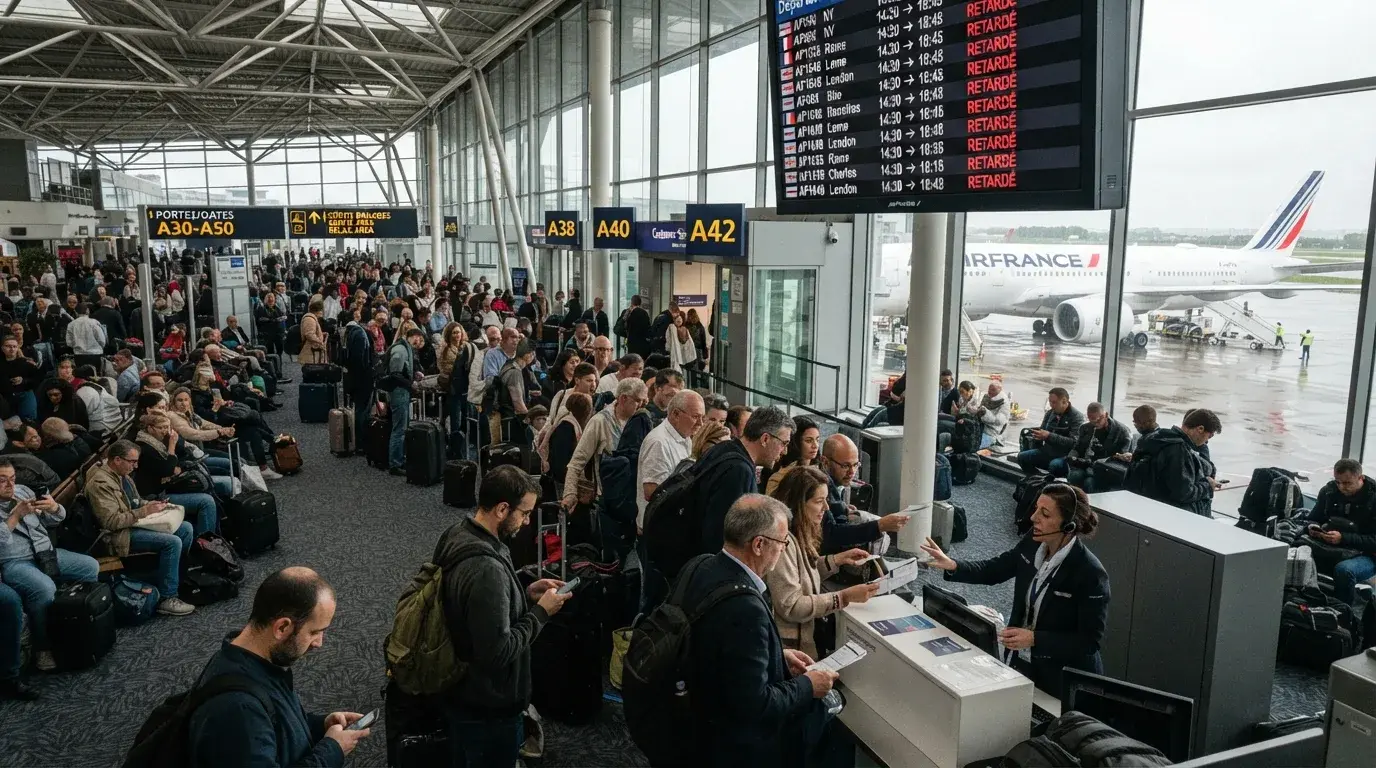
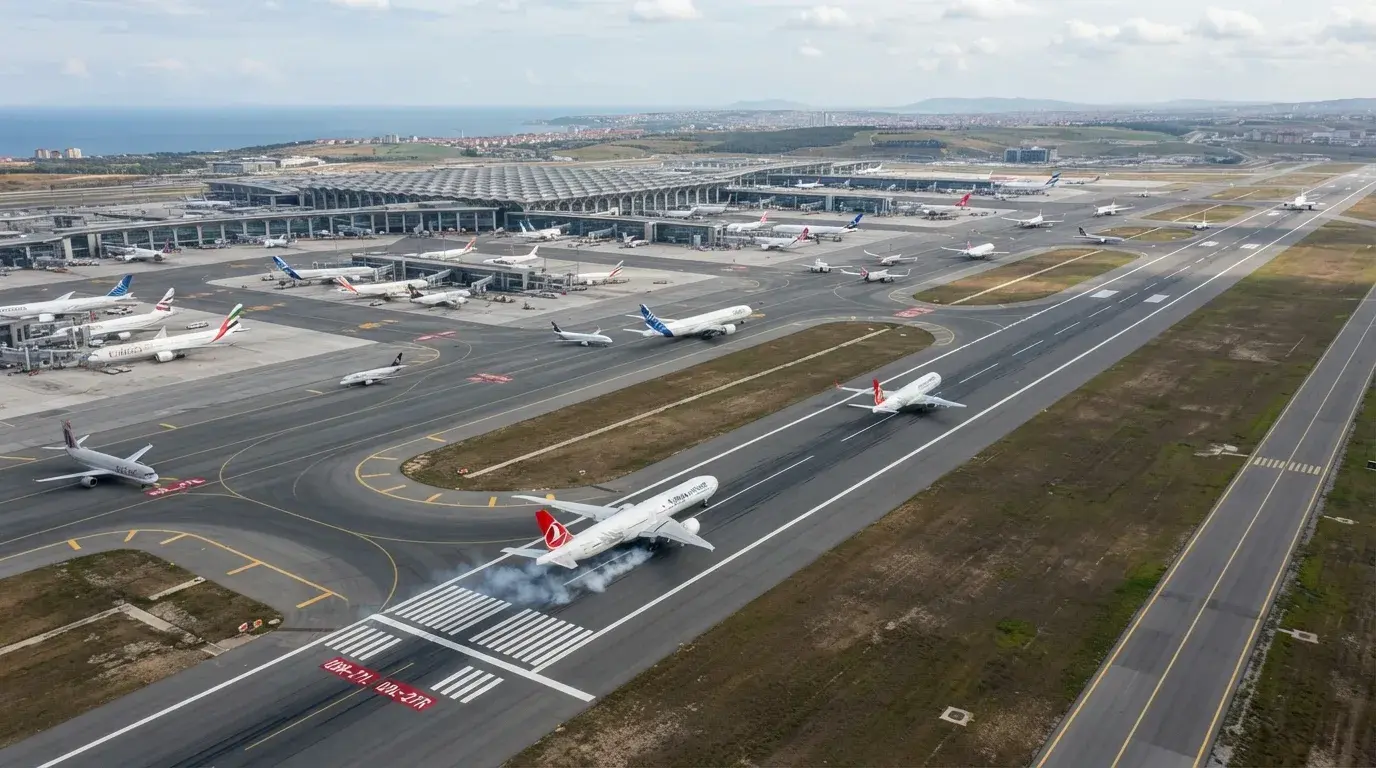
Paris-Charles de Gaulle has suffered a major setback in punctuality, ranking last among 23 international airports in AirAdvisor’s 2026 report with just 61.07% of on-time departures in 2025. This score places CDG well below the European average of 74.04% and behind competitors like London-Heathrow (79.14%) and Dublin (77.8%).
This result comes as no surprise to frequent travelers, who are accustomed to navigating CDG’s crowded corridors or waiting for hours in departure lounges. But it reveals a far more concerning reality: the Parisian airport has become the weakest link in European air transport, a burden for both business and leisure travelers. How can such operational failure be explained, and most importantly, how can you avoid its pitfalls if you must pass through it?
A hub model that undermines punctuality
CDG’s problem is primarily structural. As France’s busiest airport with 473,798 movements in 2025, it operates as a giant hub for Air France-KLM and the SkyTeam alliance. While this model centralizes international connections, it is highly vulnerable to cascading delays. A single delayed flight, a ground staff strike, or adverse weather can disrupt an entire rotation, creating a domino effect that is difficult to resolve.
The constraints of air traffic control in the Paris region, a saturated airspace, and recurring labor disputes further exacerbate this instability. In winter, fog or ice reduces runway capacity. In summer, thunderstorms disrupt takeoffs and landings. And in between, strikes by baggage handlers, technicians, or crews add to the list of risks.
Yet CDG is not alone in this situation. Other European hubs, such as Frankfurt or Amsterdam, face similar challenges. However, while these airports maintain punctuality rates above 75%, CDG collapses to 61%. The difference? A less resilient organization and insufficient investment in modernizing infrastructure.
Punctuality vs. services: two opposing realities
AirAdvisor’s ranking is not based solely on punctuality. The study evaluates six criteria: flight regularity (40% of the score), traveler reviews (40%), cost and distance of transfers to the city center (8% + 4%), commercial offerings (5%), and Skytrax ratings (3%). On the latter point, CDG scores 4.18/23, far behind London-Heathrow (16.94) and Dublin (16.74).
The cost of transfers to Paris also works against CDG. With the RER B priced at €14 in 2026, access to the airport is one of the most expensive in Europe. However, this is not the most decisive factor for travelers. What matters most is flight reliability. And on this front, CDG has become synonymous with stress and unpredictability.
How to avoid CDG’s pitfalls? Practical strategies for travelers
If you absolutely must pass through Charles de Gaulle, here are some tips to minimize risks. First rule: avoid connections. A delay on your initial flight can have disastrous consequences if you need to catch another connection. Opt for direct flights or, failing that, allow a generous buffer between flights (at least 4 hours).
Second tip: choose less congested time slots. Peak hours (between 7 AM and 10 AM, and between 5 PM and 8 PM) are the most saturated. If possible, book an early morning or mid-afternoon departure. Statistics show these slots are generally less prone to delays.
Third piece of advice: monitor weather forecasts and strikes. Tools like Eurocontrol or airline apps can help anticipate disruptions. If a strike is announced, consider modifying your booking in advance to avoid additional fees.
Alternatives exist: what if you avoided CDG?
If your final destination allows, why not consider departing from another airport? Bordeaux-Mérignac, for example, tops the punctuality ranking with an 83.5% rate. Other options include Lyon-Saint Exupéry (76%) or Nice Côte d’Azur (75%). These less congested airports offer a far smoother experience.
And if you must arrive in Paris, note that Orly (71.3%) and Beauvais-Tillé (70.2%) perform better than CDG. Beauvais, in particular, is often underestimated: despite its low-cost reputation, it boasts punctuality rates higher than its larger neighbor.
Finally, remember that punctuality is not solely the airport’s responsibility. Airlines play a key role. Some, like KLM or Lufthansa, are renowned for their operational rigor. Others, such as Air France, struggle to meet commitments. If you have a choice, compare airlines’ punctuality rates before booking.
Can CDG recover? Paths to improvement
Faced with this punctuality crisis, solutions do exist. The first step is modernizing infrastructure. CDG must accelerate de-icing operations, improve runway management, and invest in more efficient air traffic control systems. Projects are underway, but implementation will take years.
Another avenue would be to reduce dependence on the hub model. By developing direct routes from major French and European cities, CDG could ease pressure on its infrastructure and improve regularity. Initiatives like the Paris-Orly-Andorra route, operated by Chalair from 2027, show that alternatives are possible.
Finally, better coordination between stakeholders (airlines, air traffic control, airport management) would be a major asset. Delays at CDG are often the result of a chain of dysfunctions rather than an isolated issue. By aligning practices, the airport could gain efficiency.
For travelers, one thing is certain: the situation at CDG is not inevitable. By adopting tailored strategies and exploring alternatives, you can reduce risks and travel with greater peace of mind. But for lasting change, public authorities and industry players must finally grasp the magnitude of the problem.
Be the first to comment on this article