Hong Kong Loses Its Appeal: Why Low Wages Threaten the World’s Top Cargo Airport
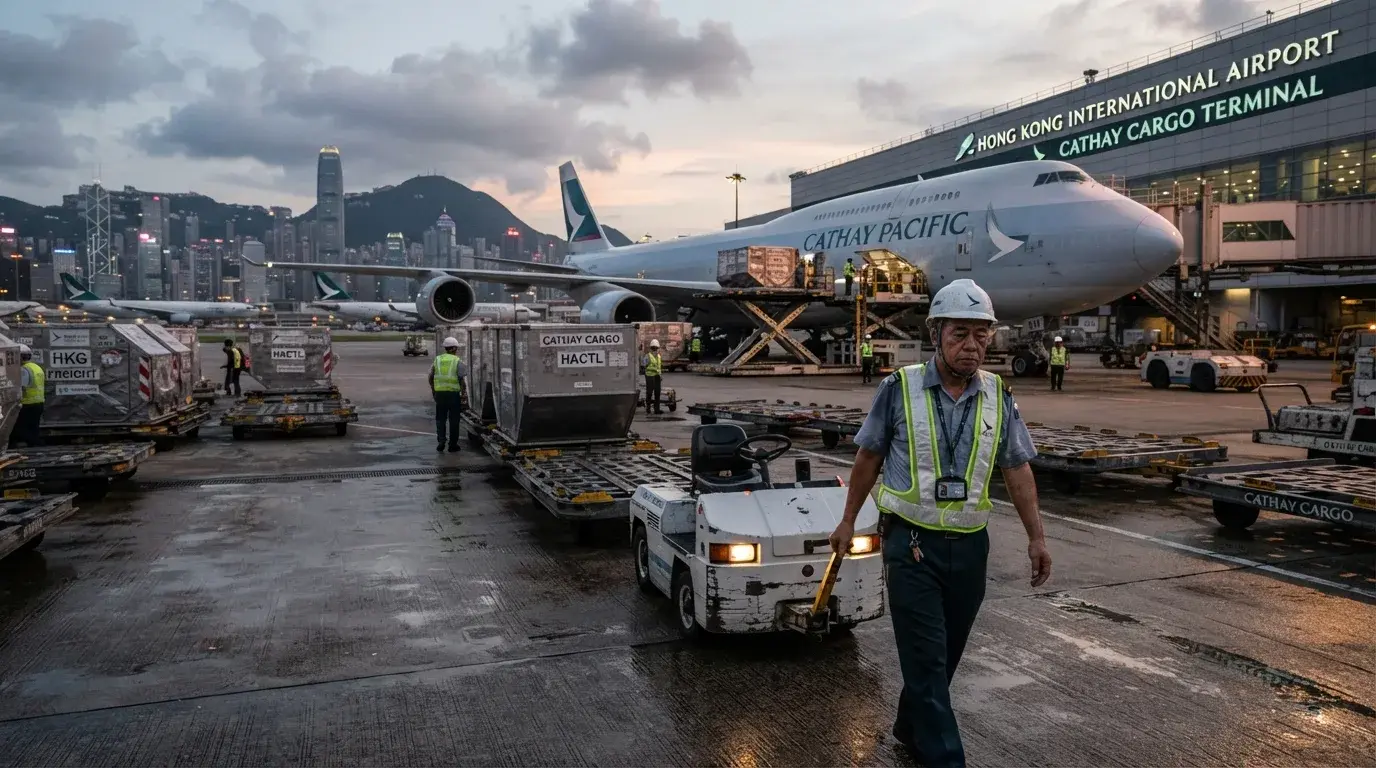
As Hong Kong aims to solidify its position as the world’s leading cargo airport, a simmering crisis lurks beneath the surface. Local unions are sounding the alarm: low wages, grueling working conditions, and a lack of career prospects are making airport jobs increasingly unattractive. A paradox for a hub that handled over 61 million passengers and processed 5.07 million tonnes of cargo in 2025—45% of Hong Kong’s external trade value.
Frontline roles, from cargo handlers and baggage staff to maintenance technicians, are at the heart of this recruitment crisis. Irregular hours, long commutes, and exposure to extreme heat are pushing working conditions to the brink. The Staffs and Workers Union of Hong Kong Civil Airlines (HKFTU) reveals that some cargo warehouse employees earned less than HK$10,000 (≈€1,150) per month before July 2023—wages deemed insufficient for the sacrifices demanded in an expanding sector.
This situation is already impacting the hub’s competitiveness. Wilson Yap Yee-liek, HKFTU president, warns: « The main competitive advantage of Hong Kong Airport does not lie in its infrastructure, but in its operational agility ». Yet this efficiency relies on the experience and skills of ground teams, whose renewal is becoming increasingly problematic. Retirements and former employees’ reluctance to return post-pandemic are exacerbating the issue. « We are facing a professional experience transmission crisis », the union leader stresses.
Promotions, far from solving the problem, sometimes worsen it. The union denounces wage gaps between managerial and operational roles. A supervisor, for example, may earn a base salary below HK$16,000 (≈€1,850)—less than a customer service agent earning HK$18,900 (≈€2,180). The union argues this imbalance discourages applications for supervisory positions, deepening the shortage of experienced managers.
Pilots, though less directly affected by wage issues, are not spared. The Hong Kong Aircrew Officers Association (HKAOA), representing Cathay Pacific crews, highlights fatigue and social dialogue concerns. Pilot fatigue, already flagged by the European Cockpit Association (ECA), is a critical safety issue. The HKAOA is demanding the restoration of regular meetings with management on operational safety and service planning—a practice halted since 2021.
These labor tensions coincide with Hong Kong’s ongoing airport expansion. In 2025, the airport saw a 15% rise in passenger traffic and an 8.7% increase in aircraft movements. Its cargo volume, accounting for over 45% of the region’s external trade value, secured its 15th consecutive year as the world’s top air cargo hub since 2010. Yet future growth could be jeopardized by the inability to attract and retain talent.
The Airport Authority Hong Kong (AA) claims to be closely monitoring staffing levels and engaging with employers and unions. It mentions an external recruitment program, but solutions remain slow to materialize. Bill Tang Ka-piu, a lawmaker representing the labor sector, urges major employers to « improve employment conditions and restore or strengthen dialogue with unions ». Despite his confidence in the hub’s future, he notes a « gap between Hong Kong’s ambitions and the frontline teams’ reality ».
As competition intensifies among global aviation hubs, Hong Kong cannot afford to neglect its human resources. Modern infrastructure alone cannot guarantee growth. The challenge now is to make airport jobs attractive enough to prevent the platform from losing its global leadership.
Wages Deemed Indecent in a Booming Sector
Figures speak for themselves. According to HKFTU, frontline aviation wages in Hong Kong are among the lowest globally for such a critical sector. Before July 2023, cargo warehouse employees earned less than HK$10,000 (≈€1,150) monthly—barely enough for jobs demanding technical skills and high responsiveness. These wages are seen as insufficient, even indecent.
Comparisons with other international hubs are stark. In Singapore, for instance, airport job salaries are significantly higher, reflecting greater recognition of the sector’s demands. In Hong Kong, the gap is even more glaring given the high cost of living. Unions criticize employers’ reluctance to align wages with international standards, despite record profits reported by major regional airlines.
This situation directly impacts service quality. Underpaid and undervalued employees are less motivated to meet passenger and airline expectations. Delays, handling errors, and logistical issues could multiply, threatening the airport’s reputation as a reliable and efficient hub.
A Crisis in Professional Experience Transmission
The problem extends beyond wages. Unions warn of a lack of career progression in airport roles. Promotions, when available, are often poorly paid and fail to adequately reward acquired experience. As a result, experienced staff leave the sector—either for better-paid jobs in other industries or for less demanding but better-compensated roles within the airport.
This experience transmission crisis is particularly concerning for a hub like Hong Kong, where operational efficiency depends on procedural mastery and local expertise. New hires, often inexperienced, struggle to acquire necessary skills quickly. Errors, delays, and inefficiencies multiply, jeopardizing the smooth flow of air traffic.
Unions are calling for strengthened continuous training programs, mentorship initiatives for newcomers, and significant wage increases for supervisory roles. Without these measures, the platform risks losing its competitive edge, built on the agility and expertise of its teams.
Cathay Pacific Pilots Face Fatigue and Lack of Dialogue
While frontline roles bear the brunt of the wage crisis, Cathay Pacific pilots are not immune to social tensions. The Hong Kong Aircrew Officers Association (HKAOA) highlights crew fatigue—a major safety concern. Pilots report insufficient rest between flights and mounting pressure to meet schedules, even at the expense of their health.
The HKAOA is demanding the restoration of regular meetings between pilots and management to address safety and service planning. These meetings, discontinued since 2021, would improve communication and better address crew concerns. « Our pilots have several channels to engage with management, but we must strengthen dialogue to ensure their safety and well-being », a Cathay Pacific spokesperson explains.
Pilot fatigue is a recurring issue in global aviation. According to a European Cockpit Association (ECA) survey, nearly one in four pilots admits flying while fatigued. In Hong Kong, the situation is exacerbated by the lack of career prospects and pressure to maintain the hub’s competitiveness. Without proactive fatigue management policies, passenger safety could be at risk.
What Can Save Hong Kong’s Hub?
Facing this multidimensional crisis, solutions must be holistic. Unions urge employers and authorities to act swiftly to improve working conditions and raise wages. A significant increase in frontline salaries is essential to attract and retain talent.
Training and mentorship programs must be strengthened to ensure professional experience is passed down. Pilots, meanwhile, demand a return to constructive social dialogue with management to better address fatigue and safety concerns. Finally, airport authorities must accelerate their external recruitment programs to fill gaps in qualified personnel.
Without concerted and rapid action, Hong Kong risks losing its top spot as the world’s leading cargo airport. Modern infrastructure alone cannot guarantee growth. The hub’s future now hinges on its ability to attract and retain talent in an industry where international competition is fierce.
Be the first to comment on this article
On the same topic
- Aircalin Prepares Long-Haul Revolution with Airbus A350: 3 Things to Know Before Booking Your Flight to New Caledonia
- Singapore Airlines under pressure: Why the Asian giant struggles to turn traffic records into profits
- Icelandair Slashes Fleet and Sets Load Factor Records Amid Fuel Crisis
- Heathrow’s Third Runway: UK Regional Airports Demand Guaranteed Slots Before 2027
- Air India Bets Big on Wide-Bodies to Revive International Network and Challenge Boeing & Airbus
- Etihad Deploys A380 to Bangkok: The Ultra-Premium Experience Reshaping Thailand Travel