United Airlines Bets on the Airbus A321XLR to Redefine Long-Haul Travel in 2026
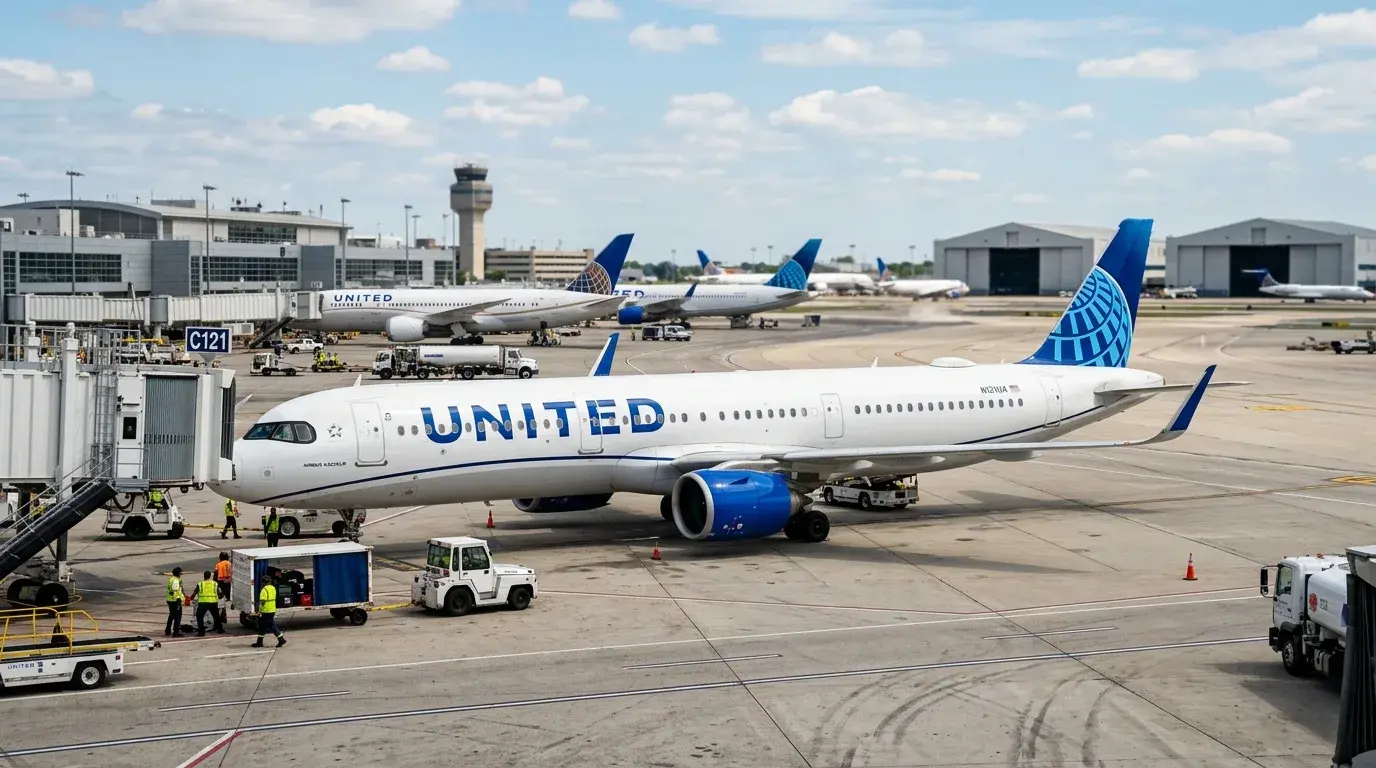
With the delivery of its first Airbus A321XLR in Hamburg on June 3, 2026, United Airlines is taking a major step in transforming its long-haul network. The aircraft, registered N64321, marks the beginning of a new era for the U.S. carrier, which is banking on this ultra-long-haul single-aisle to replace its venerable Boeing 757‑200s and open direct routes to previously inaccessible destinations without a stopover.
The ferry flight to Tampa, where the aircraft will receive its Starlink connectivity system, demonstrated impressive operational capability: over ten hours of nonstop flight, capable of connecting cities like Lisbon, Oslo, or even South American destinations such as São Paulo or Bogotá from the U.S. East Coast hubs. This performance, once reserved for wide-body aircraft, is now achievable with a lighter, more fuel-efficient aircraft, reducing operating costs per seat.
United ordered 50 A321XLRs in 2019, a strategic decision made in response to strong demand for direct flights to niche markets. The challenge was significant: offering a travel experience comparable to that of twin-aisle long-haul aircraft, but with the flexibility and efficiency of a single-aisle jet. The aircraft meets this equation by offering a premium cabin with 150 seats, a range of nearly 8,700 km, and high-speed connectivity from the start of commercial service.
For travelers, this innovation translates into more travel options, potentially more competitive fares, and a reimagined onboard experience. For airlines, it’s an opportunity to unlock underserved but high-demand destinations while optimizing the profitability of existing routes.
The United A321XLR is more than just an aircraft: it symbolizes a revolution underway in commercial aviation, where long-haul single-aisle jets are becoming the new ambassadors of global connectivity.
A single-aisle long-haul jet to replace the Boeing 757‑200
The Boeing 757‑200s, which have long served as the workhorse for United’s transatlantic and South American routes, are nearing the end of their operational lives. While versatile, these aircraft are among the oldest and least efficient in the fleet, with high fuel consumption and rising maintenance costs. Replacing them with the A321XLR allows United to modernize its fleet while reducing its carbon footprint—a factor increasingly decisive for travelers and regulators.
The A321XLR, with its extended range of nearly 8,700 km, enables United to consider direct routes to European and South American cities that previously required a technical or commercial stopover. Destinations like Lisbon, Oslo, or even less-served cities like Porto or Recife can now be reached nonstop, greatly simplifying the traveler’s experience and enhancing the appeal of these routes.
This transition aligns with a logic of network rationalization. United can now focus its resources on more profitable and better-adapted routes for its customers while reducing costs associated with layovers and connections. The A321XLR thus becomes the new pillar of long-haul single-aisle operations, a segment experiencing rapid growth.
For passengers, the benefits are twofold: simplified itineraries and potentially more attractive fares, thanks to better cost optimization per seat. United has confirmed that the aircraft will primarily serve routes to Europe and South America from its East Coast hubs, while leaving the door open for other niche long-haul markets.
A premium cabin with 150 seats to rival twin-aisle jets
One of the major innovations of United’s A321XLR lies in its cabin configuration, which features only 150 seats but delivers a premium experience comparable to that of wide-body aircraft. Unlike the typical single-aisle configurations, often criticized for their lack of comfort on long-haul flights, United has opted for a premium layout: 20 seats in Polaris class (long-haul business), 12 in Premium Plus (premium economy), 36 in Economy Plus (extra-legroom economy), and 82 in standard economy.
The Polaris class, with its 1‑1 configuration seats that fully recline into beds and private doors, draws directly from the long-haul experience of twin-aisle jets. Each seat offers a 75- to 78-inch bed, a separating door, and a complete entertainment system, ensuring optimal privacy and comfort for overnight transatlantic flights. This configuration, rare on a single-aisle jet, positions the A321XLR as an aircraft capable of rivaling the Airbus A330 or Boeing 787 in terms of service quality.
Behind the Polaris class, the 12 Premium Plus seats in a 2‑2 or 2‑3 layout offer increased space and superior comfort compared to standard economy, ideal for travelers seeking extra comfort without opting for business class. The Economy Plus section, with its 36 seats featuring improved legroom, caters to passengers looking for better comfort at a reasonable fare.
This cabin segmentation allows United to offer a differentiated experience based on budgets while maximizing the aircraft’s profitability. The "snack bar" space at the rear, accessible to all passengers, adds a touch of conviviality and reinforces the premium aspect of the aircraft.
Starlink connectivity from day one
Another major innovation, the United A321XLR will be equipped with high-speed Starlink connectivity from the start of commercial service. This technology, developed by SpaceX, enables passengers to enjoy seamless Wi‑Fi and internet access throughout the flight—a feature now essential for both business and leisure travelers.
United has already announced plans to equip several hundred aircraft in its fleet with Starlink by the end of 2026, with a long-term goal of around 800 connected planes. For the A321XLR, this connectivity will be installed from the first commercial flight, offering a consistent experience on new long-haul routes. Passengers will be able to work, stream movies, or stay connected with loved ones without interruption, even aboard a single-aisle jet.
This initiative is part of United’s broader strategy to modernize its onboard experience and meet the expectations of an increasingly demanding clientele in terms of connectivity. The choice of Starlink over traditional solutions like Viasat or Gogo demonstrates the airline’s commitment to technological innovation.
Airbus seeks leadership in the long-haul single-aisle segment
The A321XLR is the result of Airbus’ ambitious strategy to conquer the long-haul single-aisle segment, long dominated by the Boeing 757 and 767. With a range of nearly 8,700 km and a capacity of 244 passengers in high-density configuration, the aircraft positions itself as a high-performance alternative to twin-aisle jets for low-traffic but high-demand routes.
Airbus has already secured over 500 firm orders for the A321XLR, with a significant portion coming from U.S. and European carriers. United, with its 50 aircraft, is one of the main customers, but other airlines like American Airlines, JetBlue, and even Asian carriers have also placed orders. The success of the A321XLR lies in its ability to combine the efficiency of a single-aisle jet with the performance of a long-haul aircraft—a winning equation for airlines seeking flexibility.
For Airbus, this program is strategic: it allows the manufacturer to directly compete with Boeing in a segment where the U.S. rival has long held unchallenged dominance. The A321XLR, with its performance and versatility, could well become the new standard for long-haul single-aisle jets, relegating the Boeing 757 to the past.
A tight schedule for commercial service in summer 2026
United plans to introduce the A321XLR into commercial service as early as summer 2026, following a familiarization phase with the aircraft on domestic or regional routes. The airline has indicated that these aircraft will primarily serve routes to Europe and South America, though it has not yet revealed the full list of destinations benefiting from these new routes.
The stakes are high: United must ensure its crews and ground teams are fully trained to operate the A321XLR’s capabilities. Starlink connectivity, for example, requires specific training for flight attendants to assist passengers in using the system. Similarly, the aircraft’s advanced systems and modern avionics demand adaptation from technical teams.
The first commercial flights will likely serve as tests for United, allowing the airline to adjust its offerings based on passenger feedback and the aircraft’s operational performance. The goal is clear: to make the A321XLR a commercial and operational success while solidifying United’s position as a leader in the long-haul single-aisle segment.
The impact on the long-haul travel market
The arrival of the A321XLR on the market represents a major opportunity for travelers and a challenge for traditional airlines. By enabling direct flights to destinations once reserved for stopovers, the aircraft is redefining the standards of long-haul connectivity. Travelers now benefit from simpler itineraries, sometimes shaving hours off their journeys, and potentially more competitive fares thanks to better cost optimization.
For airlines, the A321XLR offers unprecedented flexibility. They can now serve niche markets without investing in expensive, fuel-guzzling twin-aisle jets. This ability to "unlock" destinations is a major asset in a context where demand for direct flights continues to grow, particularly among business travelers and efficiency-focused tourists.
United Airlines, with its first A321XLR, is leading the way. Other carriers are expected to follow quickly, making the A321XLR a key player in long-haul aviation in the years to come. For travelers, this means more choices, greater flexibility, and a reimagined travel experience where the long-haul single-aisle jet becomes the norm rather than the exception.
In a constantly evolving sector where cost pressures and sustainability demands continue to rise, the A321XLR embodies the future of air travel: more efficient, more flexible, and more connected than ever.
Be the first to comment on this article
On the same topic
- Why European Airfares Will Skyrocket Until 2029: Expensive Fuel to Reshape the Industry
- American Airlines revolutionizes flights with Starlink: ultra-fast Wi-Fi arrives on 1,000 aircraft by 2027
- Royal Air Maroc and Starlink: High-Speed Wi-Fi Coming to 41 Aircraft by 2027, a First in Africa
- Royal Air Maroc First in Africa with Starlink: How to Enjoy Unlimited Wi-Fi from 2027
- Wizz Air to equip all Airbus aircraft with Starlink Wi-Fi from 2027: what it means for European flights
- Copa Airlines unveils its 2026 ambitions: 420 daily flights and 88 destinations