Transavia to disrupt the European market with its A321neo in Eindhoven from 2027
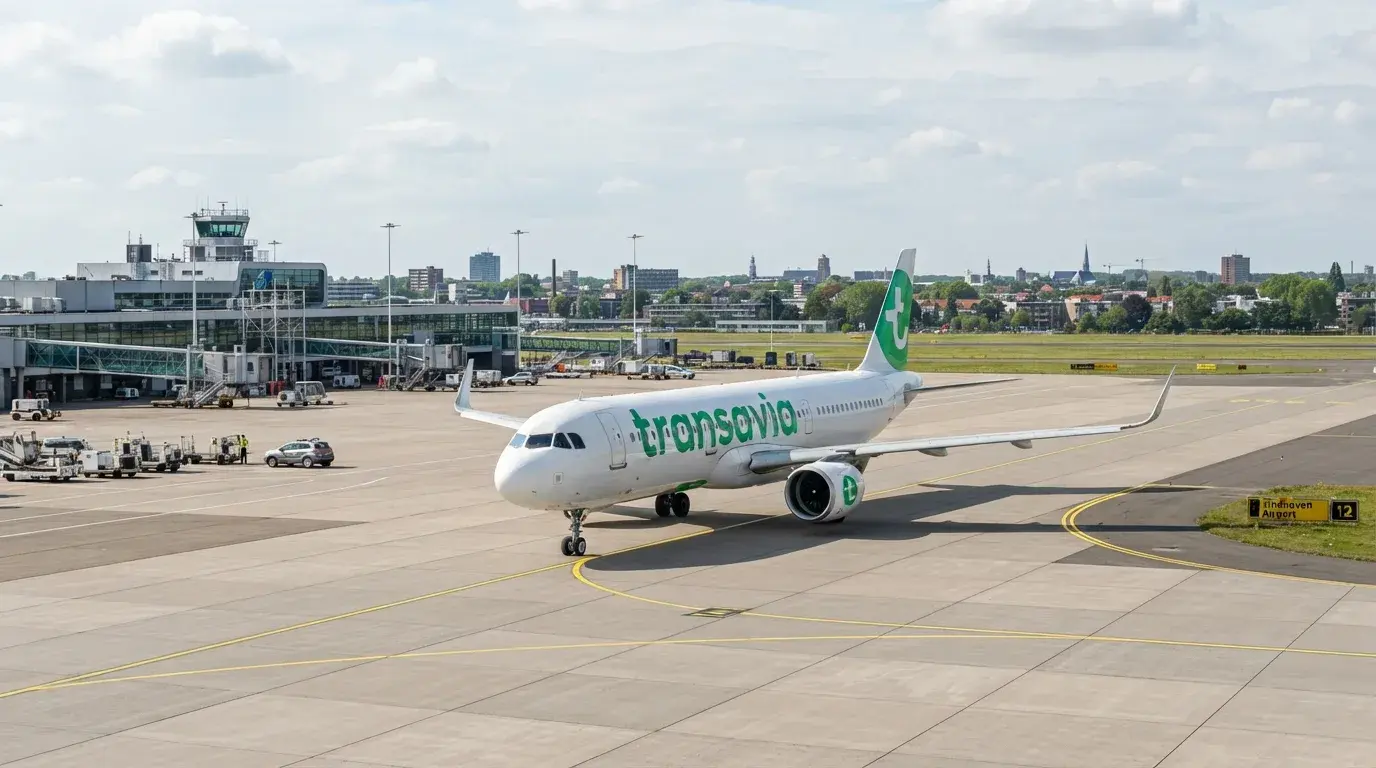
From summer 2027, Transavia will make waves in the European aviation scene. The low-cost subsidiary of the Air France-KLM group has announced it will base its first Airbus A321neo at Eindhoven Airport in the Netherlands following the reopening of the airport after prolonged closure for major renovation works. This strategic choice aligns with a fleet modernization and market expansion strategy.
This new base, along with the arrival of the A321neo, marks a turning point for Transavia. The airline, which is celebrating 20 years in Eindhoven this year, is banking on quieter, more fuel-efficient aircraft to boost its appeal. However, this announcement comes with a complex transition period: Eindhoven’s runway will be closed from February 1 to July 18, 2027, for major renovations, forcing the airline to temporarily reorganize operations at two neighboring airports.
The shift to the A321neo is far more than a simple technical upgrade. It represents a major evolution for Transavia, accelerating its transition to more efficient aircraft while expanding its operational reach across Europe. But how will this strategy impact travelers? And what are the concrete consequences of Eindhoven’s closure? Here’s what you need to know to prepare for these changes.
Why Eindhoven for the A321neo? The strategic rationale
The arrival of the first Airbus A321neo in Eindhoven in 2027 is no coincidence. Transavia has chosen this next-generation aircraft for several key reasons. First, the A321neo boasts a fuel consumption reduced by 15 to 20% compared to previous models—a critical saving amid persistently high jet fuel prices. Second, its lower noise levels meet growing demands from local residents and environmental regulations.
According to Tromp, Transavia’s program manager, “This aircraft marks a key milestone in our modernization strategy. We are aiming for a quieter, more efficient, and more competitive fleet.” The A321neo will also increase passenger capacity while keeping costs under control—a major advantage for a low-cost carrier. Eindhoven, with its strategic location in southern Netherlands, becomes an even more attractive hub for travelers seeking sunny destinations or European cities.
This decision aligns with an ongoing fleet renewal plan. Transavia has already replaced part of its Boeing 737 fleet with A321neos at other bases, such as Rotterdam The Hague. The anticipation of the A321neo’s arrival in Eindhoven upon the airport’s reopening in July 2027 underscores the airline’s ambition to solidify its position as a key low-cost player in Northern Europe.
Eindhoven’s runway closure: Where will Transavia’s aircraft go?
The renovation of Eindhoven’s single runway—including upgrades to shoulders and the installation of an arresting system for fighter jets—will force Transavia into a temporary reorganization. From February 1 to July 18, 2027, the airport will be closed to all air traffic, a situation with significant implications for both travelers and the airline.
To manage this transition period, Transavia will relocate part of its fleet to two neighboring airports: Weeze in Germany, where four aircraft will be based, and Maastricht Aachen in the Netherlands, with two aircraft. While less central than Eindhoven, these airports will allow the airline to maintain flights to popular destinations such as Alicante, Málaga, Barcelona, Faro, Ibiza, Lisbon, Marrakech, and Tenerife. Package sales for the period from April to July 18, 2027, will open at a later date.
This temporary arrangement raises logistical challenges. Passengers will need to adapt to new connections or longer travel times from these airports. Transavia assures that flight schedules will remain stable, with approximately two flights per aircraft per day from Weeze and Maastricht. A pragmatic solution, though it may complicate travel for time-sensitive or less mobile passengers.
Transavia’s 20-year bet on Eindhoven
Despite the immediate challenges posed by Eindhoven’s closure, Transavia remains confident in the airport’s long-term potential. The airline highlights a loyal customer base of vacationers, business travelers, and visitors to the southeastern Netherlands. This diverse clientele justifies the investments planned for the coming years.
The fleet renewal with the A321neo is part of a broader strategy to expand in the region. Transavia has already indicated it will continue investing in its presence in Eindhoven, a decision that could also attract other airlines or tourism stakeholders. Furthermore, the airport’s reopening in July 2027 will coincide with the A321neo’s arrival, symbolizing a new era for the airline and its passengers.
For travelers, this evolution could mean a wider range of destinations, competitive fares, and an improved in-flight experience. However, it also requires adapting to logistical changes, particularly during the runway closure period. One thing is certain: Transavia has no intention of abandoning Eindhoven—in fact, quite the opposite.
What this means for passengers: Key changes to expect
Travelers who had planned to fly from Eindhoven for vacations or business trips will face a complex transition period. Between February and July 2027, flights from this base will be relocated to Weeze and Maastricht, two airports that are less central and less well-connected by public transport. This constraint could discourage some passengers or prompt them to postpone their travel plans.
Transavia assures that bookings and packages will remain valid, even if departures shift to other airports. Passengers are advised to check baggage allowances and schedules, as connections may take longer. For those unable or unwilling to travel to Weeze or Maastricht, alternatives such as trains from Eindhoven to other European cities exist—but will require additional planning.
From July 2027, when the A321neo takes up service in Eindhoven, passengers can finally enjoy a redesigned experience. The aircraft, with its increased space and reduced noise, promises enhanced comfort, while the airline expands its destination offerings. For sun-seekers, culture enthusiasts, or road-trippers, Eindhoven could become an even more attractive gateway to Europe.
Will Transavia’s bold move pay off?
Transavia is making a high-stakes bet on Eindhoven and the A321neo. The low-cost airline, which has built a strong reputation across Europe, is counting on this modernization to strengthen its position against competitors like easyJet and Ryanair. The arrival of the A321neo, a more efficient and environmentally friendly aircraft, could appeal to travelers seeking cost-effective yet responsible travel solutions.
However, the success of this strategy hinges on Transavia’s ability to navigate the transition period without losing passengers. The closure of Eindhoven’s runway and the temporary relocation to Weeze and Maastricht present a major logistical challenge. Travelers will need to be flexible, while the airline must communicate clearly to avoid confusion.
Ultimately, Transavia is betting on innovation and adaptability to write a new chapter in its history. With Eindhoven as a strategic hub and the A321neo as its flagship, the airline appears poised to shake up Europe’s low-cost market. The question remains: Will passengers follow suit?
Be the first to comment on this article
On the same topic
- AirAsia Crisis: 90 Pilots Laid Off in the Philippines, Salary Delays in Malaysia
- Cebu Pacific Transforms A321neo into a Living Canvas: Celebrating 30 Years with Filipino Art
- Paris-Orly to Salerno: easyJet Launches New Low-Cost Route to the Amalfi Coast for €50
- Airbus A330-900: Record 480-Passenger Capacity Set to Disrupt Long-Haul Flights
- Frontier Airlines Hikes Fares by 71%: Fuel Bill or Strategic Shift?
- Transavia expands its Breton network with Seville: how to fly nonstop to Andalusia from Brest