airBaltic on the Brink: How Latvia Avoids a Cash Crunch with €175 Million State Guarantee
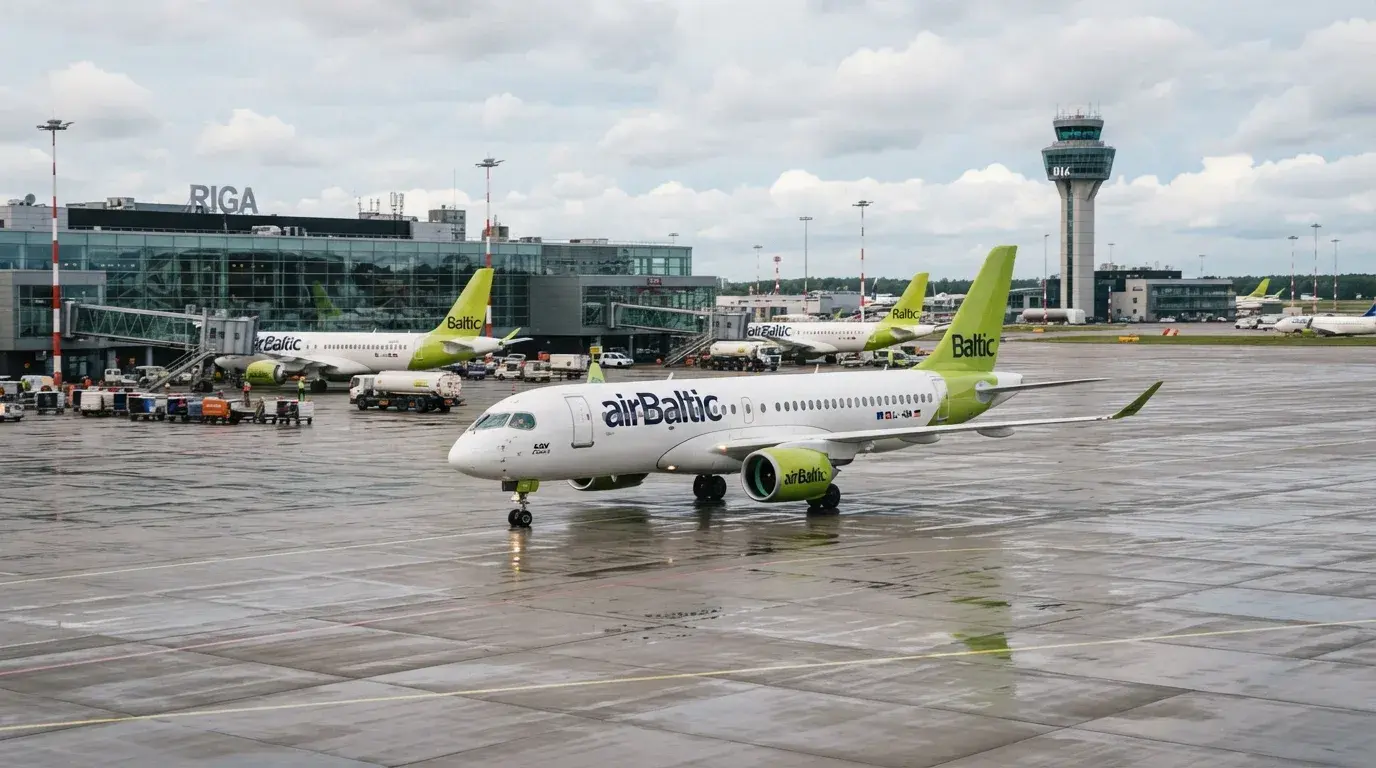
Latvia has played a high-stakes game to save airBaltic from bankruptcy. An emergency state guarantee of up to €175 million was approved by the Latvian Parliament, allowing the airline to secure private financing and avoid a possible suspension of flights as early as December. The decision was made in haste, with Brussels and a New York court still needing to give their approval.
The vote in the Latvian Parliament did not go unnoticed. On November 26, 2026, lawmakers approved amendments in a second reading by 77 votes to 19, authorizing the state to issue the guarantee. The goal is clear: cover short-term financing needs without immediate disbursement from the national budget. A temporary but vital solution to keep airplanes flying and prevent Latvia from losing its global connections.
Latvia’s Transport Minister, Krišs Lipšāns, defended the measure as the best available option in a situation where “there are no good options left.” Without this guarantee, airBaltic could have been forced to suspend operations as early as mid-December, lacking access to the remaining €125 million of a debtor-in-possession (DIP) financing already approved by a New York court. This credit, intended for companies in restructuring, is contingent on the Latvian guarantee.
This €175 million guarantee is the cornerstone of a broader financial arrangement. It unlocks the second tranche of a €350 million DIP credit, already partially utilized. The consortium of private lenders, including giants like Barclays and Morgan Stanley, requires this protection to release the funds. The announced rate, SOFR + 8%, or about 12% at the time of bankruptcy filing, reflects the precariousness of the situation.
However, two major hurdles remain. First, approval from the European Commission. The guarantee must comply with EU state aid rules, a process that could take time. Second, priority in the United States: the New York court must still rule to grant new lenders priority over holders of 2029 maturity bonds. Without this decision, the remaining €125 million will not be released.
AirBaltic filed for Chapter 11 bankruptcy on September 14, 2026, and plans to emerge from it by mid-2027. The airline assures that flights, bookings, and tickets remain valid during this process. Yet, its August business plan outlines a drastic fleet reduction: from 54 to 36 Airbus A220-300 aircraft by the end of 2026, and to around 40 by 2031. A painful restructuring that includes job cuts: between 500 and 700 positions could disappear out of the current 3,000.
On November 26, the airline even offered some pilots and cabin crew a choice between demotion or departure. Some pilots were also proposed for secondment to Air Niugini, the national carrier of Papua New Guinea. An offer that underscores the depth of the crisis.
AirBaltic’s situation is symptomatic of the challenges facing European airlines. High debt, rising aircraft leasing costs, and especially the surge in jet fuel prices following the outbreak of the U.S.-Iran war have accelerated the crisis. AirBaltic had not hedged its fuel purchases, further straining its already fragile cash flow. In 2025, the airline carried 5.2 million passengers for revenue of €779.3 million but reported a net loss of €44.3 million.
The Latvian government, which holds 88.37% of the shares, is trying to limit the damage. Lufthansa Group, which has held a 10% stake since 2025, could play a role in the restructuring. For now, airBaltic’s survival hinges on two factors: a swift agreement with Brussels and a favorable ruling from the New York court. Without these two green lights, the airline could be forced to suspend flights as early as December, plunging Latvia and its air links into turbulence.
A State Guarantee Without Immediate Disbursement, But With Strict Conditions
The Latvian guarantee is a high-risk bet. It costs nothing to the national budget in the short term but commits the state in the long run. The Latvian government specifies that the guarantee can only be granted after necessary agreements with the European Commission. A crucial step, as Brussels must verify that this aid complies with EU state aid rules.
The financial arrangement relies on a private loan of €350 million, already approved by a New York court under Chapter 11. This credit is divided into three tranches: €175 million already used, up to €125 million pending release, and up to €50 million to cover interest. The Latvian guarantee conditions the release of the second tranche, estimated at €125 million.
The private lenders, including Strategic Value Partners, Barclays, Hayfin Capital Management, Morgan Stanley, and Oaktree Capital Management, require this protection to limit their risk. The announced rate, SOFR + 8%, reflects the precariousness of the situation. For Latvia, the stakes are twofold: avoid an immediate bankruptcy of airBaltic and negotiate with Brussels to ensure this aid is considered compatible with European rules.
If Brussels approves, the Latvian guarantee will be activated. Otherwise, airBaltic could find itself at an impasse, with planes grounded and thousands of passengers stranded. A decision that could take weeks or even months, in a context where every day counts.
AirBaltic on the Operating Table: A Rescue Plan Through Drastic Fleet Reduction
AirBaltic’s business plan, unveiled in August 2026, outlines a radical restructuring of its fleet. The airline, which operated 54 Airbus A220-300 aircraft, must reduce this number to 36 by the end of 2026, and to around 40 by 2031. A decision that comes with job cuts: between 500 and 700 positions could disappear out of the current 3,000.
On November 26, airBaltic offered some pilots and cabin crew a choice between demotion or departure. Some pilots were also proposed for secondment to Air Niugini, the national carrier of Papua New Guinea. An option that highlights just how critical the situation is.
This restructuring is part of a broader crisis. High debt, rising aircraft leasing costs, and especially the surge in jet fuel prices following the outbreak of the U.S.-Iran war have accelerated the crisis. AirBaltic had not hedged its fuel purchases, further straining its already fragile cash flow. In 2025, the airline carried 5.2 million passengers for revenue of €779.3 million but reported a net loss of €44.3 million.
The airline is banking on a recovery of its operations by mid-2027, once the restructuring plan is complete. But to achieve this, it must first survive the coming weeks, with no guarantee that the Latvian state guarantee will be sufficient. Every flight counts, and every day of delay in the restructuring worsens the crisis.
Brussels and New York: The Arbiters of airBaltic’s Uncertain Survival
AirBaltic’s survival does not depend solely on Latvia. Two external actors play a key role: the European Commission and the New York court. Without their approval, the Latvian guarantee and private financing cannot be activated.
First, Brussels must validate the Latvian state guarantee. A step that could take time, as the Commission must verify that this aid complies with EU state aid rules. If Brussels deems the guarantee disproportionate or distorting competition, it could block the process.
Second, the New York court must rule on the priority of new lenders. AirBaltic explains that the last two tranches of financing will only be released if the court grants new lenders priority over holders of 2029 maturity bonds. A decision that could take weeks.
If these two green lights are not obtained, airBaltic could be forced to suspend flights as early as December. An interruption that would plunge Latvia and its air links into turbulence, with major economic and social consequences. For now, the airline assures that flights, bookings, and tickets remain valid during the restructuring process. But without financing, this promise may prove impossible to keep.
A State-Owned Airline on Life Support: Between Restructuring and Survival
AirBaltic is majority-owned by the Latvian state (88.37%), with Lufthansa Group holding 10% since 2025. This shareholding structure explains why the Latvian state took the risk of guaranteeing private financing. Without this intervention, airBaltic could have been forced to suspend flights as early as December, with dire consequences for Latvia’s connectivity.
In 2025, the airline carried 5.2 million passengers for revenue of €779.3 million but reported a net loss of €44.3 million. A situation that reflects the challenges facing European airlines: high debt, rising aircraft leasing costs, and especially the surge in jet fuel prices following the outbreak of the U.S.-Iran war.
To survive, airBaltic is relying on drastic restructuring: fleet reduction, job cuts, and the search for new financing. But time is not on its side. Each day of delay in the restructuring worsens the crisis, and every flight counts. If the Latvian guarantee and private financing are not activated in time, the airline could be forced to suspend operations, plunging Latvia and its air links into turbulence.
Be the first to comment on this article