Norse Atlantic Airways on the brink of bankruptcy: everything to know about this crisis threatening long-haul low-cost
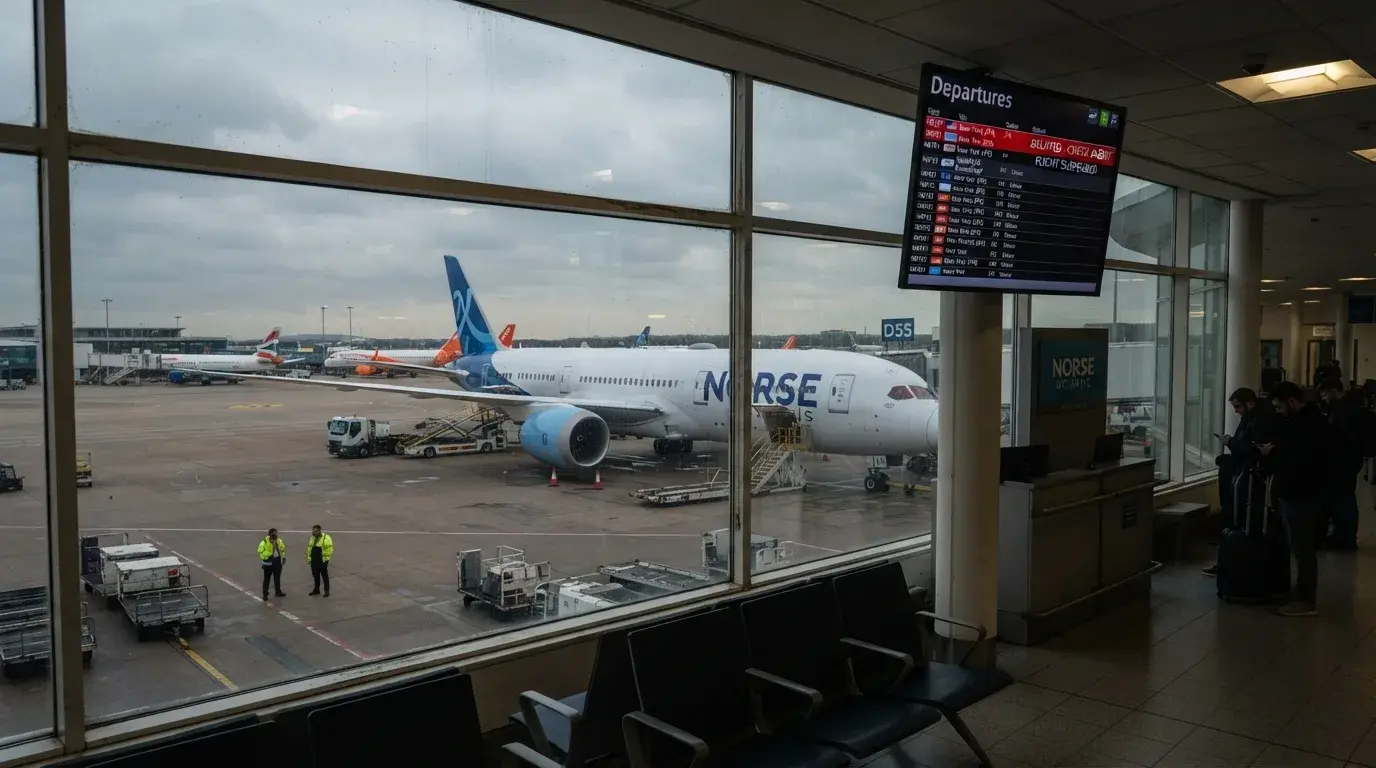
Long-haul low-cost carriers are not immune to financial pitfalls—especially when fuel prices soar and lucrative contracts crumble like an overbaked cookie. Norse Atlantic Airways, the Norwegian airline that bet on Boeing 787 Dreamliners for its transatlantic routes, now finds itself in such a critical financial situation that its very future is in question. With depleted cash reserves, broken contracts, and a desperate search for buyers, the airline appears to be navigating uncharted economic waters without a compass.
On November 25, 2026, Norse Atlantic issued a statement that reads like a financial SOS. The airline’s cash reserves are now described as “critical”—a euphemism for imminent liquidity shortages. Without an urgent cash injection or a lifesaving takeover, operations could grind to a halt. Management admits ongoing talks for a potential acquisition, but with no guarantees. “There is no assurance these discussions will lead to a viable solution,” the statement reads—a phrase that encapsulates the uncertainty hanging over the airline’s future.
The crisis is no sudden twist of fate. It is the direct result of a series of strategic missteps and external pressures that have piled up over months. The conflict in the Middle East, which sent fuel prices skyrocketing, dealt a first blow to an already fragile airline. But the real trigger came elsewhere: the abrupt end of its contract with IndiGo, one of its main customers for Dreamliner leases. In October 2026, the Indian carrier decided to abandon its long-haul operations using widebody aircraft and terminate its partnership with Norse Atlantic. The result? The Norwegian airline is now stuck with six Boeing 787-9s that must be leased out or sold urgently.
Norse Atlantic had tried to shield itself by diversifying its operations. It had leased six of its twelve Dreamliners to IndiGo, while the remaining six operated on its own network—a strategy meant to stabilize finances by spreading risk. But diversification backfired. With the IndiGo contract gone, the airline lost a major revenue stream and now faces an underutilized fleet, even as fuel prices remain at historic highs. The long-haul low-cost model, already fragile, is showing its limits: filling planes is not enough if operating costs spiral out of control.
A fleet under pressure and a desperate search for buyers
Norse Atlantic currently operates a fleet of twelve Boeing 787-9s. Six were leased to IndiGo; the other six served its transatlantic routes between Europe and the United States. With the IndiGo contract terminated, the airline must find new homes for its aircraft. It has already signed a deal with Pakistan International Airlines (PIA) to lease two Dreamliners for routes between the UK and Pakistan starting November 2026. But two aircraft is a drop in the ocean. Ten remain to be placed—and fast.
Management has indicated it is negotiating with multiple parties to secure short-term financing and restart operations. It is also exploring new wet-lease agreements—where the airline provides the aircraft, pilots, and maintenance, while the client handles ticket sales. But are these solutions enough to save the airline? Investors aren’t waiting to find out: the airline’s stock plunged 76% on the Oslo Stock Exchange after the crisis announcement, a clear reflection of the scale of the disaster.
Yet Norse Atlantic wasn’t always in this mess. Launched in 2022, the airline quickly won over budget-conscious transatlantic travelers. Its Boeing 787 Dreamliners, known for comfort and fuel efficiency, offered a credible alternative to traditional carriers. In 2025, Norse Atlantic boasted an impressive 96% seat occupancy rate. But behind the impressive load factors lay a harsher reality: the airline had still not turned a profit. In 2025, its operating result was still in the red, to the tune of about $20 million. The Middle East conflict and soaring fuel prices pushed it into deeper losses.
Is the long-haul low-cost model viable? A model in need of reinvention
The story of Norse Atlantic raises a fundamental question: is the long-haul low-cost model sustainable in the long term? The airline proved it could attract passengers with attractive fares, but it failed to make the business profitable. The problem? Fuel accounts for a far larger share of costs in long-haul than in short-haul. With jet fuel prices surging since the Middle East conflict began, margins have shrunk to a sliver. And when a major client like IndiGo walks away, the situation becomes unmanageable.
Norse Atlantic is not alone in facing this economic equation. Other players, such as Level and French Bee, have also struggled. But Norse Atlantic is the first to teeter on the edge of bankruptcy—a stark illustration of the risks inherent in the long-haul low-cost model, where even minor cost fluctuations can tip a carrier into the red. The Norwegian airline tried to diversify by offering aircraft leasing services, but this strategy failed to offset the loss of its main client.
The big question now: can Norse Atlantic survive? Management launched a formal sale or merger process as early as July 2026, but the current financial urgency makes a positive outcome uncertain. If no solution is found quickly, the airline may be forced to suspend operations, leaving thousands of passengers and employees in limbo. The worst-case scenario—a full-blown bankruptcy—could lead to fleet liquidation and the loss of hundreds of jobs.
For now, Norse Atlantic continues to operate, but under precarious conditions. The airline insists it will do everything possible to secure the liquidity needed to keep flying, but time is running out. Passengers with upcoming bookings are advised to monitor the airline’s announcements and check their reservation status regularly.
What to do if you have a Norse Atlantic flight booked
If you have a booked flight with Norse Atlantic, here’s what you need to know. The airline has pledged to honor its commitments, but it does not hide the fact that its financial situation is critical. In case of doubt, contact the airline directly or your travel agency for up-to-date information. Passengers can also check Norse Atlantic’s website to track developments.
If your flight is canceled, you are entitled to compensation under European Regulation EC 261/2004. This rule provides financial compensation of up to €600 per passenger, depending on flight distance and delay duration. For flights departing from or arriving in the EU, compensation applies even in cases of force majeure, such as airline bankruptcy. Passengers should keep all receipts (tickets, boarding passes, payment proofs) and contact the airline or booking agency to claim their rights.
Norse Atlantic has also implemented measures to protect passengers in case of disruptions. The airline says it is working with Norwegian and European authorities to find solutions that would allow stranded passengers to be repatriated or rebooked. But these measures depend on the evolution of the financial crisis—and nothing is guaranteed.
If the situation worsens, passengers may also turn to their travel insurance. Some policies include coverage for airline bankruptcies. Check your policy terms and contact your insurer as soon as possible.
An uncertain future for low-cost air travel
The story of Norse Atlantic raises a broader question: what future for long-haul low-cost air travel? The model has won over millions of passengers seeking affordable tickets, but today it is showing its limits. Airlines face high structural costs, fierce competition, and geopolitical crises that disrupt operations. In this environment, the long-haul low-cost model may need to evolve—or even disappear—unless a way is found to make it viable.
Norse Atlantic may be just the first in a wave of carriers facing financial difficulties. Other players, such as Play or La Compagnie, could face similar challenges in the coming months. Rising fuel costs, the end of government aid, and competition from traditional carriers are making the long-haul low-cost market increasingly unstable.
For passengers, this is a cause for concern. Long-haul low-cost travel has allowed millions to fly to North America or the Caribbean at lower fares. If these airlines disappear, travelers will have fewer options—and potentially higher prices. The Norse Atlantic crisis is a reminder that air transport remains a fragile sector, where even minor turbulence can plunge a carrier into chaos.
For now, passengers and Norse Atlantic employees can only hope for the best. The Norwegian airline still has a chance to pull through, but time is short. If no solution is found quickly, bankruptcy could sound the death knell for one of the most audacious experiments in low-cost air travel.
To follow developments, check Norse Atlantic’s website or the airline’s official social media accounts regularly. Official announcements will be the best source of information on whether the airline can avoid the worst.
In summary:
- Norse Atlantic Airways is in critical financial shape and risks bankruptcy without urgent funding or a takeover.
- The airline lost its main client, IndiGo, worsening its crisis.
- Six of its twelve Boeing 787 Dreamliners must be leased out or sold, but outlets remain uncertain.
- Passengers should check their bookings and contact the airline or travel agency if in doubt.
- In case of cancellation, passengers are entitled to compensation under EU Regulation EC 261/2004.
Be the first to comment on this article
On the same topic
- Corsair rises from the ashes: State wipes €80 million debt and revives airline for overseas routes
- Severe clear-air turbulence strikes Cathay Pacific A350, injuring 10 passengers
- Delays and tensions: why French air traffic control is at the heart of a European crisis
- Etihad Airways: an impressive network of 20 million passengers and a fleet of over 100 aircraft
- Vietnam Airlines reaches impressive milestone with over 350 million passengers
- Luggage and intermediate measures: new initiatives from Brussels to facilitate passenger travel