AirAsia Crisis: 90 Pilots Laid Off in the Philippines, Salary Delays in Malaysia
Asia’s largest low-cost carrier is navigating one of its most challenging periods. AirAsia has announced delayed salary payments for its Malaysian employees and the layoff of 90 pilots at its Philippine subsidiary, measures taken amid growing social tensions and financial difficulties. These steps follow a series of cost-cutting initiatives aimed at preserving the group’s cash reserves, as jet fuel prices surge to record highs amid the U.S.-Iran conflict.
On November 27, AirAsia confirmed that salaries for its Malaysian-based staff would now be paid at the end of the month, rather than in the second half of the month as previously. This temporary adjustment, effective from November to March, was framed by management as a response to a "challenging environment," urging employees to show "patience" and "flexibility." Group CEO Bo Lingam emphasized that employees’ rights would remain unchanged, with full salaries paid despite the delay. The move is intended to streamline internal payroll processes while safeguarding the group’s liquidity in a strained economic climate.
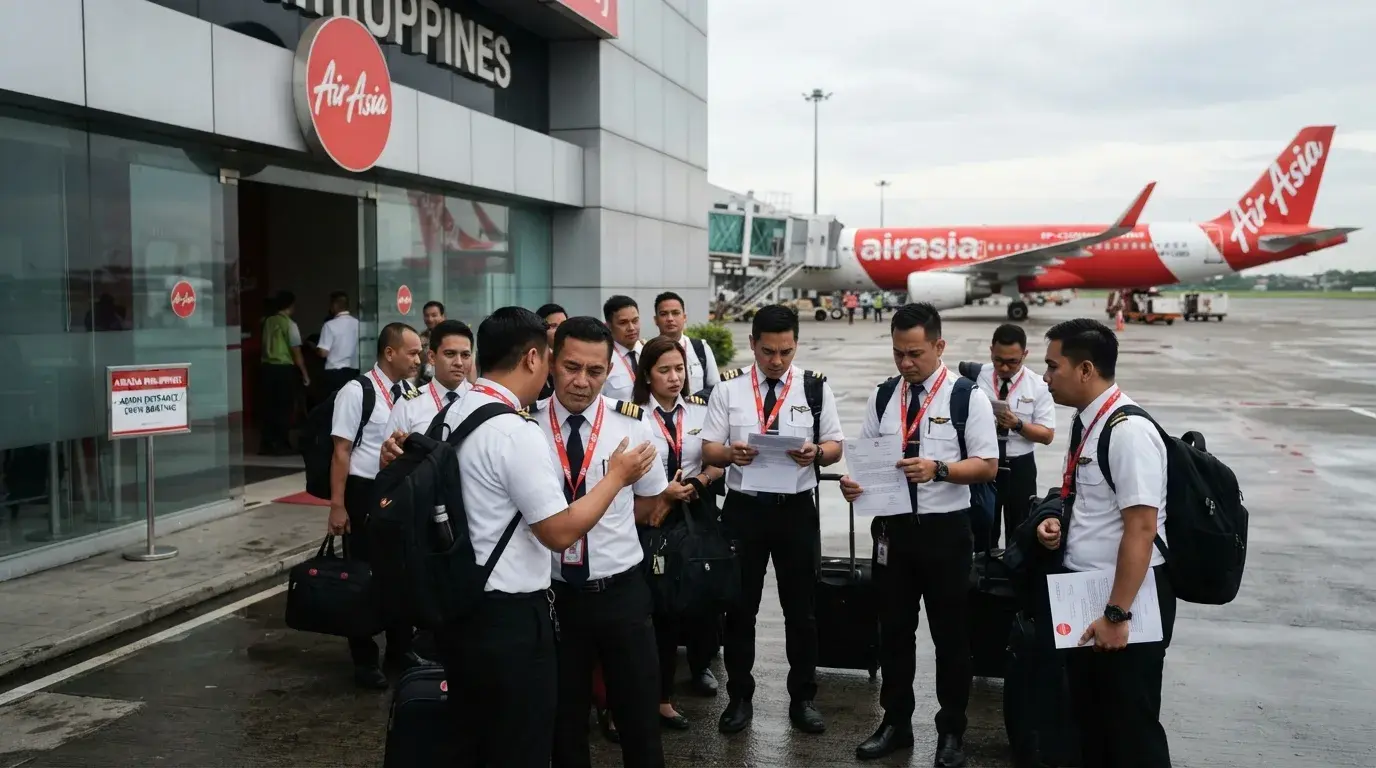
The situation is even more acute in the Philippines, where 90 pilots are set to leave the company by the end of next year. These layoffs, affecting nearly half of the airline’s pilots in the country, were justified by rising fuel costs and a weak local currency. AirAsia Philippines stated it must "optimize" its routes and frequencies, leading to a "significant impact" on staffing needs. CEO Anna Victoria Lu did not specify which routes would be affected. The layoffs have triggered a strike notice from the Airline Pilots’ Professional Union (APPU), which accuses the company of anti-union tactics. The Philippine Department of Labor has set up a crisis cell to prevent disruptions ahead of the holiday season.
These decisions are part of a broader restructuring strategy. AirAsia has already suspended unprofitable routes and returned 25 aircraft to lessors, with the option to hand back more in 2027. The airline has also initiated debt restructuring talks ahead of a planned "reconstruction" phase in 2028. As of September 30, 2026, the group’s cash reserves stood at 905 million Malaysian ringgit (approximately $220 million), a 5% decline from the previous quarter. The company’s stock has plummeted over 70% year-to-date, underscoring the severity of its financial crisis.
The Malaysian government is exploring support options for the carrier. The Ministry of Finance has indicated that any assistance would come with priority repayment terms over other creditors and enhanced oversight of the board and management. Despite these challenges, AirAsia has not canceled any aircraft orders. In May 2026, the group finalized a deal for 150 Airbus A220-300s, with options for an additional 150 aircraft, totaling around $19 billion. Deliveries are slated to begin in 2028. However, the planned hub in Bahrain—meant to connect Southeast Asia to Europe via a Kuala Lumpur–Bahrain–London Gatwick route—has been delayed to March 2027 due to regional conflicts.
This crisis unfolds as the global aviation sector grapples with major challenges, including soaring energy prices and geopolitical tensions. Once a key player in democratizing air travel across Southeast Asia, AirAsia now faces difficult choices to ensure its medium-term survival.
Fleet at Risk, Ambitions Remain
Despite current turbulence, AirAsia continues to bet on innovation and expansion. The group’s order for 150 Airbus A220-300s—Airbus’s largest single order—along with options for 150 more, is designed to modernize its fleet and support growth. Deliveries are expected to begin in 2028. However, these plans are now jeopardized by financial strain and economic uncertainty.
The Bahrain hub project, intended to link Southeast Asia to Europe via a London Gatwick stopover, symbolized AirAsia’s global ambitions. The hub was meant to offer an alternative to existing direct routes and strengthen connectivity between the two continents. Due to tensions between the U.S. and Iran, the project has been pushed back to at least March 2027. Geopolitical instability has driven up operational costs and created volatility in demand, further complicating the airline’s recovery.
Layoffs Raise Questions About the Group’s Social Future
The layoff of 90 pilots in the Philippines and the salary delays in Malaysia highlight the growing precarity of jobs in the aviation sector. While these measures are framed as economic necessities, they risk exacerbating an already tense social climate. In the Philippines, pilots’ unions have filed strike notices, while Malaysian employees are urged to accept the adjustments with understanding. These decisions underscore the challenges of job security in a sector undergoing rapid transformation, marked by rising costs and intensifying competition.
Once a model of success in the low-cost segment, AirAsia now faces unprecedented challenges. Between restructuring, layoffs, and project delays, the group is striving to preserve its cash reserves while maintaining long-term ambitions. Its future hinges on its ability to weather the current crisis and reassure both investors and employees.
What to Do If You’ve Booked a Flight with AirAsia
If you’ve booked a flight with AirAsia or one of its subsidiaries, regularly check your email for updates from the airline. In case of disruptions, AirAsia offers refund or rebooking options based on its general terms and conditions. Passengers affected by layoffs or route reductions should stay informed to avoid inconvenience.
For the latest updates and official information, visit AirAsia’s website or contact their customer service. The airline has assured that flights, bookings, and services remain "fully operational" despite current difficulties.
A Sector Under Pressure
AirAsia’s crisis reflects broader challenges facing the global aviation industry. Rising fuel prices, geopolitical tensions, and intensifying competition have forced airlines to adopt drastic cost-cutting measures, including layoffs and salary adjustments. While these steps are necessary to preserve liquidity, they also highlight the structural challenges the sector must overcome. In this context, passengers and airline employees are often the first to feel the impact of the crisis.
Once a symbol of Southeast Asia’s low-cost aviation boom, AirAsia must now navigate an economic and social storm. Its future will depend on striking a balance between restructuring and innovation while rebuilding trust among customers and partners.
For travelers, the crisis underscores the importance of staying informed about airline developments and understanding booking and refund policies. In an industry in flux, flexibility and awareness remain key to avoiding disruptions.
Be the first to comment on this article
On the same topic
- Volotea Slashes Fleet to 30 Aircraft: What It Means for French Travelers
- Air Calédonie: Vital transfer from Magenta to La Tontouta in March 2026
- Lufthansa restructures its activities to promote the integration of its subsidiaries
- Spirit rejects Frontier's latest merger proposal and continues its restructuring process
- Air Belgium in difficulty: four months to find a new buyer