Somon Air ushers in the Boeing 737 MAX era in Tajikistan: what impact on Central Asian travel?
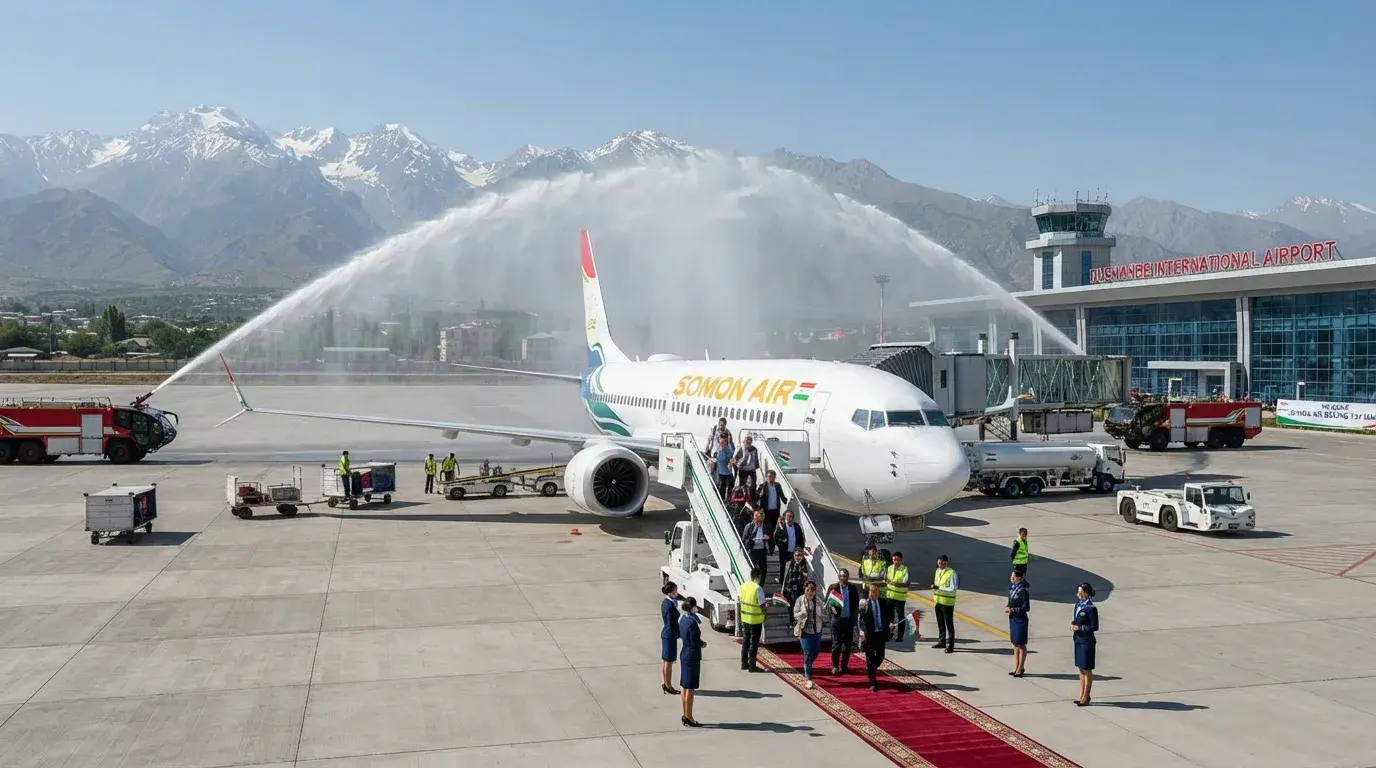
Tajikistan is entering a new era in its aviation history with the arrival of its first Boeing 737 MAX 8 in the fleet of Somon Air. A groundbreaking development for this Central Asian nation, which until now operated exclusively with Boeing 737 Next Generation aircraft, this marks a significant shift for travelers seeking non-stop routes to Europe and Asia. A technical and commercial milestone that could transform Tajikistan’s accessibility and open unprecedented opportunities for passengers looking for less-traveled destinations.
Leased from Dubai Aerospace Enterprise (DAE), this modern twinjet joins a modernization drive backed by Tajik authorities. Capable of carrying up to 210 passengers on routes up to 6,480 km, the MAX 8 enables Somon Air to consider direct links to major hubs such as London, Beijing, and Guangzhou. Enhanced range reduces reliance on connections and streamlines travel to key airports while optimizing operational costs for the airline.
Until now, Somon Air operated a fleet of six Boeing 737 Next Generation aircraft, a configuration that limited its geographic ambitions. The introduction of the 737 MAX 8 is a turning point: it not only improves fuel efficiency but also positions Tajikistan as an emerging player on the map of air connections between Central Asia, the Middle East, and Europe. A trend that could appeal to travelers seeking off-the-beaten-path getaways or those looking to bypass congested hubs in Istanbul, Dubai, or Moscow.
For passengers, these changes mean more options and shorter travel times. Routes to London, long discussed but delayed due to a lack of suitable aircraft, could finally become a reality. Direct services from Dushanbe or via Tbilisi would connect Europe to Central Asia in a single flight, eliminating layovers. A particularly attractive prospect for business travelers, expatriates, and tourists exploring the modern Silk Road.
The Tajik administration is openly enthusiastic. “Expanding the number of aircraft will allow us to broaden our flight geography. We already have authorizations from several states, but we couldn’t use them without the right aircraft,” explains Khabibullo Nazarzoda, Director of the Civil Aviation Agency of Tajikistan. His statement underscores the strategic importance of this modernization: Tajikistan, nestled between Uzbekistan, Kyrgyzstan, China, and Afghanistan, boasts untapped tourism and economic potential. Landmarks like Iskanderkul Lake, the Pamir Mountains, or the ancient Sogdian civilization sites could finally attract a steady flow of international visitors.
Boeing 737 MAX: a renewed fleet and controlled costs
The 737 MAX 8 is more than a prestige symbol for Somon Air—it’s a practical opportunity to cut operating costs and boost the airline’s competitiveness. With its CFM LEAP-1B engines, renowned for their fuel efficiency, the aircraft consumes up to 15% less fuel than Next Generation models. A substantial saving in a context where jet fuel prices remain volatile, particularly due to persistent geopolitical tensions in the Middle East.
For the airline, this transition also requires adapting operational procedures. Crew training, technical support organization, and regulatory certification updates are critical steps before the MAX 8 can be fully operational. A process already underway, but one that requires a reasonable timeline to ensure flight safety and reliability.
Leasing the aircraft from DAE allows Somon Air to avoid a massive capital investment while benefiting from a new, high-performance jet. A strategy in line with industry trends, where many carriers opt for flexible financing solutions to modernize their fleets. In the long term, if the experience proves successful, a firm order with Boeing is not out of the question—possibly for the 737 MAX 10, an even higher-capacity version of the American narrowbody.
What concrete impacts for travelers in 2026 and beyond?
For passengers, the arrival of the 737 MAX 8 at Somon Air brings several immediate benefits. First, better route coverage with direct flights to key destinations. Second, an improved in-flight experience thanks to modern cabins and enhanced connectivity. Third, potentially more competitive pricing enabled by lower operating costs.
Routes to London, Beijing, and Guangzhou are particularly anticipated. A direct service from Dushanbe to the British capital would connect two major Eurasian cities in about 8 hours, compared to nearly 12 hours with a layover. A time-saving advantage that could appeal to business travelers or tourists looking to explore Central Asia before or after a European trip.
In terms of tourism, Tajikistan offers breathtaking landscapes: the snow-capped peaks of the Pamir Mountains, the turquoise lakes of Gorno-Badakhshan, and the ancient fortresses along the Silk Road. An ideal destination for hikers, culture enthusiasts, and photographers. With the arrival of new aircraft, these sites could gain greater accessibility, especially for visitors from Europe or East Asia.
For travelers already familiar with Somon Air, this modernization is also an opportunity to experience an improved product. The 737 MAX 8’s cabins, designed for enhanced comfort and optimized sound insulation, promise a more pleasant journey. Special attention has been given to seats, now wider and more ergonomic, as well as in-flight entertainment systems, which are now more advanced.
A regional trend to watch
Somon Air’s initiative is part of a broader trend of fleet modernization across Central Asia. Several regional carriers, such as Air Astana (Kazakhstan) and Uzbekistan Airways, have already begun integrating new-generation aircraft like the Airbus A320neo or the Boeing 787 Dreamliner. A trend that could reshape Asia’s air connectivity map, offering passengers more options to travel between Europe and Asia without relying on traditional hubs.
For French and European airlines, this evolution also presents an opportunity. By developing interline partnerships with Somon Air, they could offer combined solutions to connect Europe to Central Asia via Dushanbe. A strategy in line with recent agreements signed by carriers like Aircalin with Corsair or French Bee, aimed at strengthening operational reliability and service quality.
In this context, Tajikistan could become a key transit point for travelers looking to avoid congested hubs. A destination to watch closely, especially for adventure travelers and professionals seeking new opportunities.
What’s next for 2027 and beyond?
While the arrival of the first 737 MAX 8 marks a symbolic milestone, it is just the beginning of a broader transformation. Somon Air has already announced plans to acquire additional MAX family aircraft, including the 737 MAX 10, which offers even greater capacity. This expansion could enable the airline to serve even more distant destinations, such as Seoul, Tokyo, or even Sydney, while maintaining efficiency and competitiveness.
For passengers, this means travel options to Central Asia and beyond will continue to grow in the coming years. Good news for those eager to explore less-served regions, as well as budget-conscious travelers benefiting from increased competition and potentially more attractive fares.
Finally, this modernization is accompanied by upgrades to Tajikistan’s airport infrastructure. Dushanbe International Airport, the country’s main hub, is undergoing investments to improve its capacity and facilities. A trend that could position Tajikistan as a must-visit destination for travelers seeking authenticity and adventure.
In conclusion, the arrival of the Boeing 737 MAX 8 at Somon Air is more than just a technical upgrade—it’s a revolution for air transport in Central Asia, with direct implications for accessibility, comfort, and travel options. For passengers, it’s an opportunity to discover a new, better-connected, and more accessible destination than ever before.
As Tajikistan prepares to welcome more international visitors, one question remains: when will you plan your next trip to this still-underrated gem of Central Asia?
Be the first to comment on this article