Record demand for air freight in 2026: why costs are soaring and what it means for your shipments
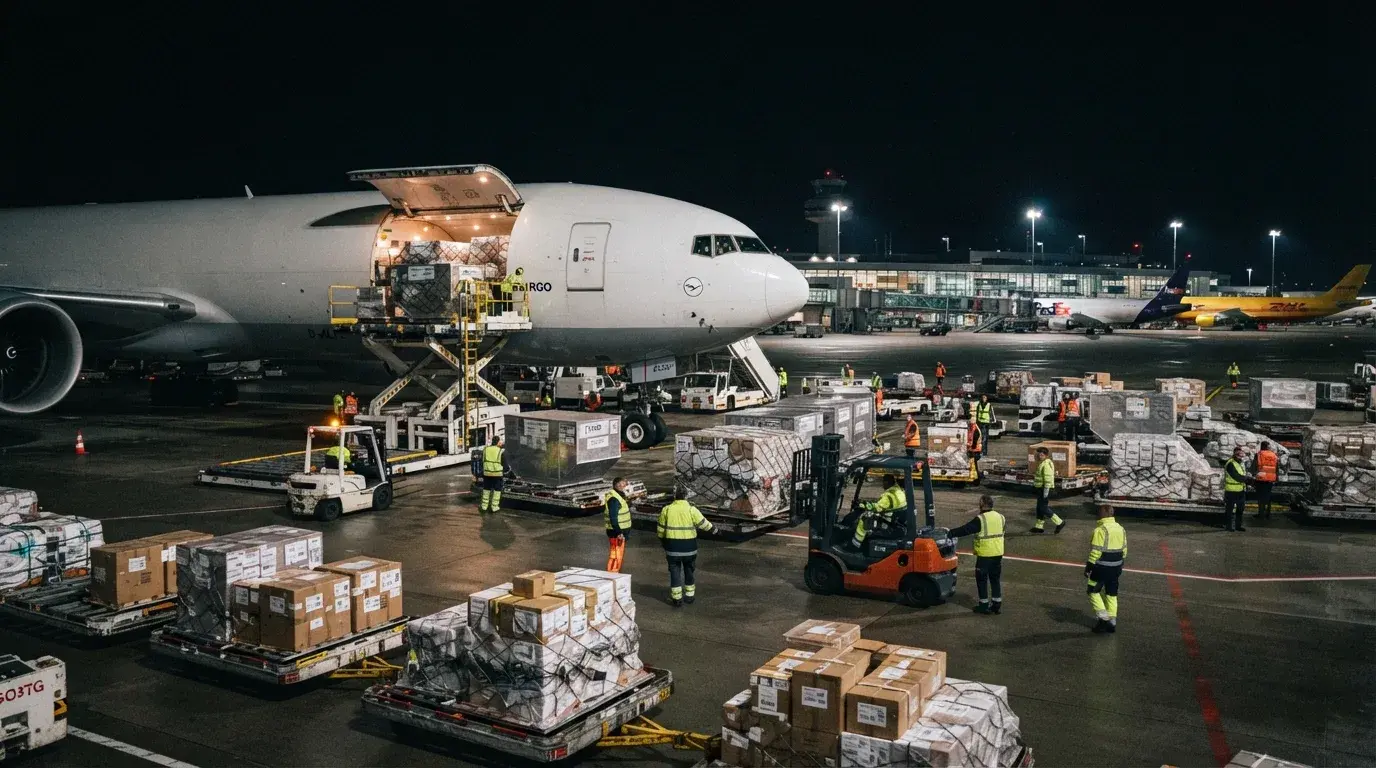
The figures published by the International Air Transport Association (IATA) for September 2026 leave little room for doubt: global air freight demand surged by 7.7% year-on-year, a record that comes with a sharp spike in costs. Behind this growth lies a paradox: while goods exchanges hit all-time highs, transporting them is becoming increasingly expensive, to the point of threatening carriers’ profitability. This situation affects both businesses and travelers, with direct repercussions on the prices of imported or exported goods.
This phenomenon is largely explained by the growing gap between supply and demand. While global transport capacity increased by just 2.7%, demand jumped by 7.7%. As a result, airlines are struggling to absorb this surplus of goods, and available space is dwindling. The global load factor reached 47.9% in September, up from 45.7% in September 2025, confirming increased pressure on logistics networks. This strain is particularly acute on the Asia-North America route, where traffic rose by 17% in September, marking an eighth consecutive month of growth.
Artificial intelligence is playing a key role in this dynamic. Shipments of high-tech equipment, particularly components for servers and data centers, have contributed to this surge. Marie Owens Thomsen, IATA’s Chief Economist, notes that “intra-Asia international trade also grew by 10.2%, while growth between Europe and North America reached 9.3%.” These figures illustrate the scale of ongoing transformations in global supply chains, accelerated by digitalization and the rise of technology.
However, this record growth is not translating into improved carrier margins. On the contrary, jet fuel prices surged by 17.5% in September compared to August and by 103.4% year-on-year, according to IATA. While cargo yields rose by 25.9% year-on-year, they are not enough to offset the soaring costs. North American airlines are seeing the strongest regional growth, with demand up 11.8%, but their capacity increased by just 0.8%. In Europe, the situation is equally tight: demand rose by 4.5%, while capacity fell by 1.6%, pushing the load factor to 54.6%, the highest among the six regions studied.
This cost pressure is unlikely to ease in the short term. IATA expects air freight prices to remain high due to volatile energy prices and geopolitical tensions in the Middle East. Risks of disruptions in crude oil and refined product supplies add to an already complex equation, making the outlook even more uncertain for the coming months. Yet economic indicators remain favorable: in August 2026, global trade grew by 3.6% year-on-year, and the manufacturing PMI reached its highest level in five years.
For travelers and businesses, this situation means longer delivery times and higher transport costs. Sectors dependent on imports, such as electronics or pharmaceuticals, are particularly hard hit. Airlines, meanwhile, must balance maintaining their margins with absorbing these additional costs, risking a loss of competitiveness to slower but cheaper alternatives like maritime freight.
In this context, carriers are seeking solutions to optimize operations. Integrating technologies like artificial intelligence can improve flight planning and inventory management. However, these innovations alone won’t solve the structural issue posed by rising energy costs. Airlines must also rethink their business models, perhaps through strategic partnerships or alliances to share resources.
The growth driven by Asia and North America
The Asia-North America axis remains the engine of air freight demand. In September 2026, traffic on this route rose by 17%, confirming a long-term trend. This market alone accounted for 23.5% of global air freight traffic in 2025, measured in tonne-kilometers. Intra-Asia international trade also saw strong growth, with a 10.2% increase. These figures reflect the growing integration of Asian economies into global value chains, as well as insatiable demand for tech equipment.
North American airlines are fully benefiting from this dynamic. Their demand rose by 11.8%, while capacity increased by just 0.8%. This disparity highlights the ability of U.S. and Canadian carriers to capture a significant share of this expanding market. In Asia-Pacific, growth is also supported, with an 8.6% increase in demand and a 4.9% rise in capacity. Europe, however, shows more modest growth, with demand up 4.5% and capacity down 1.6%.
This uneven distribution of capacity poses a major challenge for European carriers. Their load factor reached 54.6%, the highest among the six regions studied, reflecting optimal use of available resources. Yet this performance is not enough to offset the structural imbalance between supply and demand.
The impact of jet fuel on airline profitability
Jet fuel prices are the main driver of declining carrier margins. In September 2026, they surged by 17.5% month-on-month and by 103.4% year-on-year. This spike in energy costs weighs heavily on airlines’ accounts, despite a 25.9% rise in cargo yields year-on-year. Marie Owens Thomsen, IATA’s Chief Economist, sums up the situation: “There’s no shortage of goods to transport, but doing so profitably amid persistently high fuel prices has become far more difficult.”
This situation is partly due to airlines’ dependence on oil, whose prices remain volatile amid geopolitical tensions. The Middle East, in particular, is at the heart of these instabilities, exacerbating supply disruption risks. IATA expects air freight prices to remain high in the short term due to the Middle East situation and the risk of further disruptions in refined product flows.
Facing this pressure, airlines must find ways to mitigate the impact of energy costs on their results. Some are turning to sustainable fuels like SAF (Sustainable Aviation Fuels), while others optimize routes or renegotiate supply contracts. Yet these measures alone won’t resolve the structural problem posed by rising energy prices.
North American carriers, which are seeing the strongest regional growth, are particularly exposed to this issue. Their demand rose by 11.8%, but capacity increased by just 0.8%, limiting their room to absorb additional costs. In Europe, the situation is equally tight: demand rose by 4.5%, while capacity fell by 1.6%, pushing the load factor to 54.6%, the highest among the six regions studied.
Outlook for late 2026
For the coming months, IATA expects global seat capacity to exceed 2025 levels, but with highly uneven growth rates across regions. Marie Owens Thomsen notes that “these trends have largely repeated throughout much of the year, and we can expect them to continue amid geopolitical uncertainty and volatile fuel prices.” Global scheduled seat capacity is expected to remain above 2025 levels in October and November, but growth rates remain low and highly uneven.
This outlook raises questions about airlines’ ability to maintain profitability in such an uncertain environment. Carriers will likely need to adjust their strategies, perhaps through partnerships or alliances to share resources and reduce costs. Artificial intelligence and technological innovations could also play a key role in optimizing operations, but their impact will be limited without sustained improvements in economic conditions.
For travelers and businesses, this means longer delivery times and higher transport costs. Sectors dependent on imports, such as electronics or pharmaceuticals, are particularly hard hit. Airlines, meanwhile, must balance maintaining margins with absorbing these additional costs, risking a loss of competitiveness to slower but cheaper alternatives like maritime freight.
In this context, it’s essential to monitor jet fuel prices and available capacity. Airlines that succeed in optimizing operations while limiting the impact of energy costs will be best positioned to thrive. For travelers and businesses, caution is advised: anticipating delays and budgeting for air freight surcharges could prevent many headaches.
Be the first to comment on this article