Why Air Cargo Is Exploding in 2026 and How It Will Impact Your Travel and Shipments
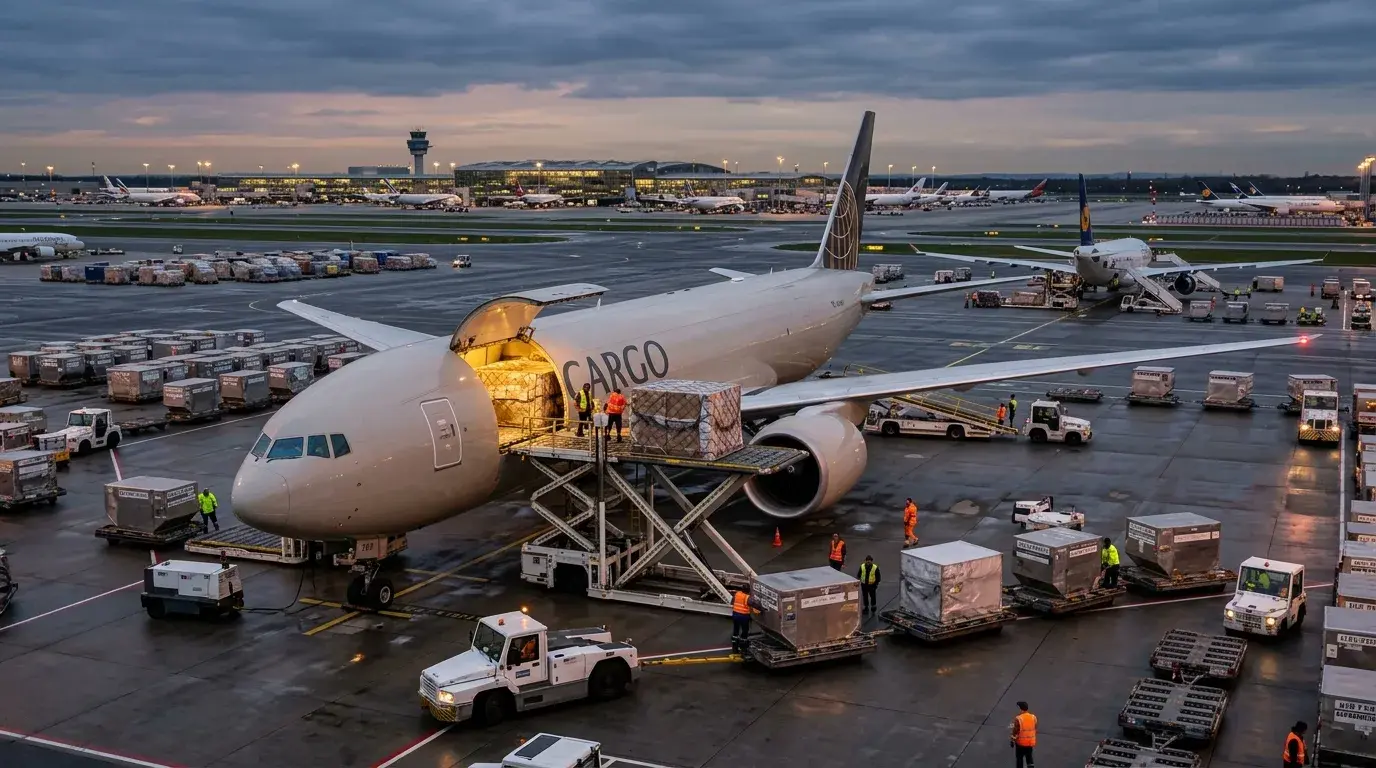
In May 2026, global air cargo demand surged by a remarkable 6%, according to the latest data from the International Air Transport Association (IATA). This figure alone encapsulates the exceptional momentum of a sector often perceived as discreet, yet whose repercussions touch every passenger and consumer. Behind this growth lies a complex reality: demand outstripping supply, air routes reshaped by geopolitical tensions, and airlines adapting their strategies to meet a rapidly evolving market.
With capacity increasing by only 1.9%, the air cargo market is now stretched thin, leading to improved load factors and rising yields. A situation that benefits carriers but could, in the long run, influence ticket prices and service availability for travelers. While air cargo is a distinct segment, its developments have direct repercussions on the entire aeronautical industry.
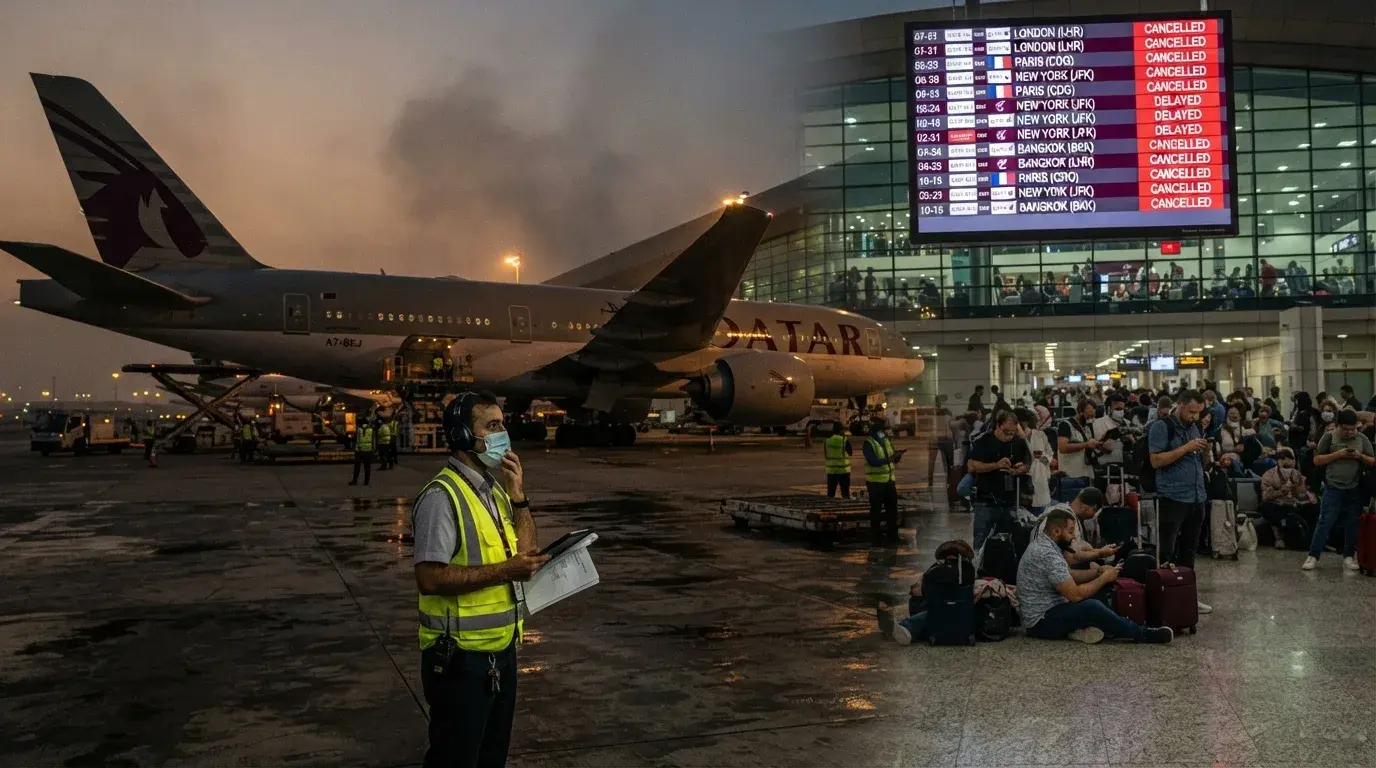
This growth is not uniform, however. While Africa and North America are posting exceptional performances, the Middle East is experiencing a nearly 9% drop in demand due to persistent regional tensions. These regional disparities highlight how air cargo has become a key indicator of global economic and geopolitical imbalances. But beyond the numbers, it is the concrete impact on travelers and businesses that deserves attention.
New trade routes, such as the Asia–North America axis (+19.9%), are reshaping logistics flows and could ultimately alter the travel options available to passengers. For instance, increased demand for cargo may lead to reduced baggage capacity or influence airline fares. For businesses, this is an opportunity for faster deliveries, but also a logistical challenge.
A Record Demand Benefiting Carriers—But Not Only
Global air cargo demand, measured in cargo tonne-kilometers (CTK), rose by 6% in May 2026, with international operations (+6.5%) performing even better. This momentum stems from the recovery of global trade, as well as airlines adapting to new logistical demands. Carriers have adjusted their networks and capacities to meet a more fragmented demand while maintaining profitability.
Willie Walsh, IATA’s Director General, notes that “air cargo demand rose by 6% in May, with performances exceeding the trend in Africa, Asia-Pacific, Europe, and North America.” This growth, though uneven, reflects the sector’s resilience in the face of current challenges. However, this surge is accompanied by higher yields, allowing airlines to absorb still-high energy costs.
The load factor reached 46.3%, up 1.8 points from the previous year. This figure illustrates optimized capacity utilization but could, in time, limit service availability for passengers. In a sector where demand often exceeds supply, every ton of cargo onboard represents one less seat for baggage or travelers.
This situation is particularly visible on the most dynamic routes, such as Asia–North America, where demand has jumped by nearly 20%. This growth is driven by the recovery of trade between the two continents, as well as airlines’ strategy to maximize yields on the most profitable axes.
Africa and North America Lead, Middle East Struggles
Regional disparities are striking. Africa recorded the world’s best performance with a 13.3% increase in demand, closely followed by North America (+10.5%). Europe, for its part, posted solid growth of 6.7%, with a load factor reaching 53.9%, the highest of all regions. These figures reflect optimized capacity utilization and sustained demand driven by intra-European and transatlantic trade.
Conversely, the Middle East is experiencing an 8.9% drop in demand, accompanied by a 9.2% capacity reduction. This situation is directly linked to logistical disruptions caused by regional conflicts. Trade axes such as Europe–Middle East (-19.8%) and Middle East–Asia (-16.5%) are particularly affected, illustrating the impact of geopolitical tensions on global logistics flows.
These disparities underscore the importance of regional stability for air cargo. In a context where supply chains are increasingly fragile, carriers must constantly adapt their strategies to minimize risks and maximize opportunities.
Trade Corridors Redrawn by Geopolitical Tensions
The evolution of air cargo depends heavily on major trade corridors. The Asia–North America axis, which posted 19.9% growth, has become the market’s primary driver. This momentum stems from the recovery of trade between the two continents, as well as airlines’ strategy to maximize yields on the most profitable routes.
Africa–Asia (+14.1%) and Europe–Asia (+10%) follow this trend, reflecting sustained demand driven by the recovery of trade and airlines adapting to new logistical demands. Conversely, axes linked to the Gulf remain heavily disrupted, with declines of 19.8% for Europe–Middle East and 16.5% for Middle East–Asia.
These contrasts show how air cargo has become a key indicator of global economic and geopolitical imbalances. Carriers must constantly adapt their strategies to meet increasingly fragmented demand while maintaining profitability in a complex environment.
A Tight Market That Could Influence Your Next Trips
While air cargo is often seen as a distinct segment, its developments have direct repercussions on the entire aeronautical industry. Record demand, coupled with limited capacity, can lead to reduced services for passengers, particularly in terms of checked baggage or ticket fares.
For example, an airline maximizing yields by prioritizing cargo may reduce the number of passenger flights on certain routes or limit checked baggage capacity. A situation that could, in time, affect traveler comfort and flexibility. Passengers should therefore be aware that carriers’ cargo choices can impact their travel experience.
Moreover, higher yields in air cargo could trickle down to airline fares. While carriers may absorb high energy costs through increased yields, this does not guarantee price stability for passengers. In a tight market, every euro counts, and airlines may be tempted to pass on these gains to their fares.
Finally, regional disparities in air cargo could also influence available travel options. For instance, reduced capacity on certain routes, such as those linked to the Middle East, may limit connection options or travel to specific destinations. Travelers should anticipate these developments and adjust their plans accordingly.
How Airlines Are Adapting to This New Reality
Faced with record demand and limited capacity, airlines must constantly adapt their strategies to meet new market demands. This involves optimizing networks, improving operational efficiency, and rigorous cost management.
Some carriers, like FedEx, are banking on bringing back legacy fleets, such as the MD-11F, to absorb peak demand. Others, like Lufthansa Technik, are heavily investing in new MRO centers to support air traffic growth. These strategies show an industry in full transformation, with players seeking to capitalize on opportunities while minimizing risks.
For travelers, these adaptations could translate into more efficient services, but also higher fares or limited options. It is therefore essential to monitor air cargo developments and anticipate their impact on your next trips.
In conclusion, air cargo in 2026 is far more than just a segment of the aeronautical industry: it is a key indicator of global economic and geopolitical dynamics. Its developments directly influence travelers, businesses, and airlines. Understanding these trends is key to better anticipating your next trips and transport choices.
Be the first to comment on this article