
Royal Air Maroc First in Africa with Starlink: How to Enjoy Unlimited Wi-Fi from 2027
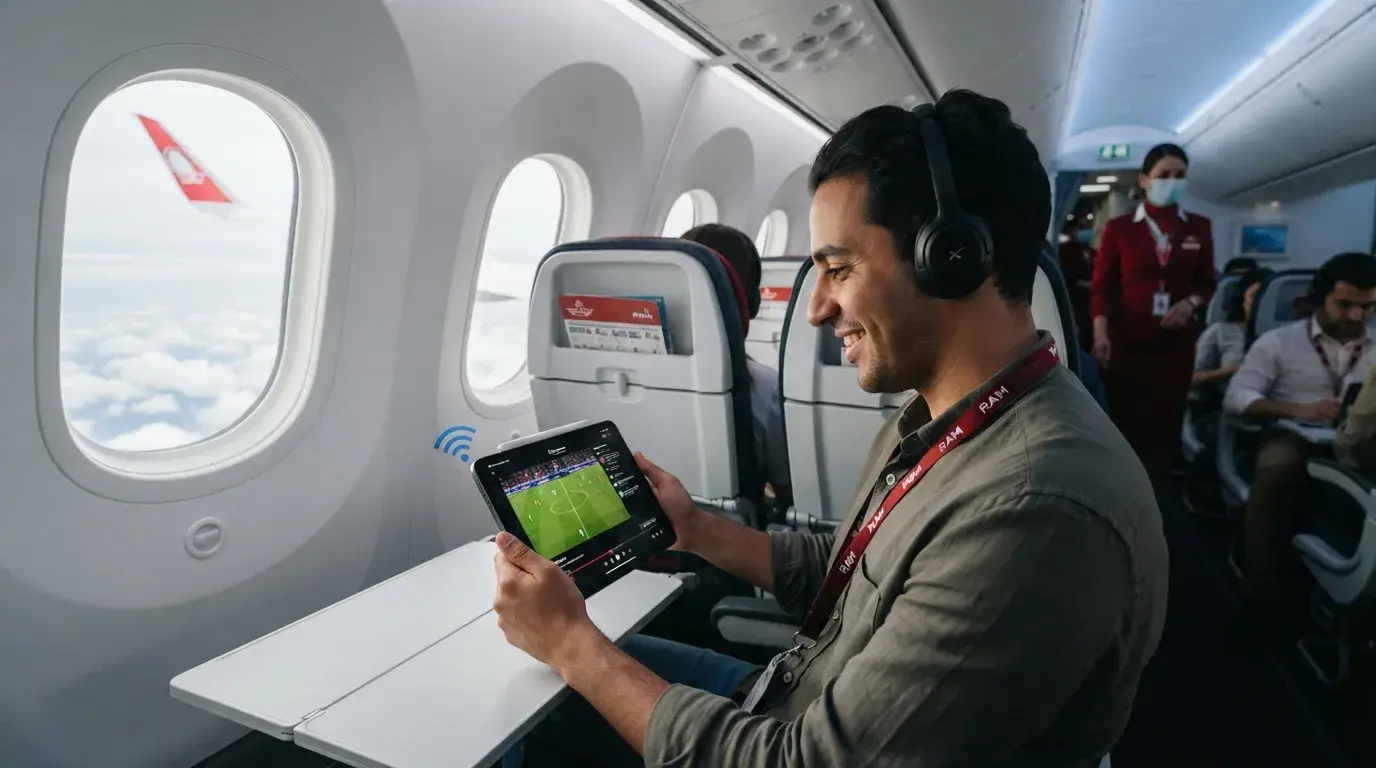
The in-flight experience on Royal Air Maroc aircraft is poised for a major upgrade by 2027. The Moroccan national carrier has announced a historic partnership with Starlink, Elon Musk’s satellite network, to install high-speed broadband connectivity across its entire fleet. A first for the African continent, this move promises to radically transform passenger comfort, especially on long-haul flights.
Starting next year, travelers aboard RAM’s Boeing and Airbus aircraft will be able to check emails, stream videos, or work online with ground-like internet speeds. This is a significant leap forward in an industry where in-flight internet access remains a luxury on many African routes. But how does this system work, and when can you start using it?
The rollout will be phased in. Initial trials have already been conducted on select aircraft, with the carrier aiming for full fleet coverage by 2027. An ambitious timeline that positions RAM at the forefront of African airlines in terms of modernity. Details on whether the service will be free, included in certain classes, or offered as a paid option remain undisclosed, but the announcement has already sparked strong interest among frequent flyers.
Royal Air Maroc and Starlink: A Strategic Alliance for Africa
RAM’s choice of Starlink is no coincidence. Musk’s technology relies on a low-orbit satellite constellation, delivering latency far lower than traditional satellite systems. For an airline serving diverse destinations across Europe, West Africa, and the Americas, this solution represents a major competitive edge.
Unlike other African carriers such as Ethiopian Airlines, which already uses different satellite solutions on select flights, RAM will be the first to deploy Starlink on a large scale. This technology ensures stable connectivity even mid-flight—a growing demand among business travelers and connected tourists. With this innovation, the Moroccan carrier positions itself as a key player in continental air transport, attracting productivity-focused or entertainment-seeking passengers.
Negotiations between RAM and Starlink were reportedly lengthy, particularly on financial and technical aspects. According to Africa Intelligence, the U.S. satellite provider initially proposed a price deemed too high by the Moroccan airline before a final agreement was reached. This compromise should enable the project to stay on schedule.
Which Aircraft Will Be Equipped First?
Royal Air Maroc has not yet specified which models in its fleet will be prioritized for Starlink connectivity. However, it is reasonable to assume that long-haul aircraft such as the Boeing 787 Dreamliner or Airbus A330-300 will be among the first, as these represent the segments with the highest demand for connectivity. Flights between Casablanca, Paris, Dakar, or New York could soon set new standards for modernity in Africa.
While full deployment is scheduled for 2027, trials have already begun on select aircraft. Passengers may therefore have the opportunity to test the technology this year on selected flights—an early glimpse of the future of air travel.
Gaining a Competitive Edge Over Europe and the Gulf
In Africa’s rapidly evolving airline sector, in-flight connectivity is becoming a key differentiator for travelers. Royal Air Maroc, already competing directly with European and Gulf carriers on its Europe-Africa routes, could gain a significant advantage through this innovation. Casablanca, with its international hub, is a strategic transit point for travelers between Europe, Africa, and the Americas.
By offering high-speed Wi-Fi, RAM not only enhances the onboard experience but also strengthens its appeal to business travelers—often willing to pay a premium to stay connected. A strategy that could influence other African airlines to follow suit in the coming years.
For now, Royal Air Maroc has kept pricing details under wraps. Will the service be free for all passengers, reserved for premium classes, or offered as a paid add-on? The question remains unanswered, but one thing is certain: this innovation marks a turning point in African air transport.
How to Prepare for This Revolution
If you plan to travel with Royal Air Maroc in the coming months or years, here are some tips to make the most of this new experience:
First, monitor RAM’s official announcements regarding equipment rollout by aircraft type. The airline is expected to provide regular updates on the project’s progress. Second, if you’re a frequent flyer, don’t hesitate to contact customer service for details on which flights will be equipped first. Finally, check whether your fare class includes Wi-Fi access or if it will be charged as an extra.
With this technological leap, Royal Air Maroc reaffirms its ambition to become a major player in African—and global—air transport. A revolution worth watching closely for all travel and technology enthusiasts.
Royal Air Maroc: A Hub in Full Expansion
Royal Air Maroc is no stranger to bold moves. Already well-established on Europe-Africa routes, the airline continues to expand its network. With services to destinations as diverse as Paris, London, New York, and Johannesburg, RAM has cemented its role as a gateway to the African continent.
The addition of Starlink connectivity aligns with this modernization drive. By enhancing the onboard experience, the Moroccan carrier aims to retain its customer base and attract new passengers. A winning strategy in an increasingly competitive air travel market.
As Africa cements its position as a must-visit destination for travelers worldwide, Royal Air Maroc is positioning itself to stay ahead. With Starlink, it takes another step toward an era where African air travel meets international standards.
What’s Next? Will Other African Airlines Follow?
The question now arises: will other African airlines follow RAM’s lead? With the rise of long-haul flights and growing passenger expectations, in-flight connectivity could soon become the standard. Players like Ethiopian Airlines or Kenya Airways may be tempted to adopt similar solutions to remain competitive.
By becoming the first African airline to adopt Starlink, Royal Air Maroc is setting the trend. An innovation that could redefine the rules of the game in a rapidly transforming sector. A development worth following closely for anyone traveling to or within Africa.
Be the first to comment on this article