Air New Zealand in Turmoil: Up to Ten Times Ticket Price for Affected Passengers After Delays
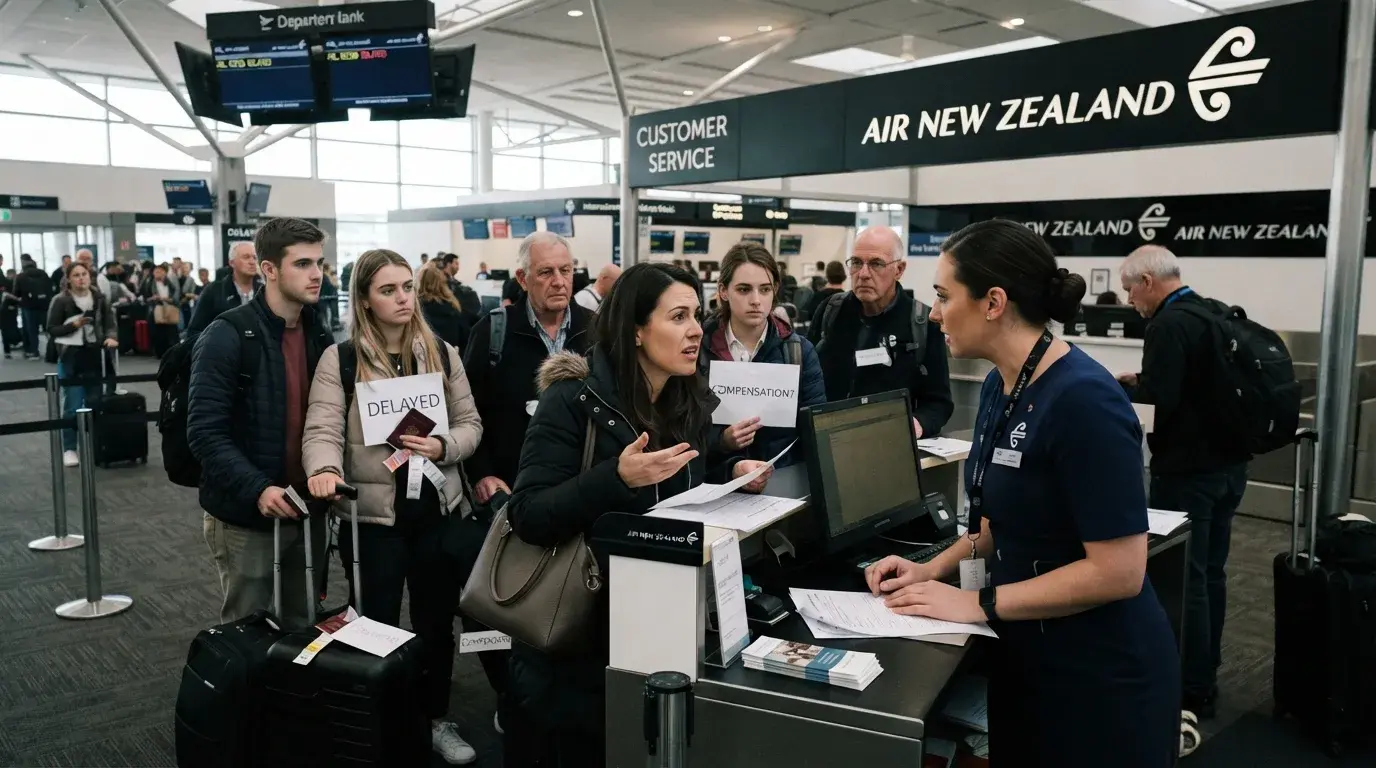
The New Zealand Commerce Commission has taken a firm stance. The consumer protection regulator announced on 19 November 2026 its intention to pursue criminal charges against Air New Zealand. The allegations are severe: the airline allegedly minimized passenger rights following major flight disruptions, depriving travelers of sums they were legally entitled to. Between January 2024 and now, hundreds of passengers are reported to have been affected by inadequate, or even misleading, responses from the carrier. A thorough investigation reveals that some travelers received incorrect information about compensation caps, while others were wrongly denied justified refunds.
The figures speak for themselves. According to the Commerce Commission, customers were presented with reimbursement caps below legal limits, creating widespread confusion over actual passenger rights. Some even received communications that incorrectly restricted eligible expenses, such as meal or accommodation costs. “We believe Air New Zealand made statements that led some passengers to mistakenly believe they were not entitled to compensation, and rejected legitimate refund requests,” says Anne Callinan, Vice-President of the authority. The regulator estimates that passengers were deprived of sums potentially reaching ten times the ticket price in the case of domestic flights.
The situation is all the more critical as Air New Zealand itself acknowledges errors, though it describes them as “non-systemic.” In an official statement, Jeremy O’Brien, Director of Customer and Digital Relations, admits that shortcomings were identified in less than 1% of the 62,000 claims reviewed by the airline. “We acknowledge we did not do right by these customers, and we are sorry,” he states. Yet the Commerce Commission is pressing ahead with legal action, arguing that the airline’s practices may have deterred travelers from claiming legally owed sums.
The case raises a crucial question: what should passengers know about their rights in the event of flight disruption? New Zealand law requires carriers to cover losses caused by delays or cancellations within their responsibility. This includes not only ticket refunds but also additional expenses incurred to reach their destination, such as meals, accommodation, or alternative transport. “Reasonable expenses may include meals, accommodation, or additional costs to reach the destination by other means. Reimbursement can reach ten times the ticket price,” reminds the Commerce Commission. Information the airline allegedly failed to communicate clearly to its customers.
The dispute between Air New Zealand and the regulator highlights a broader issue in the aviation sector. In September 2025, Jetstar was fined NZD 2.25 million for similar practices. The court ruling described deceptive practices regarding reimbursement caps for meal, accommodation, and re-routing expenses. This precedent underscores that airlines cannot rely solely on their own rules: they must uphold passenger rights as defined by law.
The Legal Framework: Different Rights Depending on Flight Type
The distinction between domestic flights and international flights is key to understanding passenger rights. For domestic routes within New Zealand, local legislation allows reimbursement of additional expenses up to ten times the ticket price, provided costs are justified. For international flights, however, the Montreal Convention applies. It also grants rights to reimbursement, but within defined limits. These rules, often unknown to travelers, explain why some passengers did not succeed in their claims against Air New Zealand.
For foreign travelers combining an international journey with domestic travel in New Zealand, identifying the applicable regime is crucial. The Commerce Commission’s statement explicitly distinguishes rights under national law from those under the Montreal Convention. A nuance Air New Zealand should have better explained to avoid confusion.
Air New Zealand’s Response: Are Corrective Measures Insufficient?
Facing the allegations, Air New Zealand claims to have already reassessed over 62,000 claims and contacted affected customers to rectify the situation. “We took the initiative to contact these customers and correct the situation. Our review concluded that the errors were neither intentional nor systemic,” affirms Jeremy O’Brien. The airline has also reinforced guidelines and staff training to improve the clarity of information provided to passengers.
Yet the regulator remains unconvinced. In its statement, the Commerce Commission emphasizes that the corrective measures taken by the airline do not erase the failures in passenger information. “We believe passengers were deprived of sums they were legally entitled to,” states Anne Callinan. Air New Zealand, for its part, expresses disappointment with the regulator’s decision to take the matter to court, despite corrective actions already implemented.
The case raises a fundamental question: how can we ensure passengers are fully informed of their rights without having to navigate complex procedures? The answer does not rest solely with airlines but also with regulators and consumer associations. In New Zealand, the Air New Zealand case could serve as a catalyst to strengthen air passenger protection.
What Travelers Need to Know
If you experienced a flight disruption with Air New Zealand or another airline, here are the key points to remember:
For domestic flights in New Zealand, passengers may claim reimbursement for additional expenses, potentially up to ten times the ticket price. Eligible expenses include meals, accommodation, and alternative transport. Be sure to keep all receipts.
For international flights, the Montreal Convention applies. Reimbursement rights are limited but remain significant in cases of disruption within the airline’s responsibility. It is advisable to check the specific rules for your journey.
If a claim is rejected or met with ambiguous responses, do not hesitate to escalate the matter to local authorities, such as the Commerce Commission in New Zealand, or passenger rights organizations in your country. Past rulings, like that against Jetstar, show regulators do not tolerate breaches of passenger rights.
The Air New Zealand case underscores the importance of transparency and rigor in handling claims. For passengers, it highlights the need to know their rights before traveling. For airlines, it serves as a warning against practices that could harm their reputation and customer relationships.
As the legal proceedings unfold, one thing is certain: New Zealand passengers, and beyond, expect clear answers and fair compensation. The stakes are not only financial but also ethical: an airline sector that respects its customers is one that earns their trust.
Be the first to comment on this article