Qatar Airways Expands Network: Zanzibar and Canberra Return, London and Phuket Soar
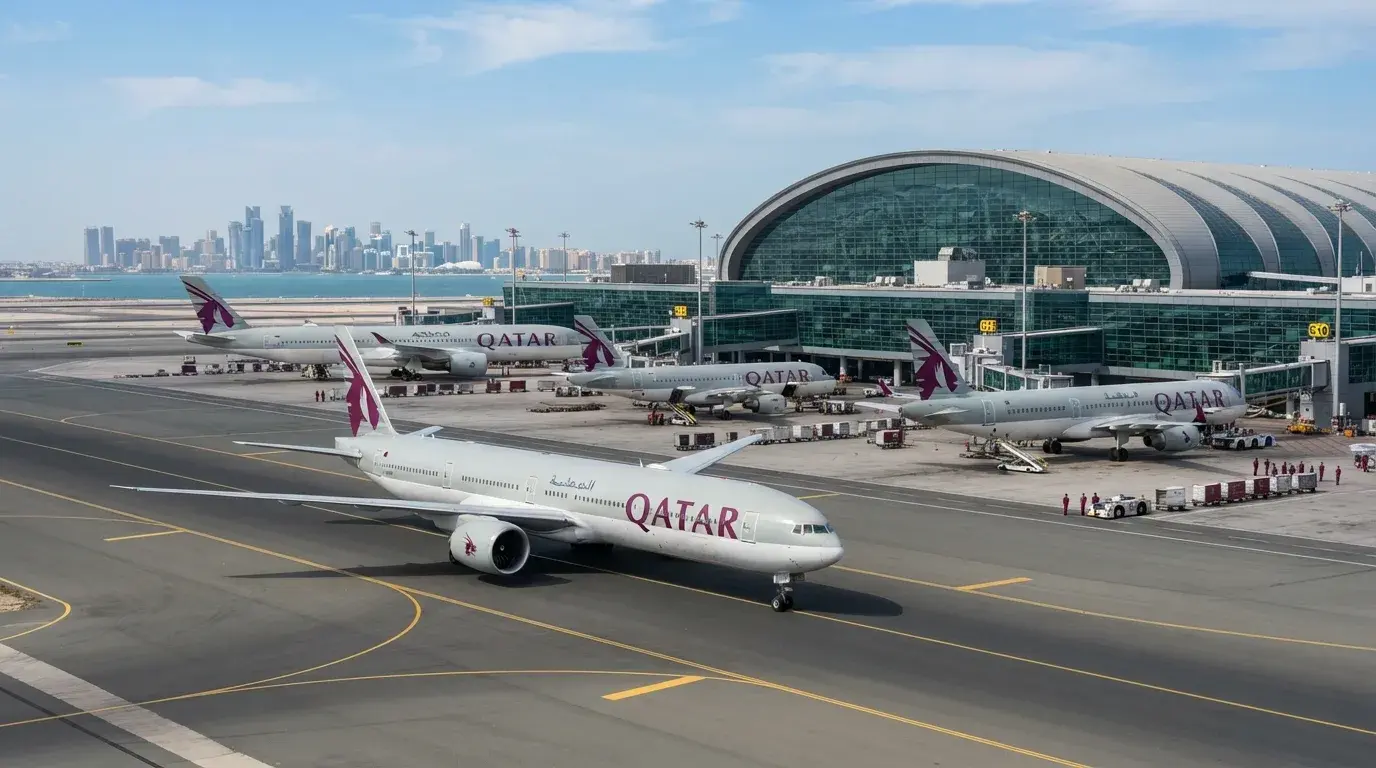
Qatar Airways is making a bold move ahead of the winter 2026-2027 season. The Doha-based carrier has unveiled an ambitious expansion plan focused on resuming iconic routes, strengthening strategic hubs, and dramatically increasing frequencies to key destinations. With nearly 1,800 weekly flights planned for December 2026, the Qatari airline reaffirms its status as a long-haul network giant, while catering to insatiable global demand for intercontinental travel.
The strategy revolves around three pillars: relaunching overlooked destinations, intensifying premium market connections, and aligning capacity with tourism and business flows. The stated goal is clear: enhance the appeal of the Doha-Hamad hub, where millions of passengers connect annually between Europe, Asia-Pacific, Africa, and the Americas. This offensive coincides with the airline’s celebration of its central role in global connectivity, backed by a modernized fleet and increasingly innovative services.
The network will expand to over 170 destinations starting October 25, 2026, with two route resumptions drawing particular attention from travelers and tourism professionals. First, Zanzibar, the Indian Ocean gem, will regain a daily service from October 25. This route aligns with efforts to capture tourism flows from Europe and the Middle East while offering passengers a convenient stopover to reach Tanzanian beaches or East African national parks. Second, Canberra, Australia’s oft-overlooked capital, will be served again starting December 9 via a connection in Melbourne—a gateway for travelers exploring Australia’s interior without relying on traditional hubs.
Asia-Pacific and Europe are at the heart of this expansion, with spectacular frequency increases. London-Heathrow, already well-served, will see weekly flights rise from 49 to 56 starting October 25, totaling eight daily rotations. This intensification is paired with strengthened partnerships with British Airways, a codeshare partner within the oneworld alliance. The London hub, a historic gateway to Europe for Qatar Airways, will see its capacity boosted to meet growing demand between the UK, the Gulf, Asia, and Africa. Frankfurt, another European powerhouse, will gain three additional frequencies starting December 7, bringing its total to 21 weekly flights.
Asia and Australia in the Crosshairs
The Asian continent, a global air traffic growth engine, receives special focus. Phuket, a top European and Middle Eastern tourist destination, will see its offer expand from 14 to 21 weekly flights starting October 25. This increase reflects Thailand’s beach escape appeal and Qatar Airways’ ambition to position Doha as a strategic alternative to Southeast Asia’s traditional hubs. Malé, capital of the Maldives, will be served 21 times per week, up from 12, while Ho Chi Minh City will gain four direct weekly frequencies starting November 7, totaling eleven flights. Kuala Lumpur, already well-connected, will have 18 weekly flights operated by Qatar Airways, bolstered by 14 additional flights from Malaysia Airlines, also a oneworld member.
Australia, another global tourism hotspot, sees its appeal strengthened through a coordinated strategy with Virgin Australia, a long-standing partner. The plan includes fourteen weekly flights from Sydney, three from Brisbane, and four from Perth operated by Virgin Australia. Combined with Qatar Airways’ own capacity, the total weekly frequencies will reach 21, 10, and 11, respectively. This synergy between the two carriers highlights the importance of alliances in hub development strategies. The resumption of daily flights to Canberra starting December 9 via Melbourne offers a new gateway to Australia, often overshadowed by coastal metropolises.
Africa and North America in Focus
Africa is not left behind. The Seychelles, an Indian Ocean paradise, will gain three additional frequencies starting March 1, 2027, totaling seven weekly flights. Johannesburg, a major southern African hub, will see its offer increase by four frequencies, rising from 14 to 18 weekly flights starting December 2. These enhancements align with a broader trend of improved connectivity between Africa and the rest of the world via Doha. Zanzibar, already mentioned, joins this list as a key destination for travelers seeking authenticity and relaxation.
In North America, Montréal is emerging as a cornerstone of Qatar Airways’ North American strategy. The city will see weekly flights rise from five to seven starting October 25, a 40% capacity increase. This reflects Canada’s growing importance in transatlantic and transpacific exchanges, as well as the appeal of European and Asian destinations accessible via Doha. The Montreal expansion is paired with a diversification of aircraft types, with a rising number of Dreamliners renowned for efficiency and comfort.
A Technological and Commercial Offensive
Qatar Airways isn’t just expanding its network—it’s also enhancing its service offerings. The airline is accelerating the deployment of Starlink connectivity onboard its aircraft. Over 150 widebody jets are now equipped with this technology, providing passengers with high-speed in-flight internet. This innovation places Qatar Airways at the forefront of the industry, with coverage now extended to six continents. The airline emphasizes its status as the first to introduce Starlink on Boeing 787-9s, a technological milestone likely to attract connectivity-conscious travelers.
Commercially, Qatar Airways continues to strengthen its strategic alliances. The partnership with British Airways, already robust, expands with the addition of a daily round-trip between London and Doha, complementing Qatar Airways-operated flights. Similarly, collaborations with Malaysia Airlines and Virgin Australia enable capacity sharing and offer passengers a broader choice of destinations and schedules. These alliances, combined with a modernized fleet and premium services, position Qatar Airways as a key player in the competition among Gulf hubs, alongside Emirates and Ethiopian Airlines.
A Resilient Economic Model Amid Challenges
This expansion unfolds against a backdrop of robust global demand for long-haul travel, despite economic and geopolitical uncertainties. Qatar Airways is leveraging denser connection banks at Doha to attract more transit passengers while meeting direct demand to key destinations. The dual objective is to capture tourism flows, particularly to Asia and Africa, and strengthen premium market links between Europe, North America, and the Middle East.
The capacity boosts to London, Phuket, or Malé exemplify this strategy. These high-demand tourist destinations justify increased frequencies. Meanwhile, the resumption of routes like Zanzibar or Canberra addresses specific needs, whether for leisure or business. In Africa, where connectivity remains a challenge, these services offer an alternative for travelers seeking less saturated destinations.
Finally, technological innovation with Starlink and strengthened commercial partnerships enhance Qatar Airways’ competitiveness. The airline demonstrates its ability to anticipate the needs of modern travelers while sustaining steady network growth. This momentum should solidify its leadership in intercontinental routes while addressing the challenges of an evolving aviation sector.
For travelers, these announcements translate into more options, optimized schedules, and expanded connection possibilities. Whether for a Phuket getaway, a Maldives escape, or a business trip to London, Qatar Airways now offers more flexible and better-adapted travel solutions. A boon for those seeking to explore the world without the constraints of lengthy connections or impractical layovers.
Be the first to comment on this article