flydubai launches all-cargo freighter operations with three Boeing 737-800s: what it means for express shipments
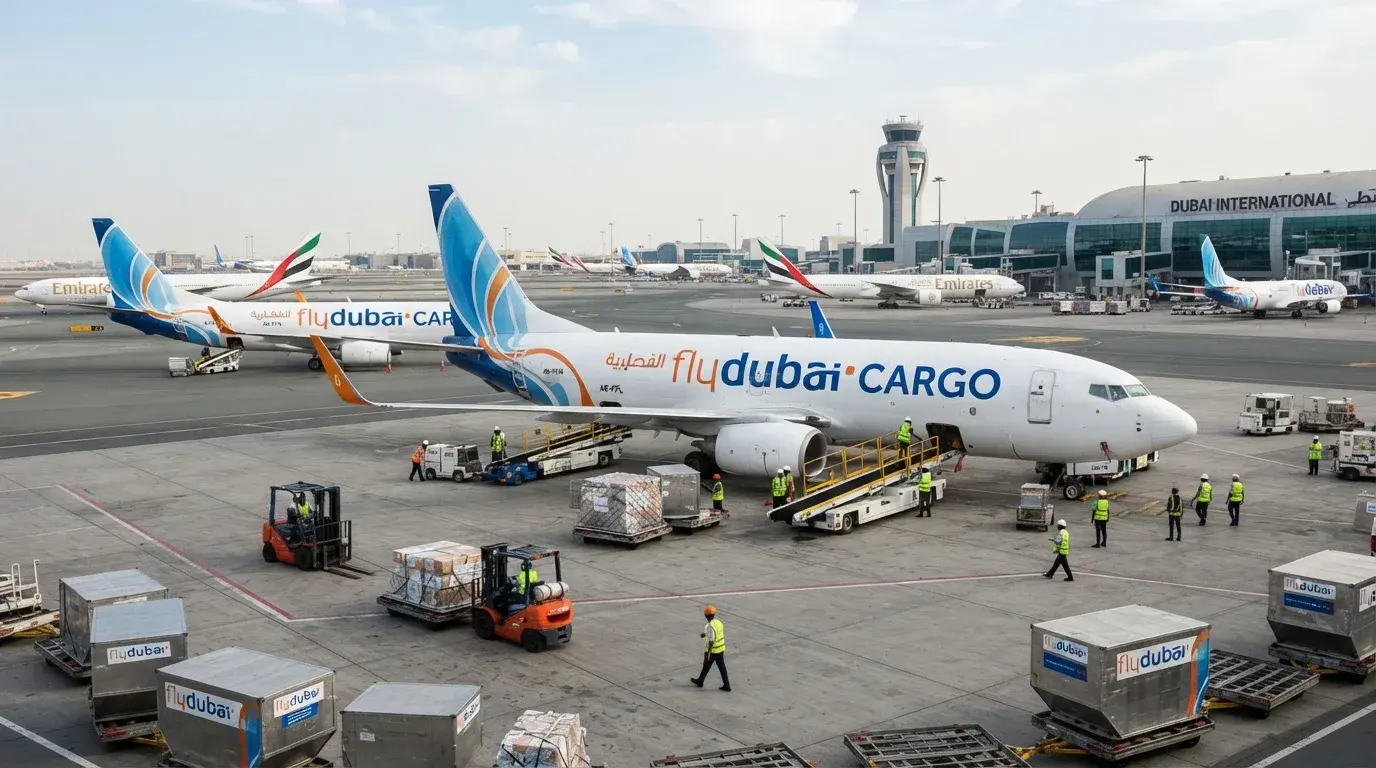
Dubai is solidifying its ambition to become a global air trade hub. On October 1, 2026, flydubai will launch all-cargo freighter operations with three Boeing 737-800 Freighter aircraft, a first for the Emirati low-cost carrier. Based at Dubai World Central-Al Maktoum Airport (DWC), these planes are set to revolutionize express shipments between Europe, Asia, and Africa.
Until now, flydubai Cargo relied primarily on the belly holds of its passenger aircraft. The arrival of these three main-deck freighters, capable of transporting up to 23 tonnes of cargo per flight, marks a turning point. According to the airline, each operation will add up to 23,000 kg of cargo capacity beyond existing belly holds—a boon for shippers of temperature-sensitive pharmaceuticals, perishable goods, or aerospace components requiring enhanced traceability.
The initial flights will target regional markets with the highest demand, followed by a gradual ramp-up in frequencies. « The launch of all-cargo operations is a significant milestone in flydubai’s evolution », says Ghaith Al Ghaith, CEO of the airline. He also sees this as a way to create new trade lanes for goods heading to international markets while supporting Dubai’s ambition to be a global commerce and logistics platform.
Dedicated cargo capacity for urgent and oversized shipments
Unlike traditional belly holds, the Boeing 737-800 Freighter can accommodate pallets and containers directly on the main deck. This added flexibility and volume cater to shippers requiring tailored handling, traceability, and temperature control procedures. The three aircraft will be provided by SolitAir under a wet lease agreement, which includes the aircraft, crews, maintenance, and insurance.
The targeted cargo flows include pharmaceuticals, perishables, live animals, dangerous goods, express shipments, and aerospace parts. For European importers, this capacity could cut delivery times between Southeast Asia or India and Europe by avoiding the technical stops often required with traditional cargo aircraft.
DWC: flydubai’s future cargo hub, away from Dubai International
The three 737-800Fs will be based at Dubai World Central, a strategic choice that distinguishes flydubai’s cargo operations from its main passenger hub at Dubai International (DXB). This geographic positioning brings operations closer to Dubai South, a multimodal logistics zone with road and rail connections. flydubai aims to offer regular flights and point-to-point charters across its network of over 125 destinations, spanning Africa, Central Asia, the Caucasus, Central and Southeast Europe, the Gulf, the Middle East, the Indian subcontinent, and Southeast Asia.
This initiative comes ahead of the traditional peak season for air cargo, driven by e-commerce, holidays, and express shipments. It also foreshadows a broader strategy: flydubai says it plans to convert passenger aircraft into freighters starting in 2029. The airline is also awaiting 30 Boeing 787-9 Dreamliner aircraft, its first order for widebody jets, with deliveries expected to begin in 2027. These planes are expected to significantly boost its belly-hold cargo capacity on passenger routes.
What this means for travelers and businesses
For frequent travelers between Europe and Asia, this new capacity could indirectly improve the reliability of checked baggage. With cargo holds less burdened by passenger luggage, airlines may better absorb peak traffic during summer or holiday seasons. Shippers, meanwhile, will gain a more flexible alternative to major cargo carriers like Emirates SkyCargo or Qatar Airways Cargo.
flydubai emphasizes that its initial cargo flights will operate in addition to existing belly-hold capacities, without cannibalizing passenger aircraft holds. The airline highlights the complementarity of this offering with its passenger network, particularly for travelers looking to ship bulky items or sports equipment without relying on postal services.
A bet on e-commerce and regional trade growth
With a fleet of 97 Boeing 737 aircraft, flydubai is diversifying its revenue streams. The all-cargo freighter initiative aligns with its low-cost model, helping to smooth fixed costs throughout the year. The three 737-800Fs will likely be joined by additional aircraft in the coming years, including the introduction of 787-9 Dreamliner jets from 2027.
For European businesses exporting to Asia or Africa, this new route presents an opportunity to reduce logistics costs. Transit times between, for example, Germany and India, could be cut by 24 to 48 hours thanks to a direct connection via Dubai, rather than a stopover in Eastern Europe or the Middle East.
flydubai has not yet announced pricing for its new cargo routes, but the airline promises competitive rates for urgent shipments. Regular flights are expected to begin on October 1, with frequencies ramping up gradually based on demand.
Be the first to comment on this article