Ryanair expands Swedish network with five new routes including Rabat, amid rising airport fees
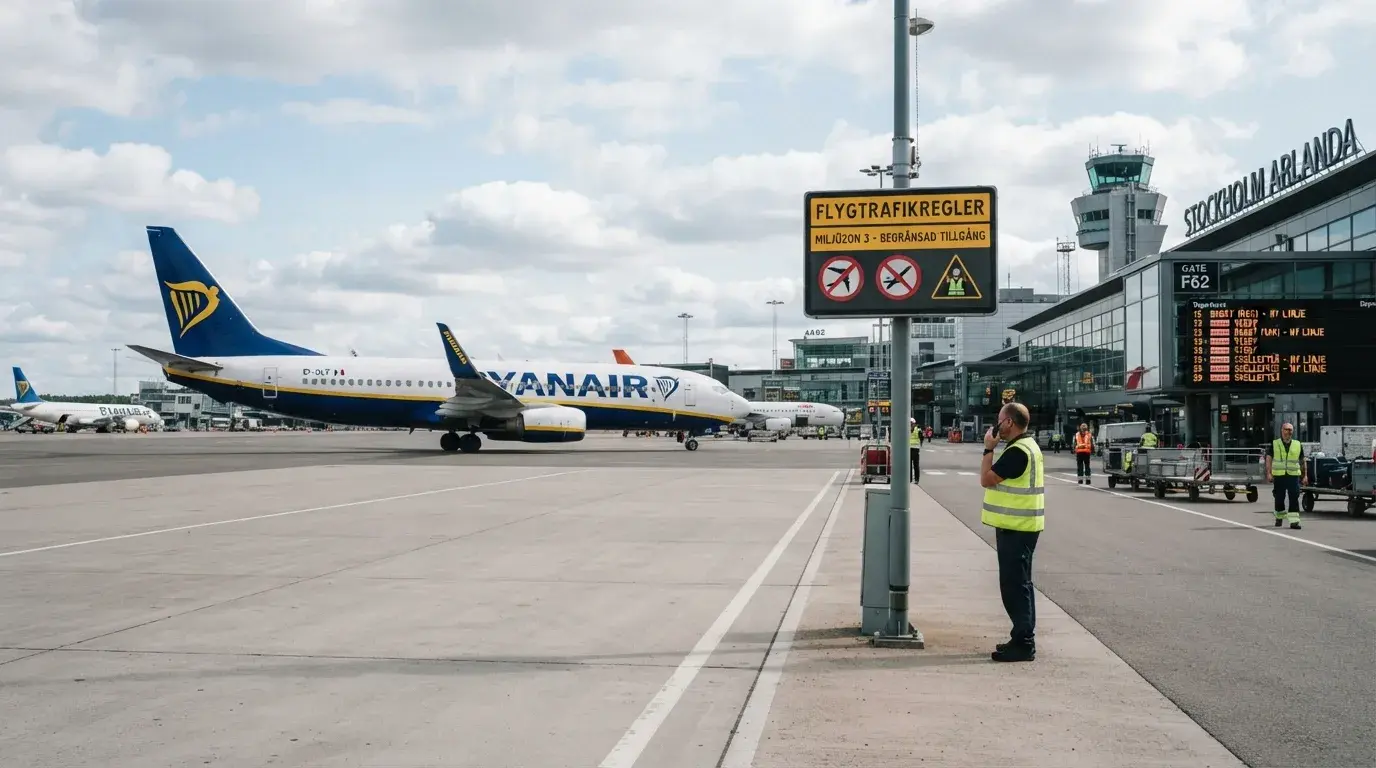
Ryanair has launched a major expansion in Sweden for the 2026-2027 winter season, unveiling 43 routes—five of them new—and adding a third Boeing 737 based at Stockholm-Arlanda. However, behind this commercial announcement lies a growing dispute with Swedish authorities as airport fees have surged by 22% following the abolition of the air travel tax in July 2025. The Irish carrier is targeting 4.6 million annual passengers in Sweden but insists its growth hinges on competitive access costs.
On September 10, Ryanair revealed a significant offensive in Sweden, introducing five new international routes from its three main bases. Among them, Stockholm-Arlanda – Rabat (Morocco) stands out as the most distinctive, while connections to Warsaw, Wrocław, Budapest, and London (from Malmö) target traditionally strong markets in Central Europe. These new routes complement a winter network of 43 routes operated by eight Boeing 737 aircraft based at Arlanda, Göteborg, and Malmö. Ryanair expects annual traffic to reach 4.6 million passengers, a 16% increase, with a projected investment of €700 million in Sweden.
This record growth is directly linked to the Swedish Parliament’s decision to abolish the air travel tax on July 1, 2025. The tax, which ranged from SEK 77 to SEK 517 depending on the destination, was scrapped, prompting Ryanair’s accelerated expansion. “Since the Swedish government wisely abolished the air travel tax in July 2025, Ryanair has responded with accelerated growth, adding three aircraft, an additional $300 million investment, and 760,000 extra passengers across six Swedish airports,” said Eddie Wilson, Ryanair’s CEO.
Yet this growth is threatened by a sharp rise in airport fees. Ryanair claims that Swedavia, the state-owned airport operator, has increased fees by 22% since the air travel tax was removed. The carrier also warns of a 67% hike in security fees from March 2027. “Ryanair aims to double its Swedish traffic to 8 million passengers annually by 2030, add five more based aircraft, and create up to 6,000 jobs by 2030—but we cannot achieve this growth without competitive access costs,” Wilson emphasized.
Ryanair’s five new Swedish routes
Ryanair’s 2026-2027 winter program in Sweden includes five new routes designed to diversify its offering and capture new passenger flows:
Stockholm-Arlanda – Rabat (Morocco): A first direct link between Sweden and Morocco, a market previously underserved from Northern Europe. This route is expected to appeal to both leisure travelers and Moroccan workers in Sweden.
Stockholm-Arlanda – Warsaw (Poland): Strengthening a long-standing axis between Sweden and Poland, driven by business and family travel.
Stockholm-Arlanda – Wrocław (Poland): A second route to Poland, targeting Wrocław, a major economic and university hub.
Göteborg-Landvetter – Budapest (Hungary): Opening a new corridor between Sweden and Hungary, a destination popular for urban tourism and its affordable cost of living.
Malmö – London: Confirmation of this route, initially announced for summer 2026, now operating year-round from Malmö to the UK capital.
These five new routes join an existing winter network of 43 routes operated from Stockholm-Arlanda, Göteborg-Landvetter, and Malmö. Stockholm-Arlanda now concentrates the bulk of Ryanair’s Swedish operations, with eight based aircraft, compared to two in Göteborg.
Swedavia under pressure: fees with a double edge
The tension between Ryanair and Swedavia, Sweden’s airport operator, highlights the recurring conflicts between low-cost carriers and airport authorities. Ryanair points to a 22% increase in airport fees since the air travel tax was scrapped, while Swedavia defends its tariffs as compliant with European and Swedish regulations.
Airport fees, which cover infrastructure and service usage, are set by Swedavia and approved by Swedish authorities. The operator states its fees are “in line with European and Swedish legislation,” though it has opened consultations for the 2027 tariff schedule. Ryanair argues that the fee hikes have negated the competitive advantage gained from the tax abolition.
The security fee, administered by Sweden’s Transport Agency, is another point of contention. This per-passenger charge for aircraft over 10 tonnes is set to rise by 67% from March 2027, according to Ryanair. The carrier is demanding the Swedish government freeze airport fees at their 2024 levels and permanently abolish the security tax.
For Ryanair, the stakes are high: maintaining competitiveness against other low-cost carriers and avoiding a reallocation of capacity to more favorable markets. The airline notes that the upcoming Boeing 737 MAX 10 will offer new growth opportunities, though it cannot guarantee Sweden will benefit.
A bold bet for Stockholm and Sweden
Ryanair has set an ambitious 2030 target: doubling its Swedish traffic to 8 million passengers annually. This scenario depends on adding five more based aircraft and creating up to 6,000 jobs, but remains conditional on lower access costs. The carrier highlights that its Swedish investments directly support the local economy, generating over 3,600 jobs according to its estimates.
For travelers, this expansion means a wider choice of destinations and increased airport traffic in Sweden. Stockholm-Arlanda, in particular, is becoming a key Ryanair hub in Northern Europe, with routes to Morocco, Poland, Hungary, and the UK. These connections should attract both Swedes seeking winter sun and international visitors looking to explore Sweden.
However, the success of this strategy hinges on Sweden’s ability to reach a compromise with Ryanair. Freezing airport fees and abolishing the security tax appear essential for the carrier to maintain its investment levels. Without such measures, Ryanair could reallocate capacity to other European markets with more stable costs.
The question for passengers is straightforward: attractive fares and an expanded network, or higher costs and a reduced offering? The answer may unfold in the coming months as Ryanair and Swedish authorities negotiate the framework for their future collaboration.
What to remember for your next trips
Ryanair is making a bold bet on Sweden with an expanded winter 2026-2027 network and five new routes. This long-term strategy faces challenges from rising costs. Here’s what to keep in mind for your next travels:
Expanded destination choices: The new routes to Rabat, Warsaw, Wrocław, Budapest, and London (from Malmö) offer alternatives for Swedish and international travelers. Rabat, in particular, could appeal to those looking to escape the Nordic winter.
Fares to watch: Competitive pricing will depend on the evolution of airport fees. Ryanair’s growth is tied to competitive access costs, which could impact ticket prices for passengers.
Travel conditions to monitor: As always with Ryanair, check baggage rules, ancillary fees, and any restrictions before booking. Last-minute cancellations or schedule changes remain possible in case of disputes with airport authorities.
Local economic impact: Ryanair’s Swedish operations support over 3,600 jobs, according to the carrier’s estimates. This impact could grow if the fee dispute is resolved favorably.
For Swedes and international travelers, Ryanair’s offensive represents an opportunity to explore new destinations at lower costs. But the balance remains fragile: without an agreement on fees, the carrier may reduce its offering, limiting benefits for passengers and the local economy.
Keep a close eye on developments in the coming months as Ryanair and Swedish authorities negotiate the terms of their future partnership.
Be the first to comment on this article