Traveling with a Pet on a Plane: Europe’s Best Airlines According to Experts
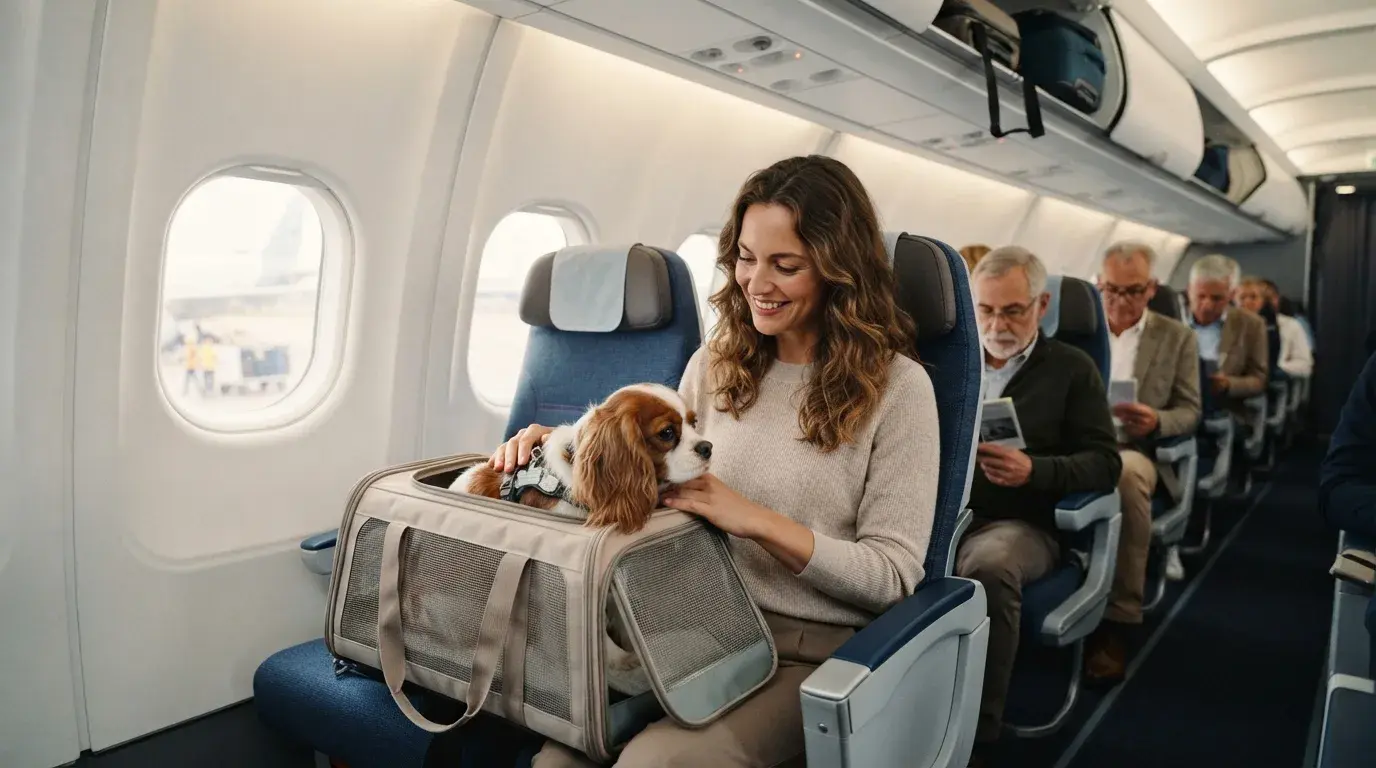
Traveling with a pet on a plane requires more preparation than a standard bag. Yet, an increasing number of travelers prefer not to leave their four-legged companions behind. A recent study by AirAdvisor, a specialist in passenger rights, ranks Europe’s most pet-friendly airlines for transporting dogs or cats. The ranking is based on strict criteria: acceptance of pets in the cabin, options for cargo or freight transport, and access to airport lounges.
Out of 22 airlines analyzed across the European Union and the European Economic Area, ten stand out. Aegean Airlines, Air France, KLM, Austrian Airlines, Brussels Airlines, Finnair, LOT, Lufthansa, SAS and TAP Air Portugal top the list. Their common advantage? They all allow pets in the cabin, provided they meet weight and size requirements. This criterion is crucial, as it avoids the constraints of cargo transport, including check-in delays and risks of delays or lost luggage.
Low-cost carriers, however, take a more restrictive approach. Ryanair, Icelandair and Wizz Air categorically refuse pets in the cabin. Among the four airlines that ban pet transport in cargo (Ryanair, Wizz Air, Icelandair—except on certain domestic routes—and Volotea), traveling with a pet becomes significantly more challenging. For these carriers, pet owners must explore alternative solutions, such as boarding or pet sitters, which can quickly become costly and inconvenient.
Key Rules for Traveling with a Pet in the Cabin
Most airlines permitting pets in the cabin enforce an 8 kg weight limit, including the carrier. This rule applies to Aegean, Air France, KLM, Austrian Airlines, Brussels Airlines, Finnair, LOT, Lufthansa, SAS and TAP Air Portugal. The carrier must typically fit under the seat in front of the passenger. For example, Air France and KLM require carriers not to exceed 46 x 28 x 24 cm. Choosing the right travel crate is essential to avoid boarding refusals.
Air France allows passengers to travel with a dog or cat in the cabin if the animal weighs less than 8 kg. For heavier pets, the airline offers cargo options, with fares ranging from €70 to €250 depending on the route. KLM, part of the Air France-KLM Group, follows similar rules, but its fares range from €70 to €500 per trip, reflecting flight length and destinations.
Some airlines, like Finnair, are more flexible, accepting not only cats and dogs but also hedgehogs, tortoises, and rabbits when departing from EU countries. Ferrets may travel in cargo. This openness is particularly useful for travelers with less conventional pets. LOT Polish Airlines stands out by allowing pets to leave their carriers in airport lounges under constant owner supervision—a rare exception in the industry, where most airlines require pets to remain in their cages or bags throughout layovers.
Cargo Options and Associated Fares
For pets too heavy for cabin travel, airlines offer cargo solutions. Lufthansa allows up to two pets per passenger, with combinations of cabin and cargo options. Small dogs and cats can travel in the cabin up to 8 kg, while larger animals are placed in climate-controlled and temperature-regulated cargo holds. TAP Air Portugal only accepts cats and dogs, with a maximum weight of 32 kg (including the crate) for cargo. Fares range from €40 to €170 in the cabin and €78 to €247 in cargo, depending on the route, season, and booking method.
It is essential to book pet transport in advance, as airlines limit the number of pets allowed per flight, both in the cabin and cargo. A passenger ticket does not guarantee a spot for a pet. Rules may also vary by destination, travel class, or aircraft type. Some airlines, for example, prohibit pets in Business or Premium cabins. Code-share flights or multi-carrier itineraries can complicate the process, as policies may conflict.
Essential Documents and Precautions
Before traveling, verify the documents required by the destination country. A European pet passport, health certificate, rabies vaccination, or other documents may be necessary. Brachycephalic breeds, such as bulldogs or pugs, often face additional restrictions due to their sensitivity to temperature and pressure changes in the cabin. It is advisable to consult both the airline’s policies and the destination country’s regulations before booking.
Travelers should also anticipate potential additional fees for pet transport, which vary significantly between airlines. These costs must be factored into the initial travel budget. Arriving at the airport with ample time is recommended to allow for necessary checks and avoid last-minute surprises at boarding.
The Importance of Preparation for Stress-Free Travel
Traveling with a pet requires meticulous preparation. It is essential to research the chosen airline’s policies, book in advance, and ensure all documents are in order. Top-ranked airlines like Aegean Airlines, Air France, KLM or Lufthansa offer tailored solutions to simplify pet travel. In contrast, low-cost carriers like Ryanair or Wizz Air make the process nearly impossible unless travelers accept significant constraints.
For pet owners, selecting the right airline can make all the difference between a stressful journey and a pleasant experience. Opting for well-equipped carriers ensures peace of mind, knowing their four-legged companion will be safe and well cared for throughout the trip.
What European Regulations Say
Pet transport within the European Union is governed by several regulations, including Regulation (EU) No 576/2013. This text sets health and administrative conditions for transporting domestic animals, including dogs and cats. It mandates a European pet passport or a health certificate issued by a veterinarian, as well as rabies vaccination for countries where the disease is present.
Airlines must comply with these rules but may impose additional constraints to ensure the safety and comfort of all passengers. Travelers are advised to consult both the applicable regulations and the specific policies of their chosen airline before booking.
For those wishing to travel with their pets, the message is clear: thorough preparation is the key to a successful journey. By selecting a pet-friendly airline and strictly adhering to the rules, pet owners can take their four-legged companions along without stress or complications.
Airlines like Aegean Airlines, Air France, KLM, Lufthansa or Finnair demonstrate that pet travel and animal welfare can coexist, provided travelers stay informed and plan their trips carefully.
Be the first to comment on this article