Emirates Cuts 16% of June Flights: Most Affected French and European Routes
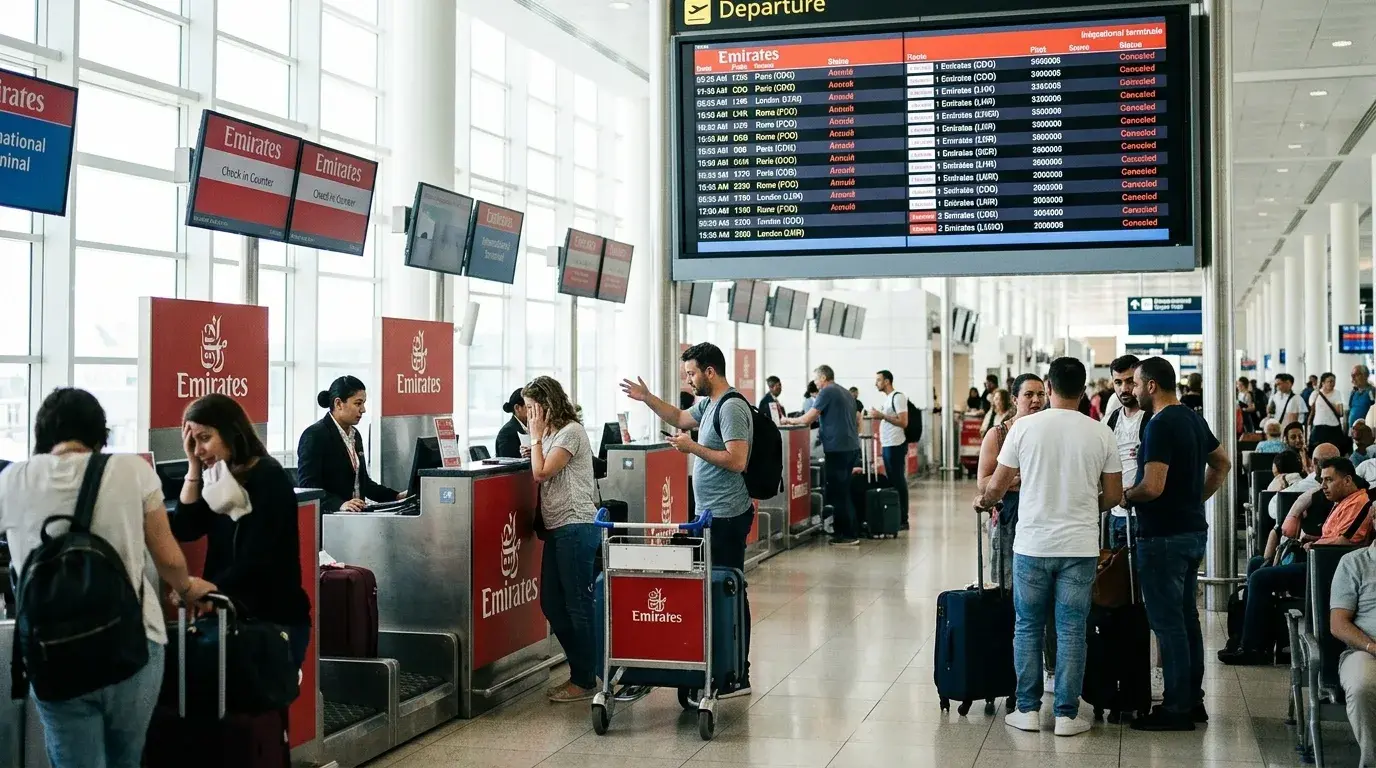
Emirates has delivered a major blow to the aviation industry. The Dubai-based carrier has announced a dramatic reduction in its June 2026 flight program, cutting nearly 16% of its originally scheduled flights in just one week—over 1,100 monthly rotations. The result: nearly 480,000 seats vanish from the market in days, an unprecedented shock for long-haul travel departing the Gulf.
This drastic decision underscores the persistent pressures weighing on the airline industry, even as the summer season looms as a critical period for traffic. Emirates, which operates an all-widebody fleet including the Airbus A380 and Boeing 777, is now forced to drastically scale back capacity, directly impacting travelers and tourism partners. Each canceled flight means the loss of hundreds of seats, amplifying the effect on overall supply.
A Global Network in Full Restructuring
The 16% capacity cut at Emirates affects all regions worldwide. In Europe, major airport hubs are hit hard, reflecting the continent’s importance in the carrier’s network. London Heathrow, Emirates’ top European destination by frequency, will lose one of its six daily flights. Plans to increase capacity to London Gatwick and London Stansted have also been pushed back to at least July. Amsterdam-Schiphol and Vienna are also facing significant reductions, as is Birmingham.
France is not spared. While less publicized than cuts in the UK, Emirates’ routes between Dubai and Paris-Charles de Gaulle are included in this program revision. Travelers connecting France’s capital to Dubai will now face reduced frequencies, potentially impacting summer bookings. This announcement comes as long-haul demand remains volatile, particularly on certain European markets where competition from low-cost carriers and rail alternatives is intensifying.
Key Routes Undergoing Major Changes
Among the most affected destinations, some frequencies are being halved. Kuwait, originally served up to five times daily, will now see just one daily flight to Dubai in June. Beijing, Brisbane, Malé, and Orlando are also among the routes heavily reduced, confirming a downward trend across several strategic long-haul markets.
This capacity revision fits into a broader context of transformation for Gulf carriers. While Etihad Airways plans an 8% growth in flights for June 2026, Emirates’ capacity now sits 14% below June 2025 levels. These divergences highlight differing strategies in response to an uncertain environment marked by fluctuating demand and persistent operational constraints.
A Wake-Up Call for Long-Haul Travel
Analysts are questioning: Is this massive reduction a tactical adjustment or a sign of deeper strategic shifts among Gulf carriers? With a 100% long-haul fleet, every flight canceled by Emirates has an immediate impact on supply and revenue, especially ahead of the peak summer season. Middle Eastern airlines continue refining their offerings amid unpredictable demand on key markets.
For travelers, this announcement means adjustments will be necessary, particularly for bookings and summer 2026 travel plans. Travel agencies and booking platforms will need to factor these new constraints into their advice, while affected airports must adapt to schedule and frequency changes.
What’s Next for Passengers?
Travelers who have already booked an Emirates flight for June 2026 will likely see modifications—some routes may even be canceled outright. Airlines typically offer alternative solutions for affected passengers, but the scale of these cuts could limit options. It’s advisable to check bookings now and contact your travel agency or the airline to anticipate any changes.
For ongoing travel plans, this announcement calls for caution. Travelers planning trips from Europe to the Middle East, Asia, or Africa via Dubai should factor this into their planning. Alternatives exist, but they may come at a higher cost or with less convenience, especially on routes with limited competition.
The Most Impacted French and European Routes by Emirates Cuts
Emirates has significantly reduced frequencies on several European hubs, with direct consequences for travelers. Here are the main French and European destinations affected:
In France
While precise details for French destinations are still being finalized, Paris-Charles de Gaulle, Emirates’ primary gateway in France, is included in this program revision. Travelers connecting France’s capital to Dubai will now face reduced frequencies, potentially impacting summer bookings. Routes to other French cities have not yet been confirmed, but passengers are urged to check their bookings regularly.
In the United Kingdom
London Heathrow, Emirates’ top European destination, will lose one of its six daily flights. Plans to increase capacity to London Gatwick and London Stansted have been postponed to at least July. These reductions could make access to major hubs more challenging, especially for connecting passengers.
In the Netherlands
Amsterdam-Schiphol, another key Emirates hub, is facing significant cuts. Travelers connecting this destination to the Gulf will need to anticipate lower frequencies, which could impact summer 2026 travel plans.
In Austria
Vienna, served by Emirates, is also affected by these capacity cuts. Travelers connecting this city to the Middle East should verify new frequencies and adjust bookings accordingly.
In Germany
Düsseldorf, an Emirates destination, is seeing reduced frequencies. This cut could make travel to the Gulf from this city less convenient, particularly for connecting passengers.
How to Adapt to These Changes
In response to this announcement, travelers should adopt a proactive strategy to minimize the impact of these cuts. Here’s how to adapt to the new reality:
First, check your bookings immediately. While airlines and travel agencies should notify passengers of changes, it’s wise to take the initiative and contact your airline or agency directly to confirm updates.
Second, consider alternatives. For travelers connecting Europe to the Gulf or Asia, other airlines offer flights to Dubai or alternative Middle Eastern hubs. However, these options may come at a higher cost or with less convenience, particularly on less-served routes.
Finally, stay informed. Flight programs may still be adjusted in the coming weeks, especially if demand shifts. Travelers should monitor Emirates’ and other airlines’ announcements to anticipate further changes.
A Long-Haul Market in Full Transformation
Emirates’ program revision reflects broader shifts in the long-haul market. As demand remains volatile and operational costs rise, airlines must continually adjust their offerings to stay competitive. For travelers, this means more rigorous planning and greater flexibility in travel plans.
The cuts also highlight how air transport remains highly sensitive to external factors—economic, geopolitical, or health-related. With summer just around the corner, travelers should remain cautious and anticipate potential adjustments to their bookings.
Emirates has indicated it will continue monitoring the situation and adjusting its flight program based on demand and operational constraints. For travelers, staying informed and adapting quickly to changes is essential to avoid surprises.
Be the first to comment on this article
On the same topic
- Emirates reinvents its fleet: Why the 777X could replace 35 Dreamliners
- British Airways Revives East Africa Routes: Kilimanjaro and Zanzibar from London
- RwandAir bets on long-haul with four additional Airbus A330-200s: here are the targeted destinations
- Emirates Weighs Swapping Boeing 787s for 777Xs: A Strategic Shift That Could Transform Long-Haul Travel
- Air Canada Launches A321XLR on Lyon Route: The Long-Haul Revolution Transforming Travel
- Lufthansa Challenges Boeing with Shark Skin on A330: A Green Revolution Reshaping Air Travel