Biman Bangladesh Airlines Bets Big on Boeing: A Costly Gamble for Travelers
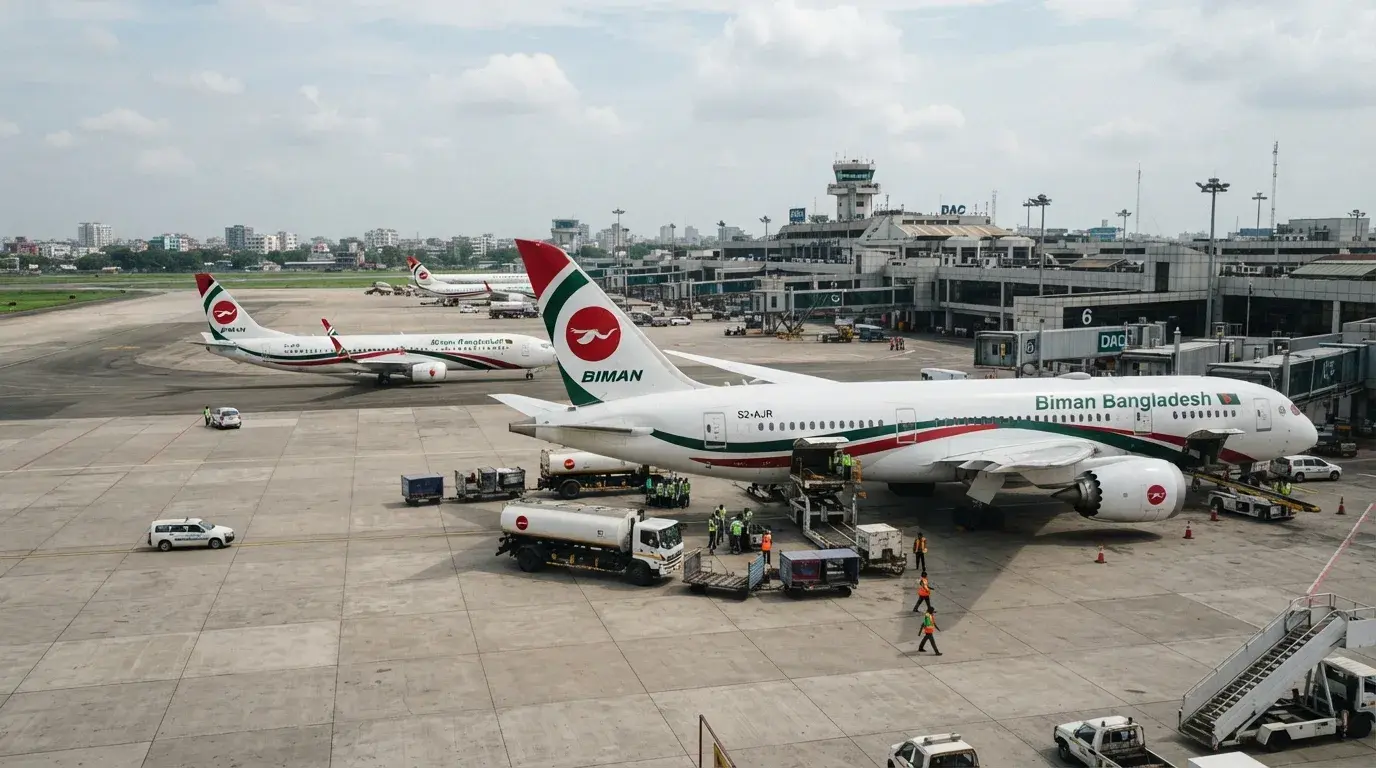
Biman Bangladesh Airlines is heavily investing in Boeing while adding Airbus aircraft, but its single-manufacturer strategy risks driving up costs, delays, and service disruptions for passengers. Here’s how this gamble could backfire.
The Bangladeshi government confirmed in late September that Biman could sign an agreement for four Airbus A350-900 and six A321neo as early as October 2026. While presented as diversification, this move is part of a broader strategy of dependence on Boeing. In the meantime, the airline has increased its total orders from the U.S. manufacturer to 25 aircraft, including five 787 MAX 10 and six additional 737 MAX 8 jets announced at the end of September, bringing its total commitments to 35 planes. Combined with the Airbus orders, Biman will integrate 45 aircraft into its fleet by 2037.
This 100% Boeing-and-Airbus fleet strategy comes with significant challenges. The first Airbus deliveries are not expected before 2033, and Boeing aircraft won’t arrive before 2031 at the earliest. In the interim, Biman will need to lease aircraft to meet growing demand, particularly on routes to Europe and North America. This costly solution could drive up ticket prices. Airlines relying on a single aircraft family often face margin pressures, as they lose the ability to leverage competition between manufacturers to secure better pricing.
Managing a mixed fleet also introduces operational hurdles. Biman will operate 777-300ERs, 787-8 and -9s, 737-800s, Dash 8-400s, A350-900s, and A321neos. Each new aircraft family brings additional costs for crew training, maintenance, and spare parts management. Delivery delays could disrupt expansion plans to new destinations, potentially leading to flight cancellations, service disruptions, and less competitive fares for passengers in Bangladesh and transit hubs like Dhaka.
Airbus and Boeing offer vastly different aircraft. The A350-900 is a long-haul jet optimized for passenger comfort on intercontinental routes, while the A321neo is a single-aisle aircraft suited for regional services. Boeing aircraft, meanwhile, are often preferred for their reliability on long-haul flights. But this apparent diversity masks a less appealing reality: increased complexity for technical teams. Biman will need to train its mechanics on two distinct maintenance systems, adding costs and raising the risk of errors.
Bangladesh’s Minister of Civil Aviation and Tourism, Rashiduzzaman Millat, has highlighted Airbus’s support for maintenance, repair, and training. Yet integrating two aircraft families into a historically Boeing-only fleet presents a major logistical challenge. Staggered deliveries over several years, combined with potential delays, could further postpone improvements in service quality promised by Biman. Passengers may wait years for a more extensive network and more attractive fares.
A High-Risk Strategy for Bangladeshi Travelers
Biman Bangladesh Airlines defends its strategy as a response to growing international demand. Yet Bangladeshi travelers and those transiting through Dhaka could end up paying the price. Delivery delays for new aircraft mean the airline will continue operating aging planes, such as its current 777-300ERs, which already carry high operational costs. Ticket prices are likely to remain high or even increase to offset these additional expenses.
The first Airbus aircraft won’t arrive before 2033, and Boeing jets after 2031. In the meantime, Biman will need to lease aircraft—a temporary fix that fails to address the core issue. Leasing is often more expensive than long-term ownership and exposes airlines to volatile market prices. Travelers could face fare hikes, particularly on long-haul routes where demand is strong.
Another concern is maintenance. With a fleet split between Boeing and Airbus, Biman will need to manage two spare parts systems and two maintenance philosophies. Costs could skyrocket, and service quality may suffer. Delays in new aircraft deliveries could also lead to flight cancellations or disruptions, directly impacting passenger experience.
Finally, this strategy of relying on just two manufacturers limits Biman’s flexibility. If technical issues arise with one aircraft family, the airline won’t have the option to quickly pivot to an alternative. Travelers could face last-minute cancellations or delays, disrupting their travel plans.
Ignored Alternatives: Why Biman Isn’t Considering Other Manufacturers
While manufacturers like Embraer or ATR offer aircraft tailored to regional and low-cost carriers, Biman appears to overlook these options. The A321neo and Boeing 737 MAX are expensive jets designed for high-traffic routes. Yet for a carrier like Biman, a more modular approach—combining single-aisle jets and turboprops—could better align with Bangladesh’s market realities.
Embraer, for example, offers E-Jets E2 aircraft that could complement Biman’s fleet without inflating maintenance costs. ATR provides turboprops ideal for regional routes, often more economical to operate. By betting solely on Boeing and Airbus, Biman sacrifices the flexibility that could help it better serve travelers.
This rigidity may also stifle innovation. While Boeing and Airbus aircraft incorporate advanced technologies, their adoption requires heavy investments in training and infrastructure. Biman will need to train pilots, mechanics, and commercial teams on these new systems, adding costs and risks during the transition period.
Biman’s choice to remain loyal to Boeing and Airbus could ultimately harm Bangladeshi travelers. Delivery delays, logistical surcharges, and the complexity of managing a mixed fleet risk driving up fares and degrading service quality. In an already competitive air travel market, this strategy could weaken Biman’s position against rivals like Qatar Airways or Emirates, which rely on more homogeneous fleets and controlled costs.
What’s Next for Biman Bangladesh Airlines Passengers?
Until 2033, travelers in Bangladesh and those transiting through Dhaka will have to contend with an aging fleet and high fares. The new Airbus and Boeing aircraft won’t arrive for several years. In the meantime, Biman will grapple with delays, surcharges, and potential disruptions. Passengers may see their travel plans upended by cancellations or last-minute changes.
However, once the new aircraft are integrated, Biman could benefit from a more modern and comfortable fleet. The A350-900 and Boeing 787 MAX offer more spacious cabins, improved pressurization, and reduced fuel consumption, which could eventually allow the airline to lower fares. But these improvements will only materialize in the medium term.
In the meantime, travelers should stay alert to Biman’s announcements. Delivery delays or technical issues could lead to schedule changes. Booking tickets in advance and purchasing travel insurance is advisable to mitigate potential disruptions. Biman still has a long way to go before it can match the service standards of its regional competitors.
Biman’s announced diversification with Airbus is, in reality, a costly gamble on just two manufacturers. The strategy carries major risks for travelers, who may end up bearing the brunt of delays, surcharges, and service disruptions. The bet is a risky one—and Bangladeshi passengers could pay the price.
Be the first to comment on this article