Canada, Mexico and the United States for the 2026 World Cup: Where to Travel to Follow the Tournament?
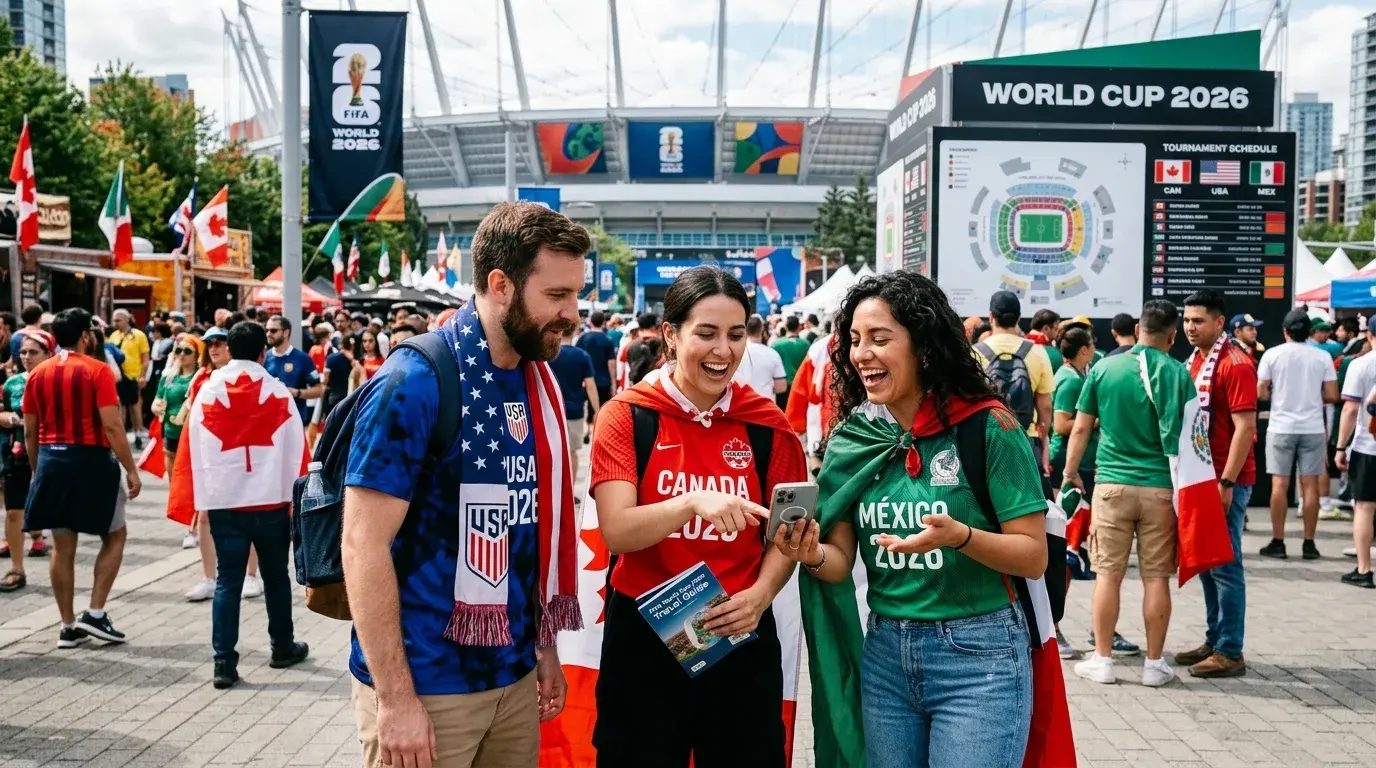
As the 2026 FIFA World Cup approaches, European supporters are already asking: which of the three co-hosting countries—Canada, the U.S., or Mexico—offers the best conditions for attending matches? Differences in cost, atmosphere, and ease of travel are shaping very distinct choices. For French travelers, the decision hinges on practical concerns: ticket prices, accommodation, local transport, and the ability to move between cities will weigh just as heavily as the sporting lineup.
The tournament is more than just the competition itself. It’s a long-haul trip involving significant distances and entry requirements that vary by country. Fans planning a trip are looking less for a “spectacular” destination than for a manageable experience where they can combine matches, travel, and discovery without breaking the bank.
At this stage, Canada emerges as the most balanced option, the U.S. as the most expensive and logistically challenging, and Mexico as the land of passionate fan culture. Each destination caters to different traveler profiles. Yet when it comes to tourism potential and SEO, Canada stands out—thanks to its welcoming image, host cities, and the opportunity to extend a stay beyond the stadiums.
Canada: The Most Straightforward Choice for Fans
Canada is already capitalizing on its role in the 2026 World Cup. With Toronto and Vancouver as host cities, the country offers two clear entry points for travelers. The first advantage is perception: Canada is widely seen as offering smoother organization, manageable urban distances, and a travel experience often judged simpler than in the U.S. For a supporter spending several days, these factors matter as much as the match schedule.
Toronto positions itself as an accessible, multicultural metropolis with excellent connectivity and experience in hosting major events. Vancouver, by contrast, leverages its spectacular geography, offering a setting where football can be combined with exploration of the Pacific coast. For travelers, this means a Canada trip can be planned as a round trip from stadiums—or as an urban or nature getaway without multiple base changes.
The country also has a concrete selling point: tourism professionals report a rise in bookings, particularly for packages that blend matches with sightseeing. Flywest notes that tour operators are already seeing interest in road trips and extended stays in Canada. This is significant because it creates easily searchable content around queries like traveling to Canada for the 2026 World Cup, matches in Canada, or football trip to Canada 2026.
The U.S.: High Costs Deter Travelers
The contrast with the U.S. is stark. On paper, the country hosts the most matches and garners the most media attention. In practice, early feedback from supporters highlights soaring internal travel costs, inflated hotel prices, and administrative hurdles. Examples speak for themselves: a shuttle from Manhattan to MetLife Stadium priced around $150 round-trip, tickets often exceeding €500, and accommodations that climb rapidly in host cities.
Added to this is a less welcoming climate for international tourism. Observers question whether stadiums will fill for group-stage matches, especially for less attractive fixtures. For foreign travelers, entry controls and administrative requirements further dampen enthusiasm. In this context, planning a simple trip to the U.S. becomes more difficult—especially for supporters hoping to attend multiple matches.
Yet the U.S. remains central to the sports tourism market. It’s where France’s national team will play its group-stage matches, according to the current schedule. The Bleus will take on opponents in New York/New Jersey, Philadelphia, and Boston. None of these games will be held in Canada or Mexico, limiting the appeal of those countries for following France’s group-stage campaign. However, if France qualifies for later rounds, opportunities may arise to travel to Toronto, Vancouver, or certain Mexican cities.
Mexico: The Destination of Passion
Mexico occupies a different niche. If the goal is stadium atmosphere and a deeply visible football culture, this is the country to watch. Mexico City, Guadalajara, and Monterrey will host matches, with the Estadio Azteca highlighted for the tournament’s opening game in the host nation. Mexico’s tourism appeal isn’t just about football—it’s about integrating the event into a more intense urban and communal experience.
For supporters, Mexico can be a compelling choice if the aim is to experience a louder, more collective World Cup, often less staged. Chants, packed stands, and the local roots of football are part of the equation. On the downside, the country demands consideration of long-haul travel from Europe and the logistics of moving between host cities. For some travelers, Mexico will be a second choice after Canada; for others, it will be the most attractive destination of the tournament.
From an SEO perspective, Mexico holds strong search value when covering phrases like 2026 World Cup in Mexico, Mexico 2026 opening match, or traveling to Mexico City for football. But in terms of potential volume, the Canadian theme resonates more broadly—especially with a Francophone audience seeking a practical, reassuring solution.
Why Canada Dominates Fan Searches
Canada’s strength lies in its balanced positioning. It’s neither the most expensive nor the most logistically complex, yet it offers a more manageable itinerary. For a supporter wanting to attend a match without turning the trip into an obstacle course, this balance is decisive. Host cities are few, routes can be planned in advance, and the stay can be extended with urban or nature stops without leaving the country.
Specialized agencies have caught on. Operators like Comptoir des Voyages, Authentik Canada, the Cercle des Voyages, and Imagine-Canada are already surfing the wave with tailored circuits, self-drive tours, and customized trips. This isn’t trivial: the more a destination is adopted by recognized operators, the more credible it becomes for travelers who prefer not to improvise. It also boosts editorial potential around the 2026 World Cup, particularly for queries tied to Canada World Cup 2026 tours and football trips in North America.
Canada also benefits from a more favorable psychological context. While the U.S. accumulates criticism over pricing and controls, Canada emerges as the reasonable alternative. Compared to Mexico, it offers a simpler structure for travelers who want to stay in urban bases and minimize transfers. This positioning explains why the destination could become one of the most sought-after for following the tournament from Europe.
What’s the Best Choice for French Supporters?
For French fans, the answer largely depends on France’s tournament path. The team’s group-stage matches will be played in the U.S., making Canada less relevant in the initial phase. However, if planning a longer stay or targeting later rounds, Toronto and Vancouver could serve as more comfortable bases than some American cities. Mexico, meanwhile, remains more of an atmosphere or combo option.
The final choice will be pragmatic. Those prioritizing budget efficiency will look to Canada. Those aiming to maximize match attendance must accept U.S. constraints. And those seeking a more intense, dense, and loud stadium experience will turn to Mexico. In all cases, the key will be to book early and verify entry requirements—because the 2026 World Cup will also be a logistical challenge.
For travel and transport media, the topic is already established. Canada ticks the boxes for practical research, combined trips, and sports tourism. This is likely why it will become one of the most clicked subjects in the run-up to the North American World Cup, with queries blending Canada World Cup 2026, football matches in Toronto, travel to Vancouver for the World Cup, and sports tourism in North America.
Be the first to comment on this article