Vietnam accelerates its tourism push and wins over more French travelers
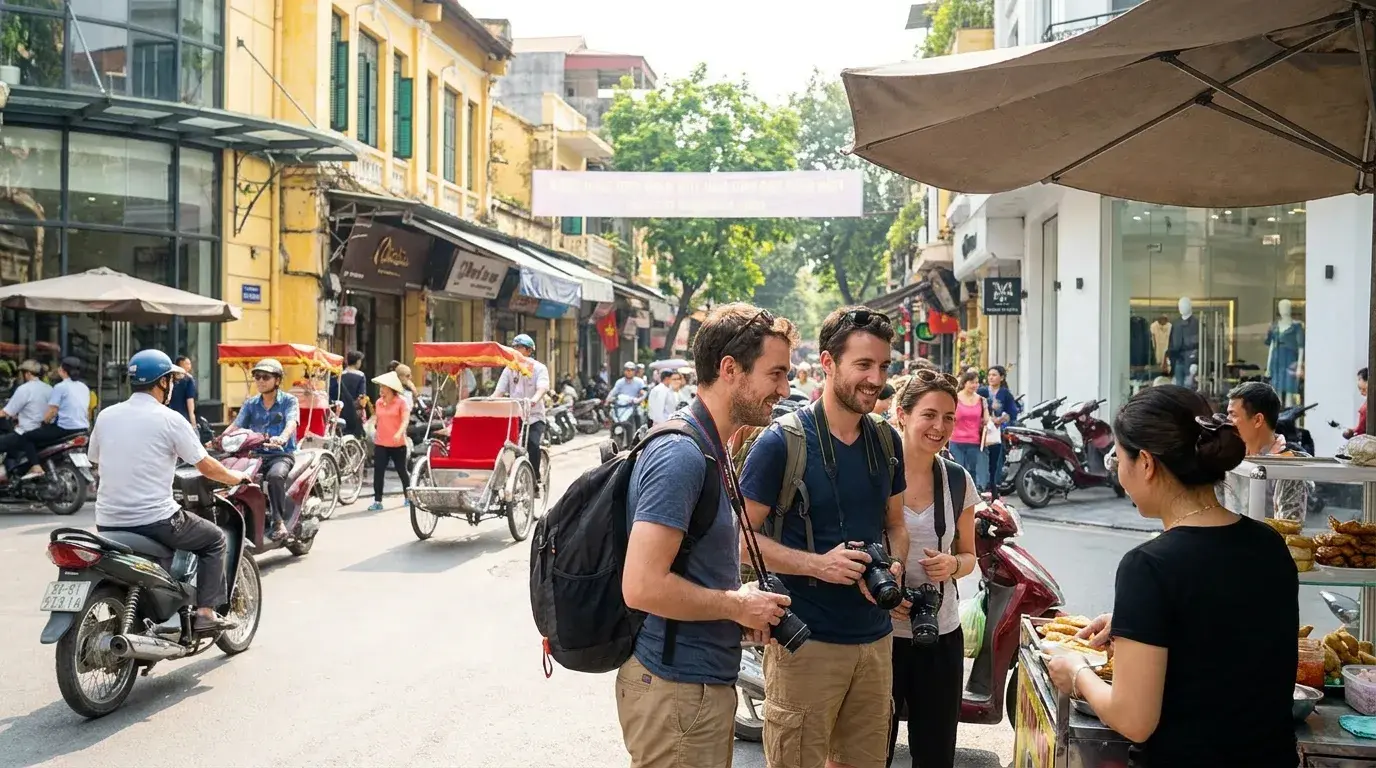
Vietnam is rapidly scaling up its international tourism. Over the past few years, the country has seen a steady surge in foreign visitor numbers, driven by a more streamlined travel offering, simplified visa processes, and highly competitive on-the-ground costs. For French travelers, the appeal is twofold: a striking cultural contrast between major cities, coastal areas, and rural regions, and a budget that often remains far lower than in other Asian destinations.
This momentum is more than just a passing trend. Vietnam welcomed around 21.5 million international visitors in 2025, up from nearly 10 million in 2016. In January 2026, the country even broke a monthly record with nearly 2.5 million international arrivals. The government is now targeting 25 million foreign visitors in 2026, an ambitious goal but one that aligns with recent market trends.
French travelers are contributing to this growth. In 2025, approximately 350,000 French tourists visited Vietnam, a figure higher than pre-pandemic levels. This rise confirms the country’s growing prominence among long-haul Asian destinations from France, particularly for trips combining culture, soft mobility, gastronomy, and affordable pricing.
Tourism as an economic pillar
Tourism now plays a central role in Vietnam’s economy. Sector-related revenues reached nearly $38 billion in 2025, reflecting both rising visitor numbers and a gradual upscaling of the travel offer. Hotels, transport, dining, leisure, and rural tourism fuel a value chain that employs countless workers, both directly and indirectly.
This growth is also supported by a stable political environment. Vietnam remains led by the Communist Party of Vietnam within an institutional framework that fosters economic continuity. For investors and tour operators alike, this stability has facilitated infrastructure development and the structuring of a more diversified travel offering.
At the same time, authorities have introduced multiple levers to boost attractiveness. Visa easing, the widespread adoption of online procedures, and visa-free entry for several European nationalities have simplified travel planning. For a market like France, where administrative preparation can still deter some travelers, these relaxations play a key role in final decision-making.
A country that’s accessible but requires some planning
Vietnam’s primary draw is its value for money. On the ground, travelers can enjoy meals for just a few euros, hostel stays for under €10 per night, and craft complete itineraries without breaking the bank. This is a compelling argument for young travelers, families, and couples seeking a distant destination without excessive ancillary costs.
Yet, Vietnam is not a logistically “simple” destination. Dense urban traffic, language barriers, and stark regional differences demand some advance preparation. The first hours in Hanoi or Ho Chi Minh City can be overwhelming due to traffic and local customs. A well-structured trip—with realistic itineraries and verified accommodations—helps avoid many pitfalls.
In this context, packaged travel options have found their audience. Organized trips to Vietnam appeal to those who want to focus on the essentials without managing every step. Other travelers prefer tailor-made itineraries, which offer more flexibility and are often better suited for trips combining cities, countryside, and coastline. The French market has even structured itself around this hybrid demand, balancing logistical security with freedom of pace.
Diverse landscapes and a visible colonial heritage
The country’s main asset remains its diversity. In just a few days of travel, visitors can move from the terraced rice fields of the north to the karst landscapes of Ha Long Bay, from the ancient streets of Hanoi to the beaches of Phu Quoc. This variety allows for highly customizable trips tailored to different traveler profiles, from cultural circuits to beach getaways and trekking adventures.
The legacy of French Indochina remains visible in several cities, particularly Hanoi, Ho Chi Minh City, and Dalat. Administrative buildings, colonial villas, opera houses, and historic hotels evoke this period without reducing the country to a static backdrop. For French-speaking visitors, this urban memory adds a tangible layer to the travel experience, beyond mere symbolism.
This heritage dimension complements a vibrant urban fabric. Vietnam’s major cities are far from being defined by their past; they now thrive with commerce, services, gastronomy, transport, and student life. The contrast between historic districts and newer areas is part of the experience, with visible changes year after year.
Hanoi, Ho Chi Minh City, and the country’s main entry points
Hanoi and Ho Chi Minh City remain the primary gateways to Vietnam. These two metropolises account for the majority of international arrivals and serve as bases for most itineraries. Da Nang, Hue, Nha Trang, and Ha Long Bay round out this network, each offering distinct profiles to suit different traveler expectations.
Authorities are also working to better distribute visitor flows across the country. Community-based tourism in rural and mountainous areas is gradually gaining traction. The goal is clear: to avoid over-concentration on a few heavily visited sites and to ensure that more regions benefit from tourism’s economic impact.
Major private groups have supported this evolution. Companies like Saigon Tourist, Vinpearl, and Sun Group have invested in hotels, resorts, amusement parks, and integrated tourism complexes. This upscaling of the travel offer allows the country to cater to a broader range of visitors, from budget-conscious travelers to those seeking more comfortable stays.
Perceived as a safe destination for solo travelers
Safety is a key consideration when choosing a long-haul destination. On this front, Vietnam enjoys a favorable image, particularly among solo female travelers. The country is often seen as relatively low-risk in terms of violent crime against tourists, which enhances its appeal in the solo travel market.
While this positive perception doesn’t eliminate the need for basic vigilance, it clearly gives Vietnam an edge over other Southeast Asian destinations. For travelers looking to explore independently, use local transport, or craft flexible itineraries, this sense of relative safety is a significant deciding factor.
This is further bolstered by a generally warm welcome, even if communication can be more challenging outside major tourist hubs. Again, thorough preparation makes all the difference, especially for those eager to venture beyond the most conventional routes.
France’s growing market for Vietnam
For French travelers, Vietnam ticks multiple boxes: simplified administrative access, moderate cost of living, diverse landscapes, and a more mature tourism offering. Specialized agencies focusing on Asia have taken note of this demand, offering organized trips, tailor-made circuits, or extensions into Cambodia and Laos.
This combined travel approach meets a concrete need. Many clients seek an initial trip to Vietnam, followed by an extension to a neighboring country in the former Indochina region. Others opt for a more targeted approach, with just two or three stops, to avoid overly complex travel within a vast and diverse country.
Vietnam has thus secured a lasting place in long-haul travel discussions. Between its booming tourism sector, improved accessibility, and increasingly structured travel options, the country now presents strong arguments against other Asian destinations vying for French travelers’ attention.
The coming months will reveal whether the target of 25 million international visitors in 2026 is achieved. But the trend is already clear: a country that is increasingly capturing the attention of agencies, independent travelers, and cultural circuit enthusiasts working within a controlled budget.
Be the first to comment on this article