Air Astana Launches Two New Routes to Oman and Japan: Your Next Asian or Gulf Getaways Take Off
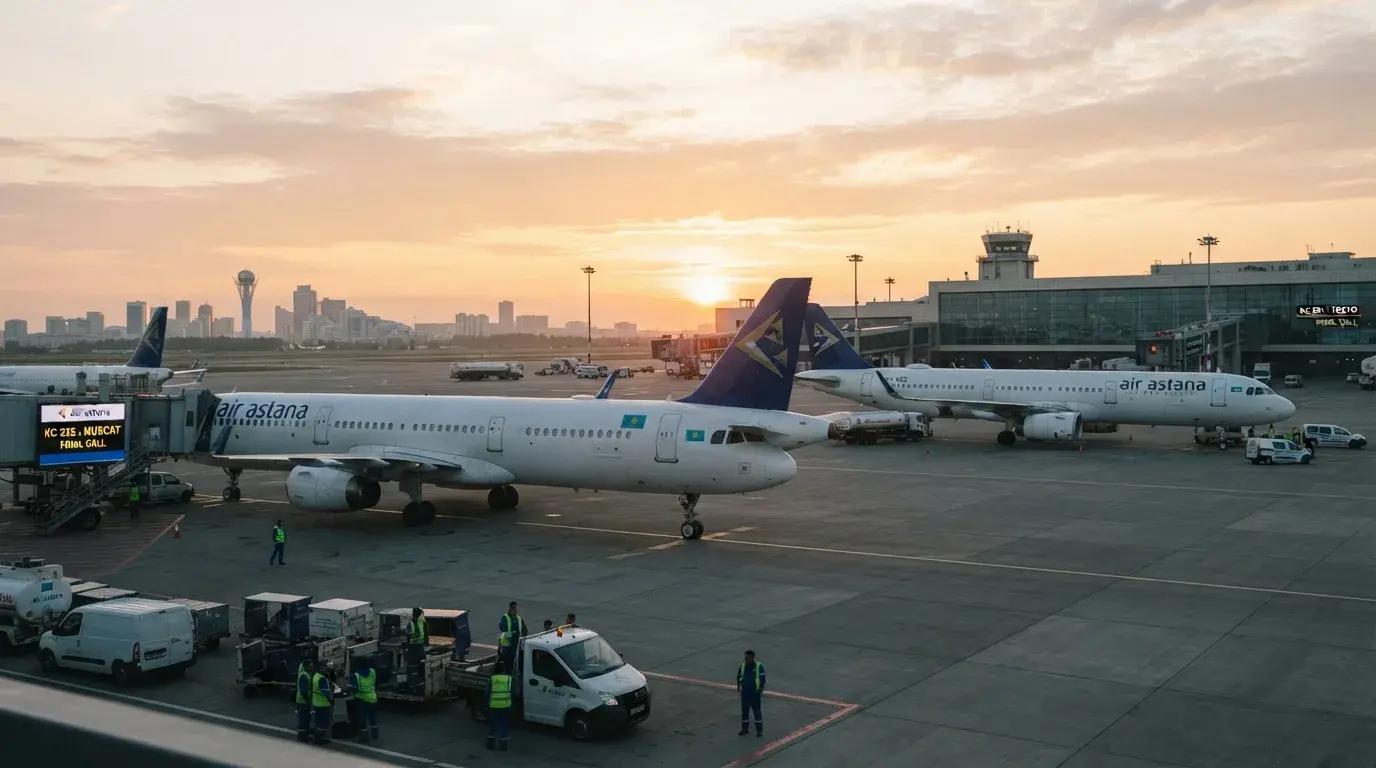
The Kazakh airline takes a major step in its international expansion with two routes that redefine travel between Central Asia and the Middle East on one hand, and East Asia on the other. Air Astana officially opens flights to Salalah, Oman, and prepares to launch its service to Tokyo-Narita, Japan—two destinations set to transform itineraries for leisure and business travelers alike. This strategy aligns with the airline’s continued geographic diversification under the leadership of its new CEO, Ibrahim Canliel, who took office in April 2026.
These new routes are more than just additions to an already extensive network. They respond to distinct economic and tourism logics, showcasing Air Astana’s ability to adapt to traveler expectations while strengthening its position in key markets. The choice of Salalah, the airline’s first Omani stop, reflects a desire to tap into the sultanate’s balneal and cultural tourism, while the future Tokyo route aims to boost economic and cultural exchanges between Kazakhstan and Japan—two complementary, fast-growing economies.
For travelers, these openings present an opportunity to explore less frequented but equally captivating destinations. Salalah, dubbed the “pearl of the Gulf of Oman” for its lush landscapes during monsoon season, offers an alternative to the classic Gulf metropolises. Meanwhile, Tokyo remains an essential hub for business travelers and Japanophiles, with connections eased by an Airbus A321LR optimized for long-haul flights.
These two routes add to a 2026 already packed with innovations for Air Astana, which has multiplied route openings across Asia and the Middle East. A momentum that underscores the group’s ambition to become a key player in air transport between Europe and Asia, leveraging hubs like Almaty and Astana.
Salalah: An Authentic Omani Stopover
Air Astana makes its debut in Salalah, a destination distinguished by its uniqueness in the Arabian Peninsula. Unlike major Gulf cities like Dubai or Abu Dhabi, Salalah is renowned for its white-sand beaches, the verdant Dhofar Mountains, and its preserved local culture, especially during monsoon season from June to September. The city draws thousands of tourists annually seeking authenticity and contrasting landscapes between desert and oasis.
The Kazakh carrier will connect Almaty and Astana to Salalah with weekly flights from each hub. These routes, launching on Fridays and Saturdays starting October 23 and 24, 2026, will be operated with an Airbus A320, perfectly suited for this service. For travelers, this means an unprecedented gateway to a region still largely untapped by European or Middle Eastern airlines, offering direct access to landscapes and culture radically different from classic beach destinations.
The launch of this route fits into Air Astana’s broader strategy of diversifying destinations, following the suspension of flights to Dubai due to regional tensions. Salalah thus represents a strategic alternative, allowing the airline to maintain a presence in the Middle East while avoiding conflict zones. This service complements other recent openings, such as those to Istanbul or Beijing, reaffirming Air Astana’s ambition to play a central role in exchanges between Central Asia and the rest of the world.
For Kazakh or European travelers transiting through Almaty, Salalah becomes a prime stopover for a weekend or trip extension, with landscapes and culture that stand out from classic Gulf destinations.
Tokyo-Narita: East Asia Within Reach from Kazakhstan
The upcoming route between Almaty and Tokyo-Narita, slated for November 30, 2026 (subject to government approvals), marks another milestone in Air Astana’s expansion into East Asia. With two weekly flights, the Kazakh airline aims to strengthen economic and cultural ties between the two countries while offering travelers an alternative to classic connections via Istanbul, Dubai, or Moscow.
This route will be operated with an Airbus A321LR, a long-haul narrowbody designed for transcontinental flights. The aircraft’s configuration includes 16 business-class seats convertible into fully flat beds and 150 economy seats, 18 of which are labeled “MySeat” with extra space. An offering designed to appeal to both business travelers and tourists seeking comfort on a journey exceeding ten hours.
A key advantage of this route lies in its partnership with Japan Airlines, enabling codeshare agreements. This means tickets for Almaty-Tokyo-Narita can be marketed under the JAL brand, significantly boosting the new route’s visibility. This collaboration aligns with existing agreements between the two carriers, reinforcing passenger exchanges between Kazakhstan and Japan.
For Ibrahim Canliel, CEO of Air Astana, this launch is a pivotal step in the airline’s strategy: “Tokyo, our 22nd new route in 2026, is one of the world’s leading business and tourism hubs. This new service, operated with an Airbus A321LR, will give a significant boost to commercial, economic, and cultural exchanges between Kazakhstan and Japan.” A statement that underscores Air Astana’s ambition to become a key player in connections between Central Asia and the rest of the world.
For travelers, this route offers a unique opportunity to reach Tokyo nonstop from Europe or Central Asia, with seamless connections in Almaty or Astana. An ideal solution to avoid lengthy, tedious layovers while enjoying optimal onboard comfort.
A Modernized Fleet for Ambitious Flights
These two new routes rely on a modernized fleet tailored to long-haul travel demands. The Airbus A321LR used for the Tokyo route is a major asset for Air Astana, offering a range of over 7,400 kilometers—well beyond the needs for Almaty to Narita. The Airbus A320 serving Salalah ensures regular service without excessive costs while delivering a comfort level appreciated by passengers.
These technological choices are part of a broader fleet renewal policy underway for several years. In 2026, Air Astana took delivery of new aircraft, including Boeing 787 Dreamliners, and continues to evaluate opportunities to modernize its narrowbody fleet. A strategy aimed not only at enhancing the customer experience but also at reducing the airline’s carbon footprint—a growing concern in the aviation sector.
The Kazakh group is also banking on strong partnerships with manufacturers like Airbus and Boeing to secure favorable rates and optimal maintenance conditions. These strategic alliances enable Air Astana to maintain a competitive fleet capable of serving diverse destinations while keeping operational costs in check.
For travelers, this translates into more attractive fares, increased flight frequency, and better schedule reliability—key criteria when choosing an airline.
Opportunities for Travelers and Professionals
Air Astana’s two new routes open exciting prospects for both leisure and business travelers. For tourists, Salalah represents an underrated destination in Europe but growing in popularity among those seeking off-the-beaten-path experiences. The city, with its lush monsoon landscapes, pristine beaches, and cultural heritage, offers an experience worlds apart from classic Gulf getaways. For Kazakh or European travelers, it’s a chance to discover a lesser-known facet of Oman, far from the crowds and hustle of major cities.
On the business side, the Tokyo route is a boon for professionals looking to avoid cumbersome layovers. With two weekly flights, this service allows for flexible business travel planning. Additionally, the partnership with Japan Airlines facilitates connections to other Japanese destinations, such as Osaka or Fukuoka, from Tokyo-Narita.
For travel agencies and tour operators, these new routes present an opportunity to craft original packages, such as combining a stay in Salalah with an extension to Muscat or Dubai. Similarly, Kazakh tourism professionals can leverage these routes to attract international visitors by highlighting the authenticity and diversity of their offerings.
Finally, for Air Astana, these openings align with a strategy of controlled growth, aiming to strengthen its position in key markets without risking rapid expansion that could undermine profitability. A cautious yet ambitious approach that should help the airline solidify its place among major players in air transport between Europe and Asia.
With these two new routes, Air Astana reaffirms its ambition to play a pivotal role in international travel by offering credible alternatives to traditional hubs. A strategy that, if pursued rigorously, could position the Kazakh carrier as an indispensable partner for future long-haul journeys.
All that remains is to see how travelers respond to these new opportunities. One thing is certain: with destinations as varied as Salalah and Tokyo, Air Astana has plenty to offer both adventurers and business travelers seeking practicality and originality.
Be the first to comment on this article
On the same topic
- LOT Polish Airlines relaunches Bangkok route after 26 years: How this nonstop flight will transform travel to Southeast Asia
- Biman Bangladesh Airlines bets on Airbus to conquer Europe and North America with A350 and A321neo
- New York-Tel Aviv for under €200: How this long-haul low-cost flight will revolutionize your getaways
- Emirates Launches Direct Dubai-Helsinki Route with Airbus A350: What It Means for European Travelers
- TAP in search of a new partner: Why France and Germany are vying for the Portuguese flagship
- Emirates Revolutionizes Nairobi-Dubai Route with A350 and Premium Economy