Canada-Vietnam: Direct Flights Approved for 2027, Air Canada Eyes Ho Chi Minh City
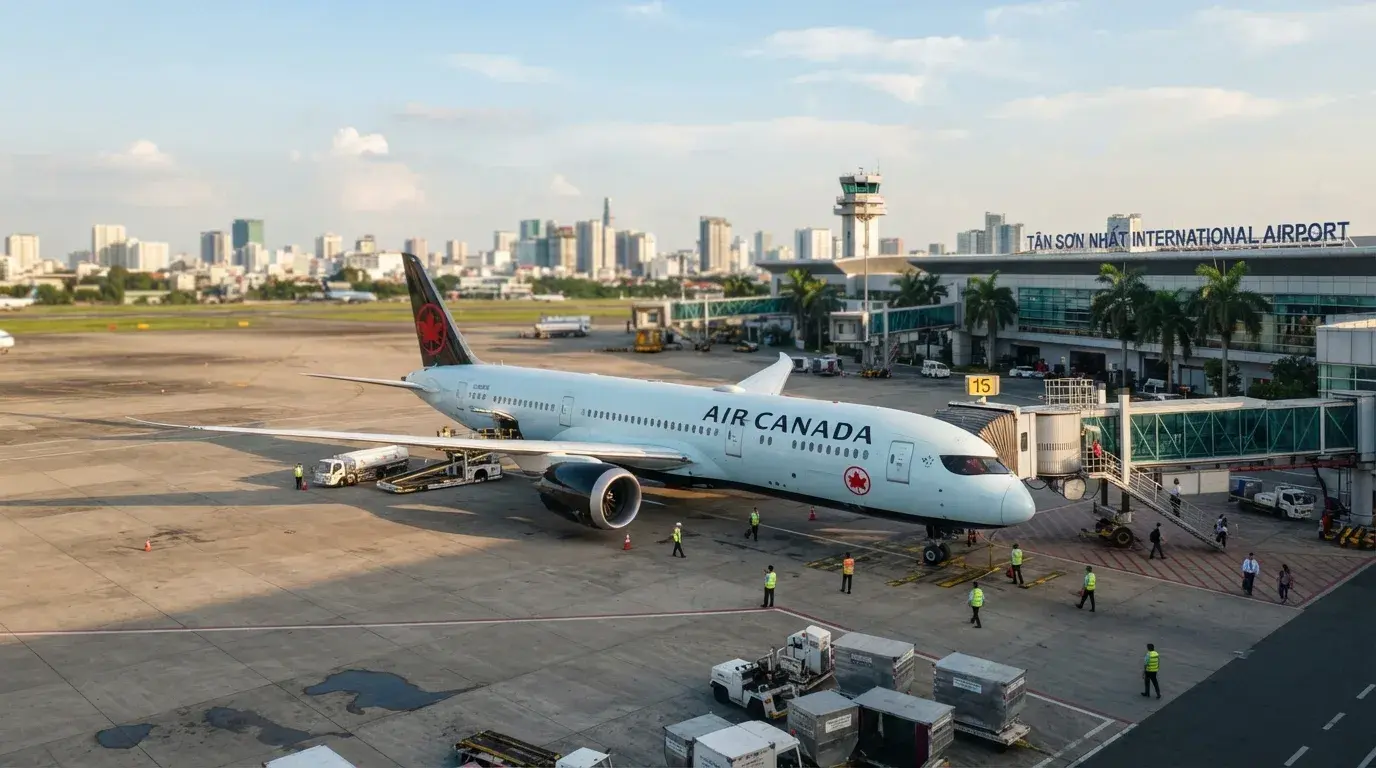
Canada and Vietnam have taken a major step in their aviation relations by signing a new air transport agreement that for the first time permits direct flights between the two countries. This breakthrough paves the way for regular service between Canada and Ho Chi Minh City starting in 2027, subject to regulatory approvals. The decision comes amid strong growth in trade and cultural exchanges between the two nations and promises to simplify travel for thousands of passengers.
Presented by Canada’s Minister of Transport Steven MacKinnon, the agreement allows up to 14 mixed passenger-cargo flights per week and per country. This presents an opportunity for airlines from both nations to strengthen their presence in a rapidly expanding market. Among the key players in this future route, Air Canada has positioned itself as one of the first carriers to express interest in the new service. The Canadian airline has confirmed its intention to serve the Vietnamese metropolis as early as next year, while noting that the project remains subject to government approvals and standard regulatory procedures.
For now, Air Canada has not specified the Canadian departure airport, exact frequencies, or the aircraft type that will be used. These details are expected to be announced later, once the necessary approvals are secured. In the meantime, travelers wishing to fly from Canada to Vietnam will still need to book connecting flights, typically via major Asian hubs such as Seoul, Tokyo, Taipei, or Hong Kong. This adds travel time and logistical complexity to journeys. With the launch of this new direct route, this inconvenience could soon become a thing of the past.
The air travel market between Canada and Vietnam is showing remarkable growth, driven in part by the presence of a Vietnamese diaspora estimated at 275,000 people in Canada. These communities, primarily based in Toronto and Montreal, fuel steady demand for family visits, business travel, and tourism. Vietnam, Canada’s top trading partner within the Association of Southeast Asian Nations (ASEAN), also represents a strategic economic opportunity. Bilateral trade reached C$20.6 billion in 2025, with Canadian exports to Vietnam up 30% year-on-year. These figures highlight the growing importance of this relationship and justify both countries’ commitment to facilitating travel between their territories.
Beyond economic aspects, this new route aligns with a shared desire to strengthen human and cultural ties. Vietnam, with its dynamic cities like Ho Chi Minh City and Hanoi, its central coast beaches, and its northern mountain landscapes, attracts an increasing number of Canadian tourists each year. Cultural exchanges, investment projects, and study opportunities are all factors fueling this momentum. The introduction of direct flights is set to act as a catalyst for these exchanges by reducing logistical barriers and making travel more accessible.
For travelers, this announcement represents an unprecedented opportunity. No more multiple layovers to reach Vietnam from Canada: a direct flight will save valuable time. Tourism professionals, students, and Vietnamese-Canadian families will finally be able to enjoy smoother, more economical trips. Airlines, meanwhile, see this as a chance to tap into a booming market, especially as demand for long-haul flights to Asia remains strong.
A strategic route for Air Canada and Vietnam
Air Canada has already hailed this agreement as a major milestone for its expansion plans in Southeast Asia. Mark Galardo, Executive Vice President and Chief Commercial Officer at the airline, stated: “Vietnam is an important market in the broader Canada-Southeast Asia relationship. We welcome this expanded air transport agreement and look forward to obtaining the necessary government approvals to begin serving Ho Chi Minh City.” This statement reflects the airline’s optimism about the prospects offered by the new route, which could strengthen its long-haul network and attract new customers.
For Vietnam, this direct service is part of a broader strategy to diversify its air partnerships. The country, which is banking on tourism and economic exchanges to support its growth, views this agreement as confirmation of its international appeal. Ho Chi Minh City, as Vietnam’s main gateway, is set to benefit directly from the new route, with positive spillover effects for its local economy and tourism sector.
Canadian travelers will thus enjoy a streamlined experience when exploring Vietnam’s attractions, whether it’s the vibrancy of its major cities, the tranquility of its natural landscapes, or the richness of its culture. With direct flights, planning short getaways or extended stays will be easier, without the hassle of connections. This new route promises to transform the travel experience between the two countries by making trips faster, more comfortable, and more accessible.
Benefits for passengers and airlines
The introduction of direct flights between Canada and Vietnam offers several key advantages for passengers. First, reduced travel time: a nonstop flight eliminates long layovers, often a source of fatigue and stress. Second, simplified procedures: a single booking covers the entire journey, reducing the risk of lost luggage or disruptions due to connections. Finally, greater flexibility: with higher frequencies, travelers can choose schedules that suit their needs, whether for business or leisure.
For airlines, this new route presents an opportunity to capture a growing market. Canada and Vietnam maintain increasingly close economic and cultural ties, and demand for travel between the two countries continues to rise. By offering direct service, Air Canada and any other carriers entering the market can tap into this demand and strengthen their long-haul positioning. This initiative aligns with a broader trend of developing direct routes between North America and Asia, responding to travelers’ growing preference for simpler, faster journeys.
Airlines can also leverage fifth-freedom rights granted under the agreement, which allow them to transport goods between two foreign countries as long as the flight originates or terminates in their home country. This opens opportunities for synergies between passenger and cargo transport, enhancing the route’s profitability. For Vietnam, diversifying trade flows could have positive economic impacts by facilitating exchanges of goods and services with Canada.
Timeline still to be confirmed, but a historic milestone
While the agreement between Canada and Vietnam marks a major milestone, several steps remain before direct flights become a reality. Air Canada has indicated that the project is subject to government approvals and regulatory processes, which can take several months. Travelers will need to wait for the official announcement of the launch schedule, frequencies, and fares. In the meantime, it is advisable to monitor Air Canada’s communications and updates from Canadian and Vietnamese authorities for the latest information.
For tourism professionals, this announcement is excellent news. Canadian and Vietnamese tour operators will soon be able to offer packages that include direct flights, making Vietnam even more attractive to Canadians. Local travel agencies in Vietnam, particularly in Ho Chi Minh City, should prepare for increased demand, especially in hospitality, dining, and tourism activities. This momentum could also boost employment and the local economy by attracting further investment in the tourism sector.
In conclusion, the approval of direct flights between Canada and Vietnam starting in 2027 represents a historic milestone in the aviation relations between the two countries. For travelers, this new route promises simpler, faster journeys, while for airlines and local economies, it opens the door to new opportunities. Once details are finalized, this route could become one of the most sought-after links between North America and Southeast Asia, marking a turning point in air transport history between the two continents.
How to prepare for this new journey
For travelers eager to take advantage of the first direct flights between Canada and Vietnam, it is advisable to closely follow Air Canada’s announcements. Once launch dates and frequencies are confirmed, booking in advance will help secure the best fares and most convenient schedules. Travelers should also check visa and public health requirements, which may vary based on nationality and residency status in Vietnam.
Tourism professionals, meanwhile, can anticipate this new demand by offering packages that include direct flights and tailored stays for Canadian visitors. Hotels, local guides, and travel agencies should prepare to welcome a larger international clientele by highlighting Vietnam’s cultural and natural attractions. An opportunity to revitalize the sector and enhance the destination’s appeal.
With this new route, Canada and Vietnam are taking a major step in their aviation cooperation. An advancement set to transform travel between the two countries by offering simpler, faster, and more accessible journeys—a welcome development for travelers, airlines, and local economies alike, as they embrace this new chapter in Canada-Vietnam relations.
Be the first to comment on this article