The challenges of air punctuality: analysis of delays and cancellations in 2025
The year 2025 was marked by persistent challenges for punctuality in the European air transport sector. Despite a slight drop in flight cancellations compared to the previous year, massive delays continue to disrupt passenger journeys. An in-depth analysis of the data reveals notable trends concerning the airlines most affected, and the underlying causes of these disruptions.
The landscape of cancellations and delays in 2025
The specialist website Flightright has published its annual review, painting a mixed picture of European air transport for the year 2025. While the number of flight cancellations from Europe has fallen, from 0.83 % in 2024 to 0.56 % in 2025, punctuality remains a major issue. In France, for example, almost a third of flights continue to depart late, a figure that testifies to the persistence of operational difficulties.
Airlines most affected by cancellations
In 2025, KLM topped the cancellation charts, with 2.30 % flights cancelled. This puts the Dutch airline in a difficult position, particularly for passengers connecting via its Amsterdam-Schiphol hub. Air France followed closely behind, in second place with 1.40 % of cancelled flights, a rate up on the previous year. British Airways rounded off the top three with 1.19 % of cancellations. These figures underline the fact that the incumbent airlines were not spared the logistical, technological and meteorological hazards that marked the year.
It is interesting to note a change in the hierarchy compared with 2024, when Lufthansa dominated the cancellation rankings. This evolution shows the shifting nature of disruptions and the vulnerability of major carriers to unforeseen events.
The podium of delays: TAP, easyJet and Ryanair top the list
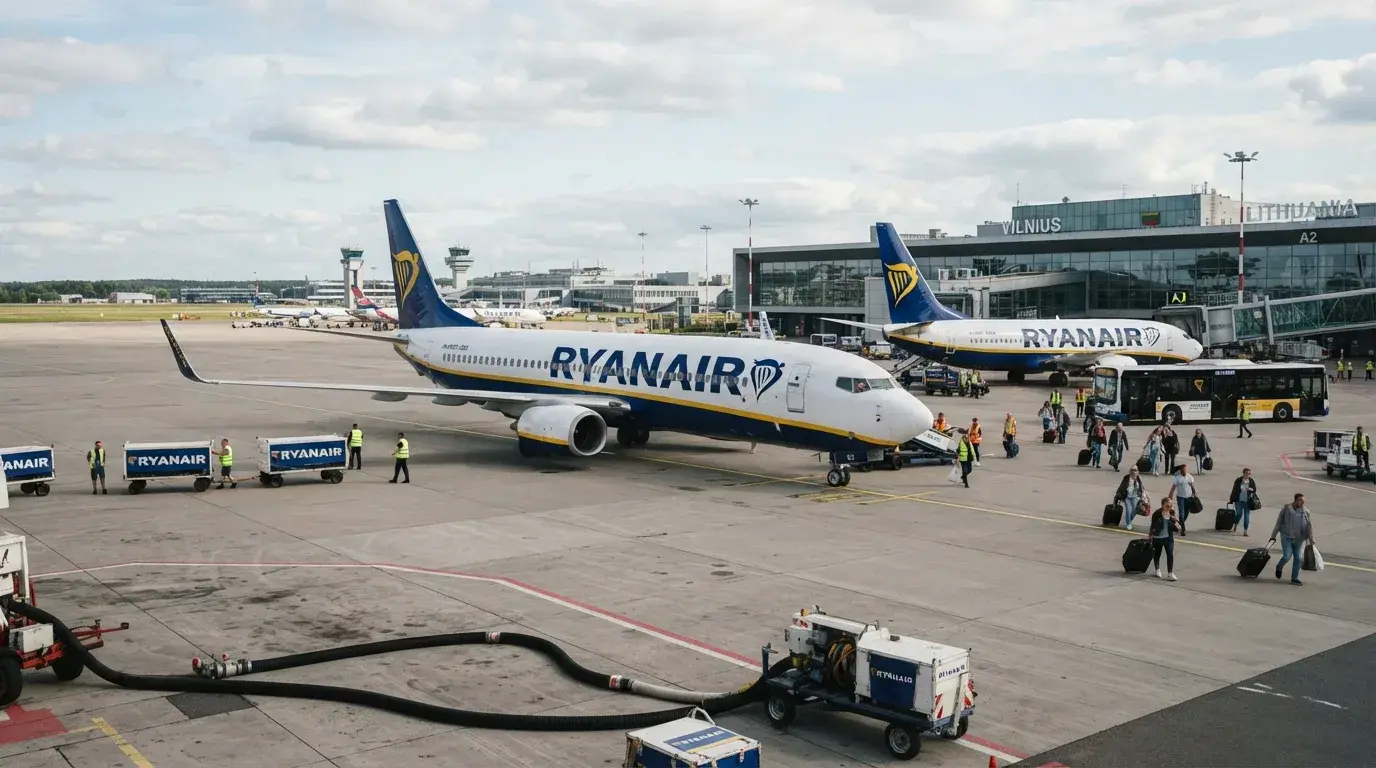
When it comes to delays, low-cost airlines are by far the most frequent, but it is TAP Air Portugal comes out on top, with an alarming 47.01 % of delayed flights. With almost one flight in two departing late, the situation is much worse than in 2024. easyJet and Ryanair complete the top three, with 43.03 % and 41.11 % respectively of delayed flights. These figures illustrate the impact of low-cost airlines' high operational intensity on flight regularity.
These results confirm the trend observed in 2024, when TAP, Jet2 and easyJet were already among the least punctual. The worsening of the situation in 2025 suggests that the problem of punctuality is becoming structural rather than cyclical.
Causes of disruption: a complex cocktail
Several factors explain the persistence of delays and cancellations in European air transport. Airport congestion and the structural limitations of air traffic control continue to generate massive delays. Extreme weather events, industrial action and technical incidents add to this picture, creating a complex operating environment for airlines.
Flightright's study also highlights the fact that, despite a slight improvement in cancellations, France continues to face an almost unchanged level of delays. This finding highlights the challenges facing the industry in guaranteeing satisfactory punctuality for passengers.
Air France: between cancellations and good compensation management
Air France will have two faces in 2025. While the company is one of those most affected by cancellations, it has also made significant improvements in its handling of passenger files. Flightright points out that Air France is exemplary in terms of speed of compensation. These two observations suggest that the company is determined to manage disruptions more effectively, even if it means cancelling some flights.
Be the first to comment on this article
On the same topic
- Middle East flights resume: airlines navigate uncertainty
- Air France threatens to cut Asian network due to sustainable fuel costs
- Air France strengthens its Paris-New York airlift with 11 daily flights
- Air France steps up prevention of sexist and sexual violence in the wake of the MeToo revelations
- Air France relaunch Paris-Saint-Domingue: what French and international travellers need to know
- Air France revolutionizes the skies with the introduction of ultra-fast WiFi on board its aircraft thanks to Starlink