Finnair: upturn in passenger numbers driven by dynamic routes to Asia
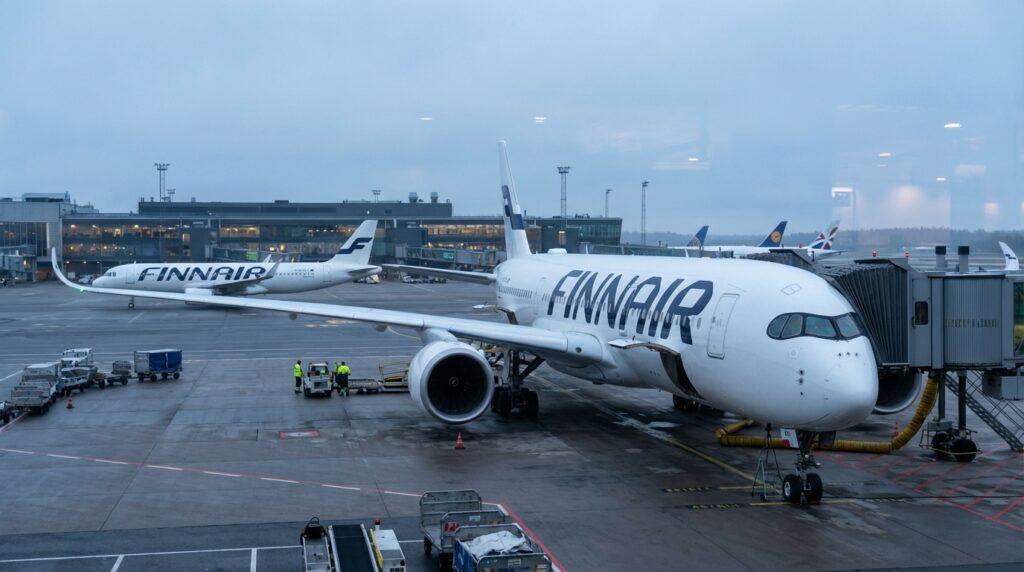
Finnish airline Finnair recorded a marked upturn in passenger numbers in February 2026, with an increase of 6.9% in the number of passengers carried compared with the same period the previous year. This upturn is attributable to the end of the labor unrest of 2025 and the strengthening of its network to Asia, a strategic axis for the carrier.
In all, Finnair carried 904,400 passengers in February 2026. This performance contrasts with February 2025, which was marked by major industrial action that restricted the company's operations. Finnair's capacity, measured in available seat kilometres (ASK), increased by 4.8% year-on-year, reflecting the reintroduction of additional frequencies to key destinations such as Tokyo, Osaka and Dallas.
Increased capacity and sustained traffic to Asia
Finnair's increased capacity reflects the end of the disruption caused by the strikes at the end of 2025. The company has also extended its winter services to Lapland, a popular tourist destination. Including wet lease operations, the Group's total capacity increased by 4.4%.
Traffic, measured in revenue passenger kilometers (RPK), rose by 8.5%. This figure underlines the robust demand on almost all Finnair networks, and particularly on routes to Asia. This dynamism is all the more noteworthy as the company continues to gradually rebuild its offer on this market since the post-Covid reopening and closure of Russian airspace, which had considerably lengthened its flight times.
Demand picks up in major markets
The most significant growth has been in Asian routes, the historical core of Finnair's long-haul model. Despite the challenges posed by the Russian bypass, the company managed to compensate with optimized operations and an expanded offer to Japan and Southeast Asia. European and domestic routes also saw a marked improvement, while volumes to the Middle East rose slightly. Transatlantic traffic remained stable, a sign of solid profitability but no major expansion.
The average load factor (LF) reached 77.7%, up 2.6 points on February 2025. This indicator is improving particularly in domestic, European and Asian markets, although it is declining slightly in North America and the Middle East.
Rising revenues and a high-performance cargo segment
Unit revenue per available seat (RASK) rose by 2.3%, underpinned by this improved load factor and more refined fare management. At the same time, Finnair's cargo segment reported a sharp rise in volumes (+9.3%) and a significant increase in revenue cargo kilometers (+11.5%). These results were driven by Asia and North America, where demand for air capacity remains high.
The cargo segment remains an essential component of Finnair's strategy. In particular, the airline operates the Helsinki-Narita (Tokyo) route and routes to Los Angeles and New York with substantial belly-freight capacity on board its Airbus A350-900s.
Punctuality affected by winter conditions
Despite this encouraging sales performance, Finnair points to a declining punctuality rate. In February, 68.4% of Finnair flights arrived on time, compared with 81.2% a year earlier. This drop is explained by a particularly harsh winter, with extreme weather conditions (snow, strong winds, freezing temperatures) weighing on the regularity of operations at Helsinki-Vantaa, the carrier's main hub.
Despite these seasonal setbacks, Finnair seems to be confirming its return to a sustainable growth dynamic. The company, headed by Topi Manner until his expected succession in 2026, is pursuing a strategy focused on market diversification and efficiency in its long-haul model, while consolidating its role as a regional hub in northern Europe.
Be the first to comment on this article