Aegean Airlines to Take Control of Volotea: What It Means for Your European Travels
Travelers accustomed to regional routes in Europe may soon see their network expand—but under a new banner. Greek airline Aegean Airlines is on track to become the majority shareholder of Volotea, the Spanish low-cost carrier specializing in point-to-point connections between secondary cities. The deal, currently being finalized, could reshape Europe’s air transport landscape, directly affecting bookings, loyalty programs, and flight offerings for millions of passengers annually.
The agreement, still pending several regulatory approvals and finalized discussions with creditor banks, includes an ambitious financial restructuring. Aegean Airlines, which has been a commercial partner of Volotea since 2021, will convert €56 million of debt into equity and inject an additional €15 million. This injection, which would increase Aegean’s stake to 56%, marks a turning point for Volotea, which has long been controlled by its founders via Alaeo Partnership.
This move comes as Volotea reports a significant improvement in operational performance. In 2025, the airline carried 11.3 million passengers, with an 18% increase in revenue compared to 2023 and a 41% rise in operating profit to €47.4 million. Despite these gains, Volotea still posted a net loss of €64 million, primarily due to exceptional costs related to deferred tax asset revaluations and currency reserve adjustments. Its negative equity stood at over €77 million, with a negative working capital requirement of €320.5 million.
Geographical and operational complementarity
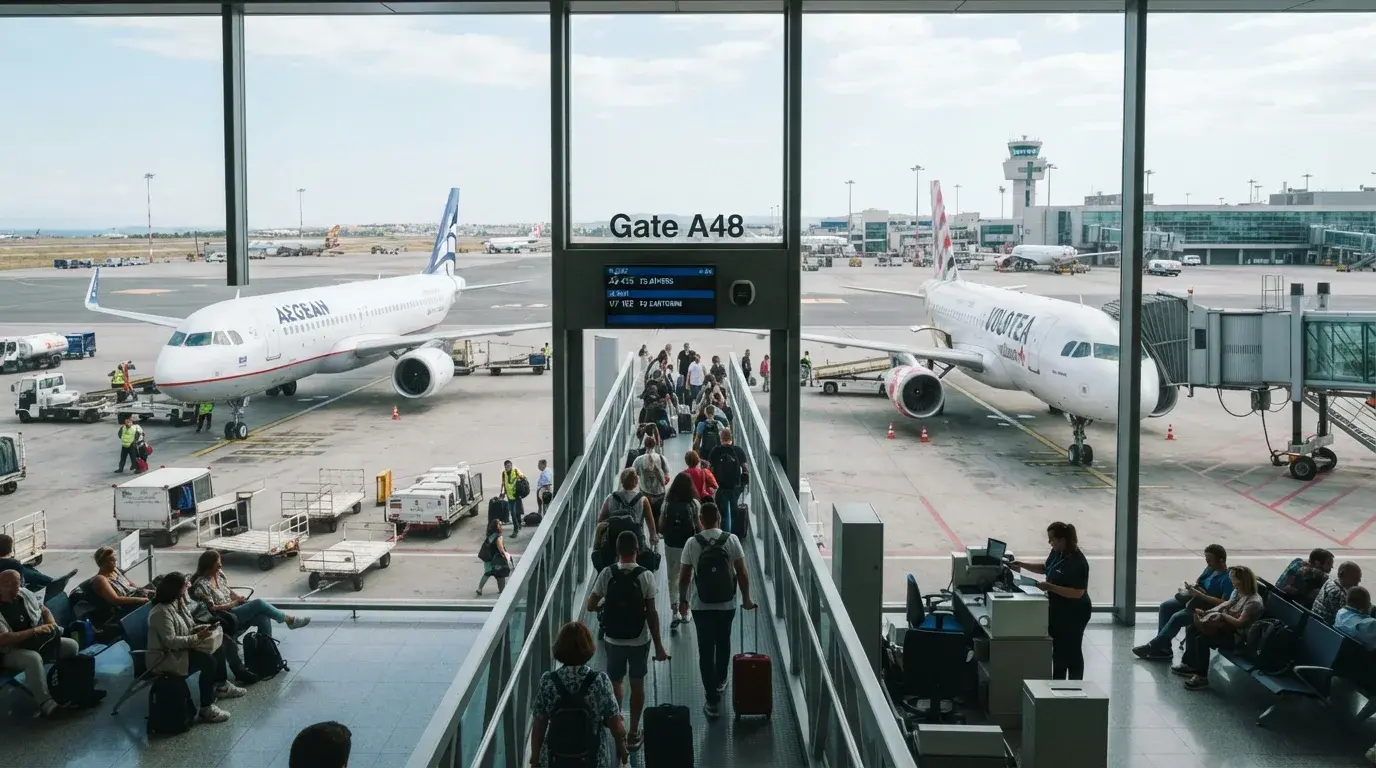
For Aegean, this strategic move aligns with its European growth strategy. Historically focused on Greece, Cyprus, and Mediterranean routes, Aegean sees Volotea as a way to expand beyond its traditional market. Volotea, in turn, operates a distinct but complementary model: specializing in direct flights between secondary European cities, often on routes with little or no competition. It serves over 110 airports across 21 operational bases with a homogeneous fleet of Airbus A319 and A320 aircraft.
In 2026, Volotea plans to offer around 13 million seats on nearly 430 routes, over half of which are exclusive. Key destinations include Lisbon, Milan-Bergamo, Porto, Rome-Fiumicino, Paris-Orly, Brussels-Zaventem, and Florence. At Asturias Airport, where Volotea holds a dominant position, the airline plans a 35% increase in its 2026 capacity compared to 2025, with over 1.1 million seats offered across 24 routes, seven of which are international.
Volotea under Greek control: what does it mean for passengers?
If finalized, Volotea will come under the decisive influence of Aegean Airlines, potentially leading to a gradual integration of their networks. For travelers, this could mean better connections between destinations served by both carriers, along with potential benefits for loyalty programs and pricing synergies. Aegean already operates flights between Athens, Thessaloniki, Corfu, and major European hubs, while Volotea covers a wide range of secondary destinations in France, Italy, Spain, and beyond.
However, the challenge also lies in Volotea’s financial consolidation. Despite improving operational performance, the airline remains weakened by its financial structure. The ongoing restructuring aims to stabilize its situation, but the shift under Greek control could lead to capital reorganization and a redefinition of strategic priorities. Passengers are advised to closely monitor developments, as this deal could influence flight availability, booking conditions, and loyalty policies in the medium term.
Volotea’s founders, Carlos Muñoz and Lázaro Ros, may see their influence reduced, while Aegean Airlines gains greater governance control over the Spanish carrier. This transition could also bring modernization to commercial and operational practices in a sector where financial profitability remains a constant challenge for low-cost airlines.
A new opportunity for travelers seeking secondary destinations
For passengers accustomed to routes between major cities, Volotea’s acquisition by Aegean could open fresh possibilities. Volotea serves numerous secondary European destinations often overlooked by major carriers, offering attractive alternatives for those looking to avoid major hubs. The potential integration of networks could enhance the appeal of these routes by improving connections and scheduling coherence.
Travelers should keep an eye on official announcements from Aegean and Volotea regarding this deal. If finalized, it could mark a turning point for regional air travel in Europe, with ripple effects on bookings, pricing, and loyalty programs. In the meantime, both airlines continue to operate independently, but this emerging alliance promises to invigorate a long-undervalued segment of the aviation market.
What to watch next: booking flights and passenger rights
If you plan to travel with Volotea or Aegean in the coming months, it’s wise to regularly check their official websites for updates. Both carriers are expected to share details on the deal’s concrete impacts for passengers soon. In the event of major changes to flight schedules or booking conditions, passengers retain their rights under European regulations, including refunds, re-routing, or assistance.
Volotea under Greek control: consequences for Europe’s air network
The acquisition of Volotea by Aegean Airlines could have major repercussions for Europe’s aviation landscape. Here are the key potential impacts for travelers:
1. Network integration
One of the biggest advantages of such a deal would be the potential integration of both airlines’ networks. Volotea serves secondary city connections in Europe, while Aegean operates flights between major cities and Mediterranean destinations. Better coordination between these networks could offer travelers more flexibility and choice for their journeys.
2. Strengthened loyalty programs
Loyalty programs could be merged or aligned, allowing travelers to accumulate points on both Volotea and Aegean flights. This would be particularly beneficial for frequent flyers who regularly use both carriers.
3. Fleet modernization
Volotea operates a homogeneous fleet of Airbus A319 and A320 aircraft, while Aegean uses Airbus A320 and A321 models. Fleet integration could lead to better cost management and operational efficiency. Passengers may benefit from improved services through a modernized fleet.
4. Pricing optimization
With better network integration, the airlines could offer more competitive fares, particularly on regional routes. This could make flights between secondary cities more accessible and appealing to travelers.
5. Operational base reorganization
Volotea has 21 operational bases across Europe, while Aegean primarily operates from Greece and Cyprus. A reorganization of bases could improve geographic coverage and cost efficiency for both carriers.
6. Impact on bookings and passenger rights
If the deal leads to changes in flight schedules, travelers must be informed promptly to avoid disruptions. In cases of flight cancellations or modifications, passengers retain their rights under European regulations, including refunds, re-routing, or assistance.
How to follow the evolution of this deal
To stay updated on the latest developments regarding Aegean Airlines’ acquisition of Volotea, check these sources regularly:
Aegean Airlines’ official website, where the carrier shares updates on partnerships and growth strategies.
Volotea’s official website, which will likely publish restructuring updates and passenger impact details.
The airlines’ official social media accounts, where they often share important announcements.
Specialized aviation media outlets, which report on strategic operations and industry analyses.
In summary, Aegean Airlines’ acquisition of Volotea could mark a turning point for regional air travel in Europe. For travelers, this could translate into better network integration, more competitive fares, and strengthened loyalty programs. It’s essential to closely monitor this deal and its potential impacts on future bookings and travel plans.
Expert insights on the deal
Industry analysts view this operation as a winning strategy for Aegean. By integrating Volotea, Aegean could strengthen its presence in Europe and offer broader coverage to its customers. The acquisition could also provide Volotea with financial and operational support to continue growing and improving profitability.
However, some experts highlight the challenges of integrating two distinct corporate cultures and managing operational synergies. The success of this deal will largely depend on the two airlines’ ability to collaborate and leverage their complementary strengths.
Be the first to comment on this article
On the same topic
- Emirates Revolutionizes Premium Economy with Electric Seats and Adjustable Partitions on A350
- Israir Launches Flights to New York: How to Book Tickets for the Big Apple from October 2026
- SAS relaunches Copenhagen-Mumbai route in October: How to book your tickets for this strategic hub
- Riyadh Air Makes European Debut: Málaga and Madrid to Be Connected by the Gulf’s New Star
- Southwest Airlines' upcoming cabin and fare transformation