Syrian Airlines relaunches Damascus-Amsterdam route: Syria returns to Europe after a decade-long absence
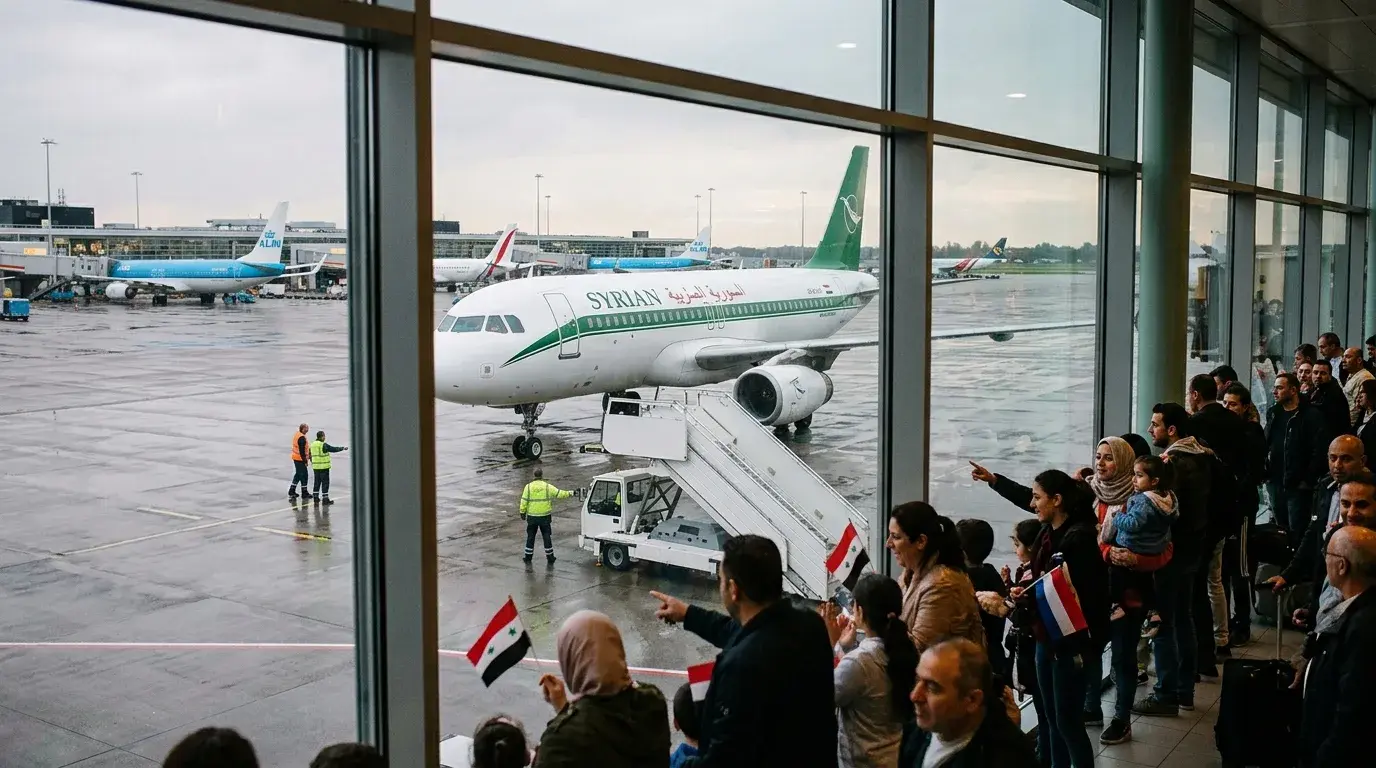
Syria is poised to mark a turning point in its reintegration into the global aviation scene. Syrian Airlines, the national carrier, will restore a direct route between Damascus and Amsterdam starting July 2026, the first regular service to the European Union since the gradual lifting of European sanctions. The announcement confirms the Syrian authorities’ commitment to normalizing air travel with the continent, in a context where connectivity plays a key role in the country’s economic reconstruction.
This reopening follows more than a decade of aerial isolation for Syrian Airlines, which faced restrictions imposed due to the Syrian conflict. Recent years have seen the airline’s fleet reduced to a handful of operational Airbus A320s. Despite these constraints, the carrier has launched a plan to restore its aircraft and gradually expand its network, with new routes to Gulf countries and reactivations to Istanbul or Tripoli. The introduction of this European route symbolizes a decisive step toward reconnecting with major international hubs.
According to Omar Hosari, Director of the General Authority of Civil Aviation and Air Transport in Damascus, “the final technical and regulatory steps are nearing completion with Dutch authorities” in preparation for an official launch at the start of July 2026. The date remains subject to final administrative approvals but already represents a historic milestone for Syria’s return to European airspace.
A strategic corridor to Northern Europe
Amsterdam-Schiphol, with its extensive network of connections, becomes the first European destination for Syrian Airlines in nearly a decade. For the airline, this choice is strategic: the Dutch airport offers an ideal gateway to Northern Europe, as well as the Americas and Africa through its multiple connections. For travelers, this new route will allow easy access to destinations like Berlin, London, or Paris from Damascus without costly intermediate layovers.
The Syrian authorities present this opening as a key step in a broader plan to gradually return to other European cities. Discussions are already underway with Germany to lift the ban on flights between Syria and the Federal Republic, a decision expected in the first half of July 2026. If this timeline is met, additional routes could emerge toward Central Europe, including Frankfurt or Vienna, further integrating Syria into international air traffic.
Reopening under strict oversight
This reopening is taking place within a strict regulatory framework. The European Union lifted the flight ban on Syrian Airlines in 2025, provided the carrier complies with strict conditions related to transparent management and political transition in Syria. Enhanced monitoring is therefore in place for the airline’s operations, whose fleet remains modest and requires further investment to meet demand.
For now, concrete details of the flight schedule have not been disclosed: neither the exact frequency nor the timetable has been revealed. However, industry observers expect a targeted launch around July 2, pending final approvals. This reopening also signals the gradual return of foreign carriers to Damascus, such as Turkish Airlines from Istanbul or Qatar Airways from Doha, further evidence of restored confidence in Syria’s aviation sector.
A symbol of resilience for Syria
Beyond the commercial aspect, this route carries strong symbolic significance. More than a decade after the start of the conflict that paralyzed the country, Syrian Airlines is attempting to reposition itself as a key player in regional air transport. Once a flagship carrier in the Eastern Mediterranean, the airline is seeking to reclaim its place among major Middle Eastern transporters alongside Emirates or Qatar Airways.
For travelers, this reopening offers a new option to reach Europe from the Middle East, with significant time and comfort savings. No longer will passengers need to transit through Istanbul, Doha, or Dubai to reach Amsterdam or other European capitals: the Damascus-Amsterdam route will connect the two cities in approximately five hours of direct flight, compared to over ten hours with a layover previously.
What prospects for travelers?
For passengers traveling from or to Syria, this new route represents a major opportunity. Business travelers will benefit from direct access to one of Europe’s most dynamic economic hubs, while tourists will find a gateway to Syria’s cultural and historical riches, from the souks of Aleppo to the ancient sites of Palmyra. In the medium term, further openings could follow, including to destinations like Rome, Milan, or Brussels, if ongoing negotiations succeed.
Syrian and Dutch authorities have both emphasized the importance of this reopening in strengthening human and commercial ties between the two countries. For travelers, it’s also an opportunity to discover a lesser-known destination with immense tourism potential. Between deserts and ancient cities, Syria offers a unique experience for history and culture enthusiasts.
Traveling in safety?
From a security standpoint, flights between Damascus and Amsterdam will operate in strict compliance with international standards. European and Syrian authorities have implemented enhanced protocols to ensure the safety of passengers and crew. Syrian Airlines, while still in the reconstruction phase, will implement necessary measures to ensure operations meet ICAO and EASA requirements.
This reopening marks a key step in Syria’s reintegration into the global aviation scene. For travelers, it’s a new option to consider when connecting the Middle East to Europe, with notable time and comfort savings. A welcome development for those looking to explore a destination still untouched by mass tourism while supporting the economic recovery of a country in reconstruction.
It remains to be seen how frequencies and fares will evolve once the route is officially launched. One thing is certain: this reopening opens a new chapter for exchanges between Syria and Europe after years of absence.
Be the first to comment on this article