Mayotte and Réunion: How Airfares Are Soaring and What It Means for Your Vacation
Passengers departing from Mayotte or Réunion have good reason to be concerned. According to the latest figures from the Direction générale de l’aviation civile (DGAC), airfares from these territories have surged by an average of 7.5% over the past year, with peaks of 16.3% in Mayotte and 11.3% in Réunion. This increase is significantly higher than the national average, which stands at 10.6% for flights departing from metropolitan France. The French Caribbean is also affected: prices have risen by 8.2% in Martinique, while French Guiana and Guadeloupe have seen more moderate increases of 2.4% and 1.6%, respectively.
This spike in airfare prices comes amid geopolitical tensions and an energy crisis. Pascal de Izaguirre, president of the Fédération nationale de l’aviation et de ses métiers (FNAM), points to the price of jet fuel, which has risen from $1,500 per ton in April 2026 to $1,611 today. Airlines now estimate that fuel accounts for between 40% and 45% of their costs, up from 25% previously. The situation is all the more critical because fuel price hedging mechanisms, once used to stabilize costs, have been abandoned. As a result, no respite is in sight for travelers.
For residents of France’s overseas departments and territories (DROM), these price hikes are far from trivial. These regions rely heavily on air travel for family visits, medical care, and business trips to mainland France. In Réunion, some passengers report price gaps of up to €80 between a national carrier and a regional airline, and up to €200 compared to a low-cost carrier. Some groups have even given up on traveling altogether due to financial constraints. Territorial continuity, already fragile, is now under even greater threat.
Airlines like Air Caraïbes and French bee are attempting to adapt by redeploying capacity to more profitable destinations, such as the United States, at the expense of routes to the French Caribbean and Réunion. This strategy limits options for travelers, especially during the off-season. Géry Morteaux, CEO of Air Caraïbes, notes that these adjustments are necessary to preserve the airlines’ viability, but they place a heavy burden on passengers.
Travelers in Réunion or Mayotte are not the only ones affected. In metropolitan France, fares have also risen, particularly on international routes (+12.1%), while domestic flights have seen a more modest increase of 3.7%. This trend is part of a broader movement across Europe, where airfare prices are following the same upward curve.
To avoid overpaying, passengers can try booking in advance or keeping an eye on airline promotions. However, with prices skyrocketing, even the most attractive offers struggle to offset the general trend. The DGAC notes that its index reflects the evolution of fares available to French residents without accounting for airlines’ revenue. The next reports will reveal whether this increase continues into the fourth quarter.
Territorial disparities complicate travel
The disparities between France’s overseas territories are striking. While Mayotte and Réunion face double-digit price hikes, French Guiana and Guadeloupe have been relatively spared, with increases below 3%. This disparity is partly explained by the structure of air routes and competition between airlines. In Réunion, ticket prices for flights between the overseas territories and mainland France are reported to have risen by 10% to 30% since the start of the crisis in the Middle East, according to Jiovanny William, a socialist deputy from Martinique.
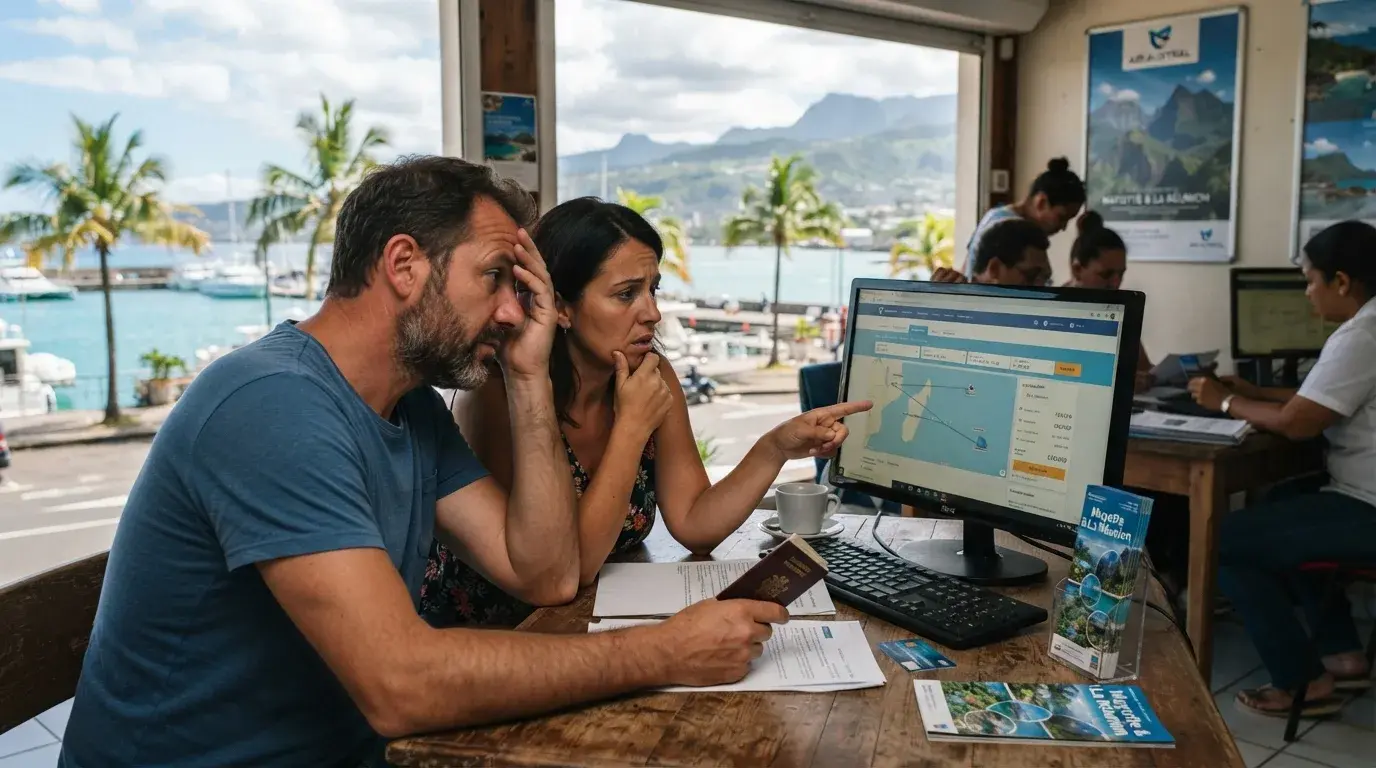
Travelers in Réunion must now plan their trips carefully. Last-minute bookings have become particularly expensive, and some are forgoing travel altogether due to budget constraints. Local airlines like Air Austral are trying to keep fares affordable, but their room for maneuver is limited by rising fuel costs and airport taxes.
For those looking to travel from Mayotte or Réunion to mainland France, options are dwindling. Airlines like Corsair and Air France offer variable fares, but price gaps between different options can reach several hundred euros. This situation is pushing some passengers to opt for longer routes with layovers to save a few euros.
The airports in Réunion and Mayotte, already strained by their size and location, are seeing their strategic role reinforced. They are the only direct link between these territories and mainland France, but their ability to absorb additional costs is limited. Local authorities and the state are therefore being called upon to play a key role in supporting airlines and preserving access to these destinations.
Jet fuel, taxes, and territorial continuity: the explosive trio
At the heart of the problem is the price of jet fuel, which has doubled since the start of the war between the United States and Iran. Airlines like Air Caraïbes and French bee no longer have access to fuel price hedging mechanisms, which were once used to stabilize costs. As a result, they are directly passing this increase on to ticket prices. Overseas carriers are particularly exposed, as their routes are often less profitable than long-haul or international flights.
Airport taxes and specific levies in the overseas territories add another layer of complexity. These charges, often higher than in mainland France, contribute to the overall cost for passengers. Airlines are calling for state support to reduce these costs, such as deferred payments or guaranteed loans. Without assistance, some may be forced to further reduce flight frequencies or even cancel routes.
Territorial continuity, a sacred principle for France’s overseas territories, is now directly under threat. Residents of Mayotte or Réunion must now weigh family travel, professional projects, and their budgets. Some are choosing to travel less frequently, while others are turning to alternative solutions like carpooling or boats, which are slower but cheaper.
Local elected officials and associations defending the interests of France’s overseas territories are sounding the alarm. They are calling for an emergency plan to support airlines and limit fare hikes. Without swift intervention, the situation could deteriorate further, with dramatic consequences for residents and the economies of these territories.
What can travelers do?
Faced with this widespread increase in airfares, passengers can adopt several strategies to mitigate the impact on their budgets. The first is to book as early as possible. Fares tend to rise as the departure date approaches, especially for flights to the overseas territories. Airlines occasionally offer promotional deals, but these are rare and time-limited.
It is also advisable to compare options between different airlines. Some low-cost carriers, like La Compagnie or French bee, offer more attractive fares than legacy airlines. However, they serve specific destinations, and their capacity remains limited. Travelers should therefore be flexible with their dates and schedules to secure the best prices.
Another option is to use loyalty programs or credit cards offering miles or discounts. Premium cards like Amex Platinum or Gold Mastercard sometimes provide valuable benefits for flight bookings. Finally, travelers can monitor last-minute cancellations, which occasionally offer reduced fares, particularly for long-haul flights.
In cases of disputes with an airline or travel agency, passengers can turn to mediation services or consumer associations. The DGAC reminds travelers that they have rights in cases of delays or cancellations, and these disputes can sometimes result in compensation. However, in the current context of rising prices, these solutions remain marginal.
An uncertain future for France’s overseas territories
The situation for France’s overseas departments and territories (DROM) and airfares remains highly concerning. Without a significant drop in jet fuel prices or increased state support, price hikes could continue in the coming months. Airlines, already weakened by the crisis, may be forced to further reduce their offerings, worsening the situation for travelers.
The next DGAC reports, expected in December, will provide insight into the scale of this trend. If the increase persists, passengers will have no choice but to adapt, either by changing their travel habits or reducing their trips. A bleak prospect for those dreaming of vacations or reuniting with loved ones in mainland France.
For now, airlines and local elected officials are making repeated calls for help. But without concrete solutions, travel to France’s overseas territories could become a luxury reserved for a minority.
Be the first to comment on this article
On the same topic
- French bee Launches Maldives and Sri Lanka Routes This Winter: How to Book at the Best Price
- Dominica 2027: An International Airport to Revolutionize Caribbean Vacations
- Saint-Martin in 2026: Why This Caribbean Gem Is Booming and How to Visit on a Budget
- Air Caraïbes Launches Paris-San Salvador Route: A New Direct Escape to the Bahamas for French Travelers
- Air Caraïbes deploys Airbus A350-900 to Saint-Martin in a highly regulated operational test at Juliana