Italy: Milan Linate Could Welcome Intercontinental Business Flights by 2026
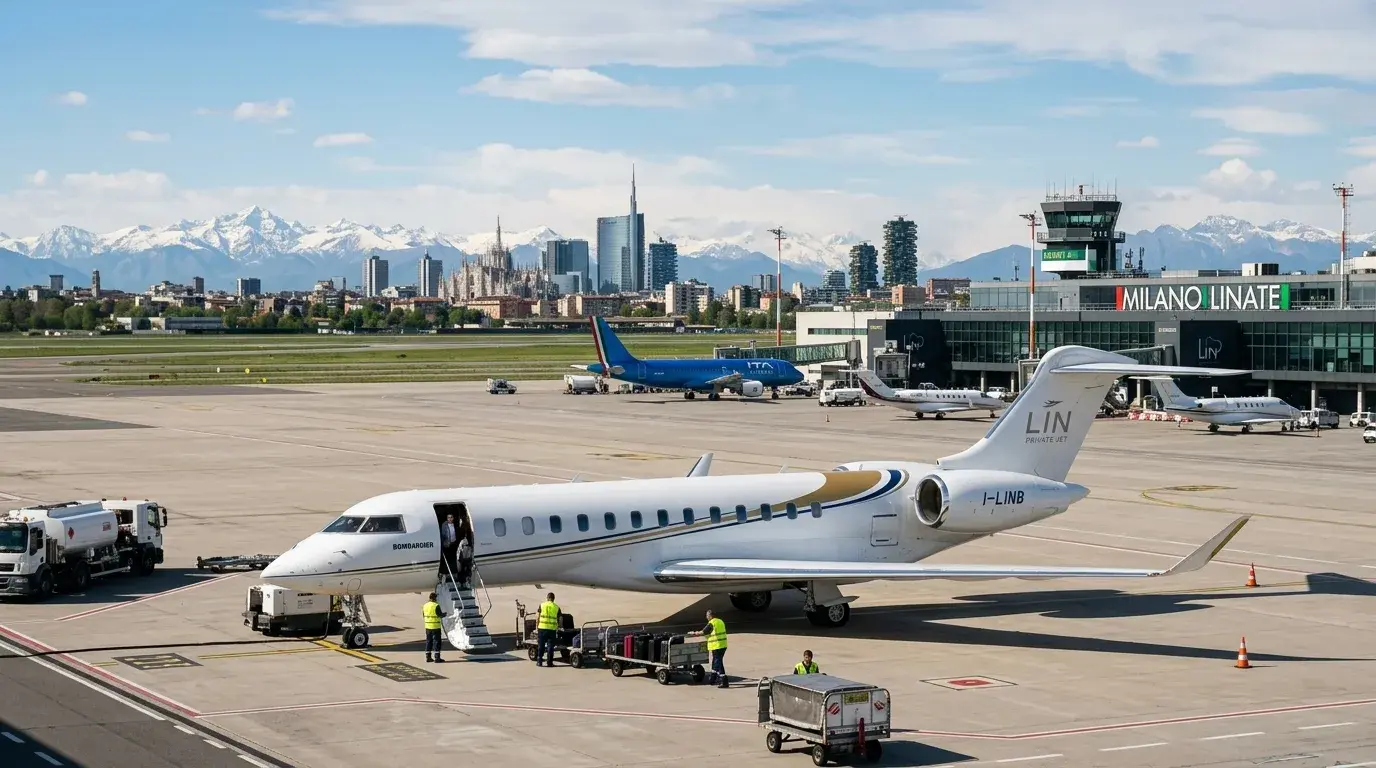
Italy’s **2026-2035 National Airport Plan**, unveiled by the Ministry of Infrastructure and Transport, marks a major turning point for **Milan Linate**, one of Europe’s most strategic city airports. For the first time, intercontinental flights could operate from Linate—but under strict conditions: aircraft must be configured in 100% Business Class and operated exclusively by traditional airlines. This could revolutionize Italy’s premium travel landscape, as Linate is currently limited to intra-European routes.
Located just twelve minutes by metro from Piazza Duomo, Linate epitomizes accessibility for time-sensitive business travelers. However, since 2022, its operations have been constrained by the “Giovannini Decree,” which restricts flights to point-to-point routes within the EU or to countries with agreements, within a 1,500 km radius. With a cap of 18 movements per hour, Linate is already saturated, and new carriers struggle to secure slots. These restrictions were initially designed to bolster **Milan Malpensa** as the intercontinental hub, following Alitalia’s difficulties and the redistribution of long-haul traffic. But the new National Airport Plan is set to change the game by introducing a targeted exception.
The strategic document outlines that Linate could be opened to extra-EU routes, even beyond 1,500 km, provided flights are operated by aircraft in 100% Business Class configuration by traditional carriers. The goal? To allow airlines to serve Milan’s economic heart directly with premium clientele, without relying on peripheral hubs. New York is the most obvious target, but other destinations like Boston, Montreal, Toronto, Dubai, or Delhi could also be considered, particularly with the Airbus A321LR or, eventually, the A321XLR.
This opening won’t come without challenges. The 18-movements-per-hour cap remains in place, meaning some domestic or European frequencies will need to be reduced to free up slots. A delicate task for ENAC and slot allocators in a market where Linate is already the preferred airport for Italian and European business travelers. The redistribution of slots will be one of the most sensitive aspects of this reform.
A regulatory framework to renegotiate with Brussels
For intercontinental flights to become a reality at Linate, the plan acknowledges that the 2022 Giovannini Decree—establishing traffic distribution between Malpensa, Linate, and Bergamo—must be “overcome.” This decree, approved by the European Commission, aimed to curb Linate’s growth in favor of Malpensa. Any changes will require negotiations with Brussels, based on a new Italian notification. The National Airport Plan 2026-2035, developed by ENAC, serves as the strategic framework for this revision. Presented on May 12, 2026, by Minister Matteo Salvini, it aligns with a broader vision for Italy’s airport sector over the next decade.
Which operators could take the leap?
On paper, ITA Airways appears as a natural candidate. Alongside the Lufthansa Group, it accounts for 52% of scheduled flights at Linate in 2026. However, neither carrier currently operates single-aisle aircraft in a 100% Business Class configuration, implying potential investments or specific conversions. Air France-KLM, whose CEO Ben Smith has previously expressed interest, is also closely monitoring the situation.
One player is already ready: La Compagnie, which operates two Airbus A321neo aircraft entirely configured with 76 Business Class seats on the Milan Malpensa–New York/Newark route. The French carrier could “fly immediately” on a potential Linate–New York route, according to Italian press, once the necessary rights are secured. Even a partial transfer of these capacities to Linate would shift the center of gravity of the Lombard premium market.
Malpensa: The other variable in the equation
For Malpensa’s advocates, this prospect revives an old Italian debate between city airports and peripheral hubs. Years of investment to strengthen long-haul traffic at Malpensa—including the arrival of new carriers and growth in capacity to North America and Asia—rest on the premise that most intercontinental traffic remains concentrated in the “brughiera” (a Lombard highland plain). A shift of the business segment to Linate could weaken the economics of certain routes and complicate profitability thresholds.
A broader goal: 305 million passengers by 2035
The National Airport Plan 2026-2035 sets an ambitious target: to increase Italy’s airport system capacity to 305 million passengers annually by 2035, up from an estimated 230 million in 2025. This growth will rely on the recovery of international traffic—both leisure and business—as well as the dynamism of regional airports. A €1.2 billion investment is planned to improve rail links to hubs like Bergamo, Olbia, Verona, and Venice.
The opening of Linate to intercontinental flights, if realized, will be just one component of a broader strategy. It reflects Italy’s ambition to reposition its infrastructure to capture an increasingly demanding premium traffic while preserving the economic balance of existing hubs. A reform that could inspire other European cities seeking to reconcile urban proximity with international connectivity.
Key takeaways on Milan Linate and intercontinental flights
The opening of Linate to intercontinental flights hinges on three pillars:
- A 100% Business Class-exclusive aircraft configuration, reserved for traditional carriers.
- An extended range beyond 1,500 km, with destinations like New York, Dubai, or Delhi in sight.
- A slot arbitration process, in an already saturated environment.
For business travelers, this evolution means direct, fast, and premium access to the heart of Milan. For airlines, it’s an opportunity to capture highly lucrative clientele without relying on peripheral hubs. For competitors like Malpensa, it’s a challenge to maintain attractiveness. A reform to watch closely, with potential early effects as soon as 2026.
Be the first to comment on this article
On the same topic
- Emirates Launches Direct Dubai-Helsinki Route with Airbus A350: What It Means for European Travelers
- Emirates Revolutionizes Nairobi-Dubai Route with A350 and Premium Economy
- Etihad Launches Calgary: First Direct Middle East to Western Canada Route, a Travel Revolution
- Aeromexico Launches Milan Route: A Game-Changer for Transatlantic Travel
- Air China Launches Groundbreaking Route to Iceland from Beijing via Copenhagen in 2026
- Starlux Leverages Art and Airbus to Revolutionize A350-1000s and Woo Europe