Albania Travel: Why the Destination Is Rapidly Gaining Popularity Among Holidaymakers
Bookings to Albania are accelerating sharply as summer approaches, with a reported increase of +275% according to Les Entreprises du Voyage, as relayed by Flywest. For French travelers, the country is now emerging as a concrete option on Europe’s vacation map, with price levels still lower than several neighboring destinations and a rapidly expanding air travel offering.
This shift is more than just a passing trend. Albania benefits from a set of factors that are highly visible to French travelers: more direct flights, still-affordable accommodation rates, a season that extends beyond the traditional July and August months, and a travel image blending coastline, heritage, and mountainous landscapes. For a market often balancing budget, weather, and accessibility, the country ticks several boxes.
The international context also plays a role. With geopolitical tensions disrupting some long-haul routes, some vacationers are shifting to closer destinations. In this movement, Albania stands alongside Spain, Greece, and Croatia, but with an additional advantage: still-low price levels, particularly outside the most touristy areas.
Growing Popularity Driven by Air Connectivity
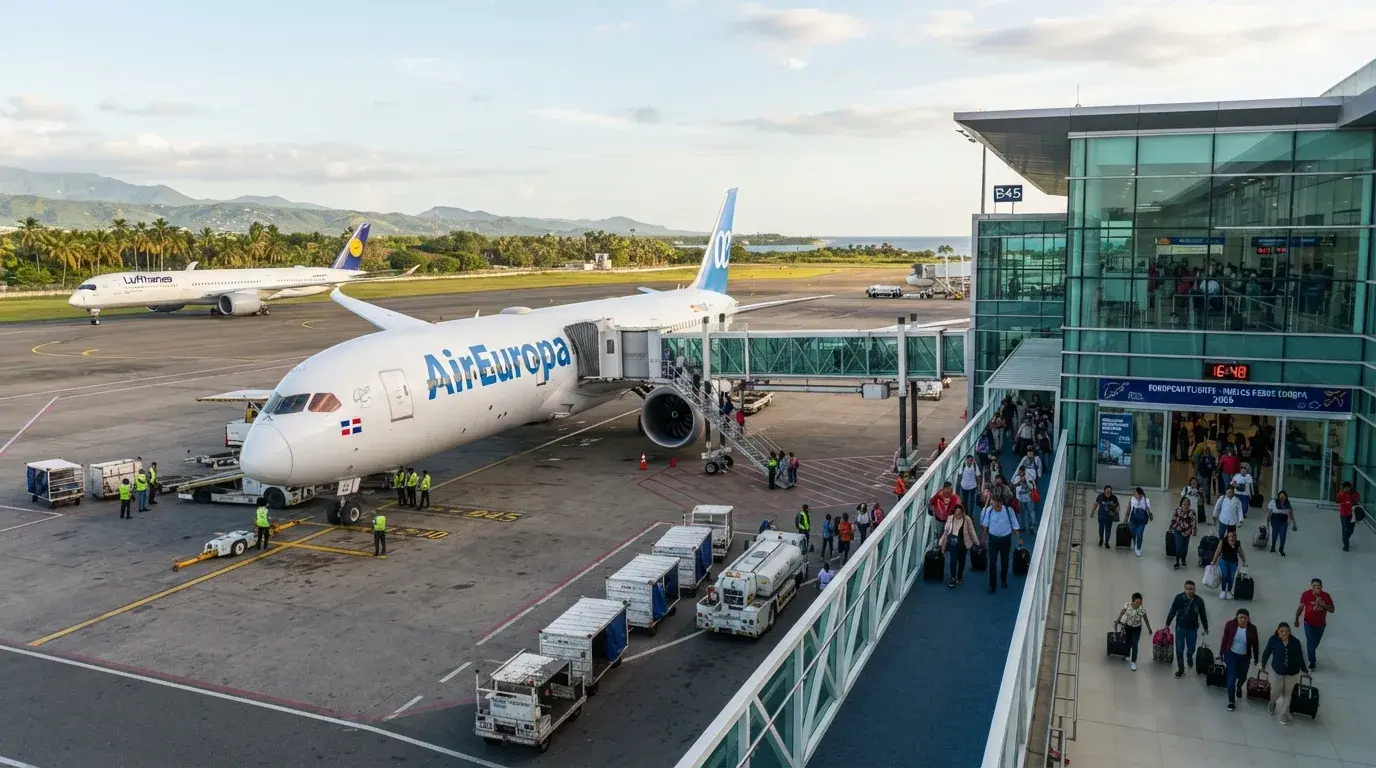
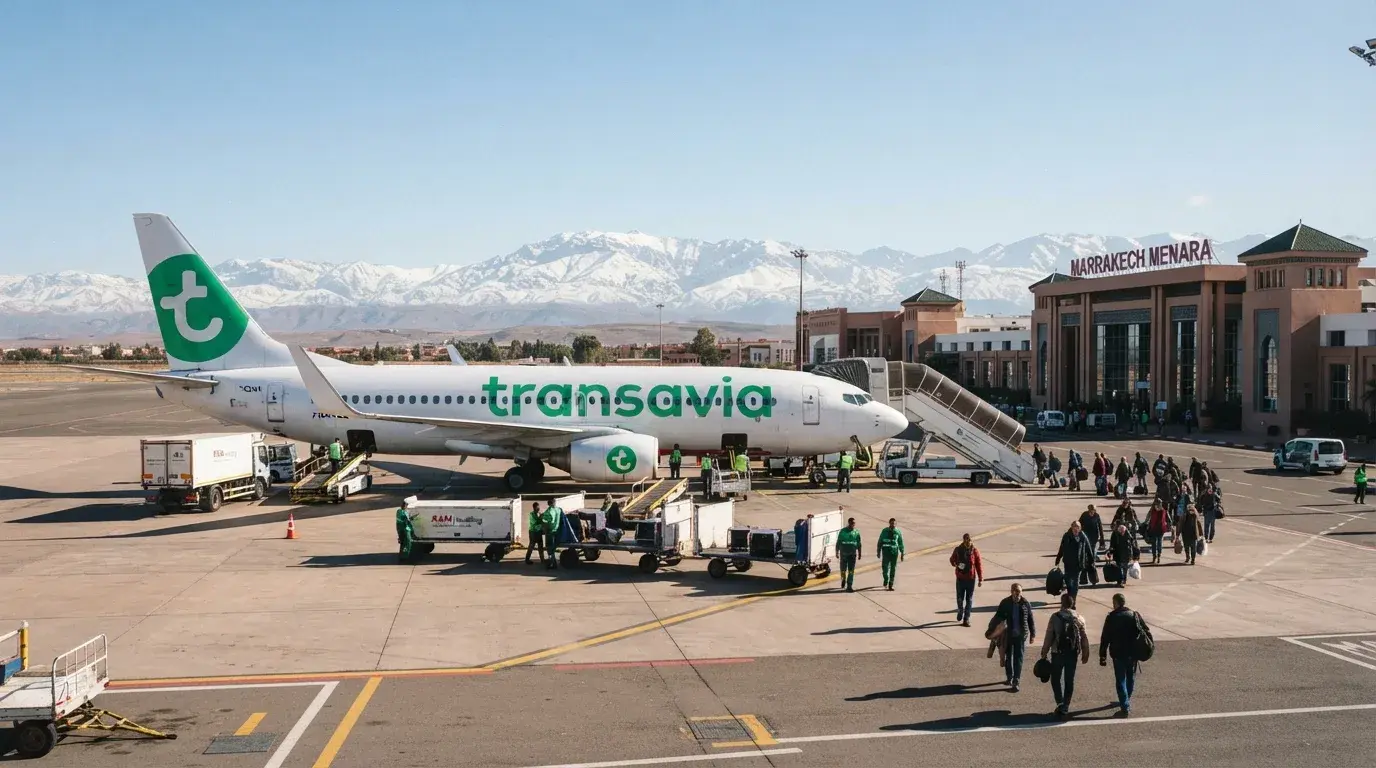
The key factor behind this surge is accessibility. Tirana International Airport, Nënë Tereza, is now connected to nine French airports, significantly changing the game for departures from both regional cities and Paris. Wizz Air dominates much of the direct routes from Paris-Beauvais, Lyon, Nice, and Basel-Mulhouse. Ryanair also serves Tirana from Paris-Beauvais and Marseille, while Air France operates two weekly flights from Paris-CDG. Transavia, for its part, launched new routes from Nantes and Bordeaux in 2025.
This multiplication of departure points makes the country much easier to sell both through agencies and direct bookings. Access costs also remain a strong argument. On certain summer dates, a round-trip Paris-Beauvais – Tirana can be found around €138 with Wizz Air, while a Lyon – Tirana flight may be listed at €148. In a market where airfare often weighs heavily on the overall budget, these price points influence final decisions.
For operators, the challenge is twofold: meeting demand for short stays and beach vacations while reassuring travelers who are still unfamiliar with the destination. This is where the presence of full-service carriers, low-cost airlines, and specialist operators adds depth to the market.
A Country That Has Transformed Its Tourist Profile
Albania is not starting from scratch. Its image has evolved over the past decade, following decades of isolation under Enver Hoxha’s regime and the instability that followed the fall of communism. Today, the country is a democracy, an EU candidate, and is working to consolidate a tourism growth that is now reflected in the numbers.
This shift in perception is also evident in visitor flows. In 2025, Albania welcomed 12.5 million international tourists, including over 200,000 French travelers. This volume confirms that the market is no longer niche. Instead, it is firmly positioned in an intermediate zone between an emerging destination and one already well-identified by highly mobile travelers.
Social media has contributed to this movement, but it does not explain it entirely. Images of beaches, hilltop villages, and coastal roads have served as a showcase, yet the momentum is driven primarily by classic tourism factors: connectivity, affordability, ease of travel, and a diverse offering.
The Albanian Riviera: The Engine of Summer Demand
For most visitors, the coastline remains the primary entry point. The Albanian Riviera dominates beach tourism demand, with resorts like Saranda and Vlorë accessible by bus from Tirana but often more easily explored by rental car. This choice offers greater flexibility to connect beaches, coastal villages, and points of interest slightly off the main routes.
The local cost of living further strengthens the destination’s appeal. According to figures relayed by Flywest, it is still possible to find rooms around €50 per night, complete meals for €10-15 per person, and a beer for less than €3. These benchmarks matter in a context where seaside stays are becoming more expensive across several European markets.
The Riviera is not limited to beach hospitality. It also attracts travelers looking to combine swimming, road trips, and short discoveries without excessive transfers. This is one of Albania’s strengths: a compact size that allows for relatively short travel times, even if road conditions are not uniform nationwide.
Heritage, Historic Cities, and Longer Trips
Beyond the beaches, Albania boasts a solid heritage. Butrint, near the Greek border, is a UNESCO World Heritage Site. Its ancient theater, dating back to the 3rd century BCE, is among the best-preserved archaeological sites in the region. Further north, Gjirokastër, also a UNESCO site, offers another facet of the country with its stone urbanism, Ottoman-era houses, and terraced layout on mountain slopes.
These sites enable the creation of more comprehensive trips than the simple beach-and-hotel package. They also provide a more accurate picture of the country, often reduced to its Adriatic coastline, when in fact it has a hinterland rich in history, architecture, and striking landscapes.
For specialized agencies, this type of product is crucial. It allows them to move beyond standardized holiday packages and assemble itineraries that blend urban stays, cultural stops, and coastal time. Flywest highlights several players in the market, including Horizons Balkans byNativ, Breathe in Travel, Expérience Albanie, and Vacances Albanie.
The Albanian Alps: A Draw for Active Travelers
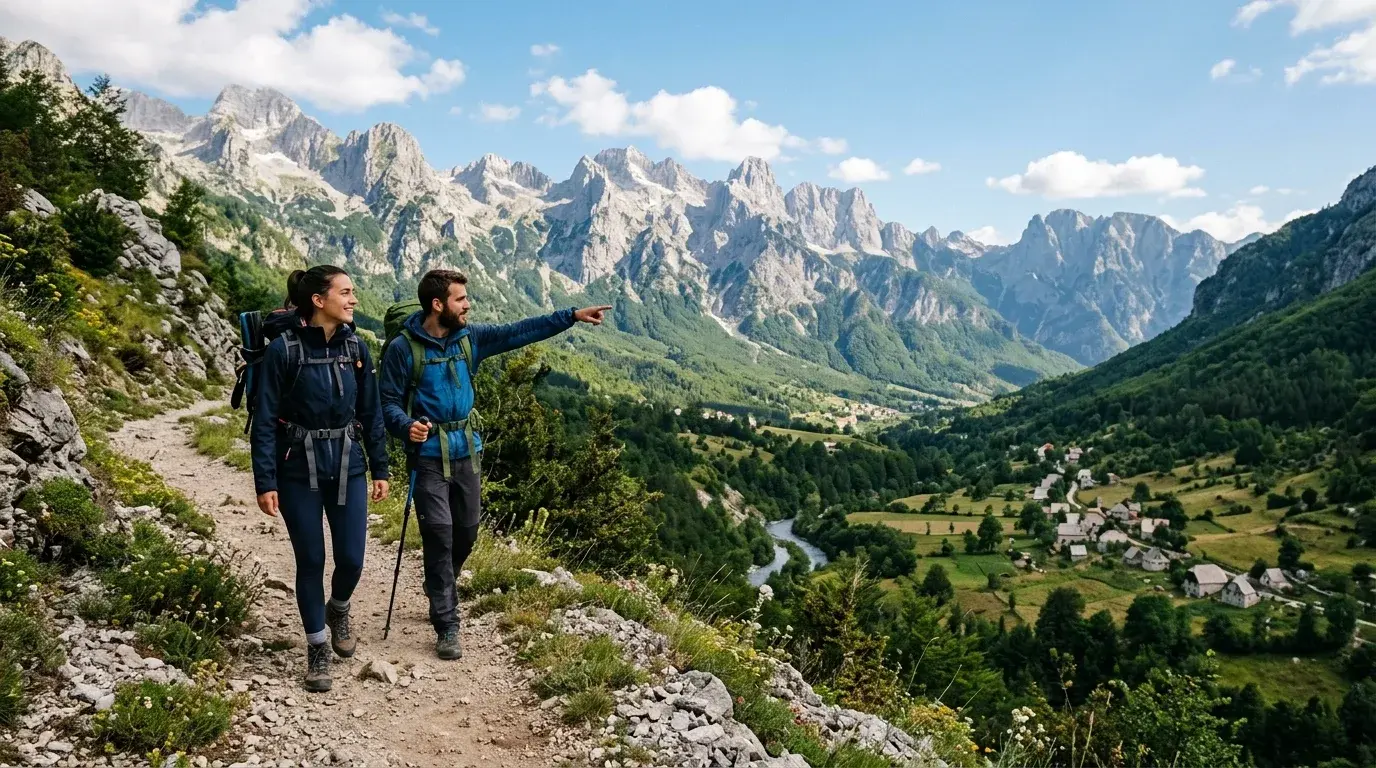
Another facet of the country is gaining visibility: the Albanian Alps. This mountainous region attracts hikers and travelers seeking firmer, less urbanized landscapes, with a focus on circuit-style travel. Wildlife and flora remain relatively well-preserved at a European scale, and some areas are suited to multi-day hikes, observation, and rural stays.
The guesthouses dotting these routes play a tangible role in the offering. They provide simple cuisine, mountain produce, homemade bread, and rakia, the local spirit prevalent in rural regions. For visitors, this format offers direct contact with the local economy, far removed from the model focused on beach resorts.
This part of the country is increasingly appealing to agencies building longer itineraries. It also responds to a demand for less intensive travel, where terrain, villages, and roadside stops are integral to the experience.
A Destination Easy to Combine and Extend Throughout the Year
The tourism calendar is another asset. Albania can be visited year-round, with mild temperatures across much of the territory. Swimming can begin early in the season along the coast, while mountainous areas offer alternative activities, including skiing in certain areas like Mount Korab, the country’s highest peak.
This versatility appeals to both independent travelers and tour operators. It allows the country to be marketed in summer but also enables the creation of spring, autumn, or winter programs tailored to different preferences. For the French market, this is valuable data, as it reduces dependence on the traditional July-August peak.
There are also alternative entry points to reach southern Albania, including via Corfu in Greece and then overland. This option expands the possible combinations for travelers looking to bypass Tirana while still accessing the country’s southern regions. The capital, however, is worth a stop, if only to understand how the country has reshaped its image and role in regional tourism.
With improving connectivity, still-competitive fares, and a diversifying tourism product, Albania is firmly establishing itself in the travel plans of French holidaymakers. The surge in bookings is not based on an abstract promise but on very concrete elements: still-affordable flights, reasonably priced accommodations, a coastline that’s easy to sell, and an interior that broadens the spectrum of travel experiences.
Be the first to comment on this article